28 3

Beyond Learning Analytics: How Skillzen Fills up the Skill Gaps Missed by Conventional Platforms

Beyond Learning Analytics: How Skillzen Fills up the Skill Gaps Missed by Conventional Platforms

There is a ton of data on your learning analytics dashboard. measures for engagement, time spent, assessment results, and completion rates. “Are we ready for the digital transformation?”, questions the leadership. You look over charts, but you can’t find the solution. The issue is that learning analytics reveals what transpired. It doesn’t indicate what people are capable of, where important skill gaps are developing, or who is prepared for the next phase. The majority of platforms gauge activity rather than aptitude. They do not bridge skill gaps, but they do monitor learning. 
Skillzen was constructed in a new way. 

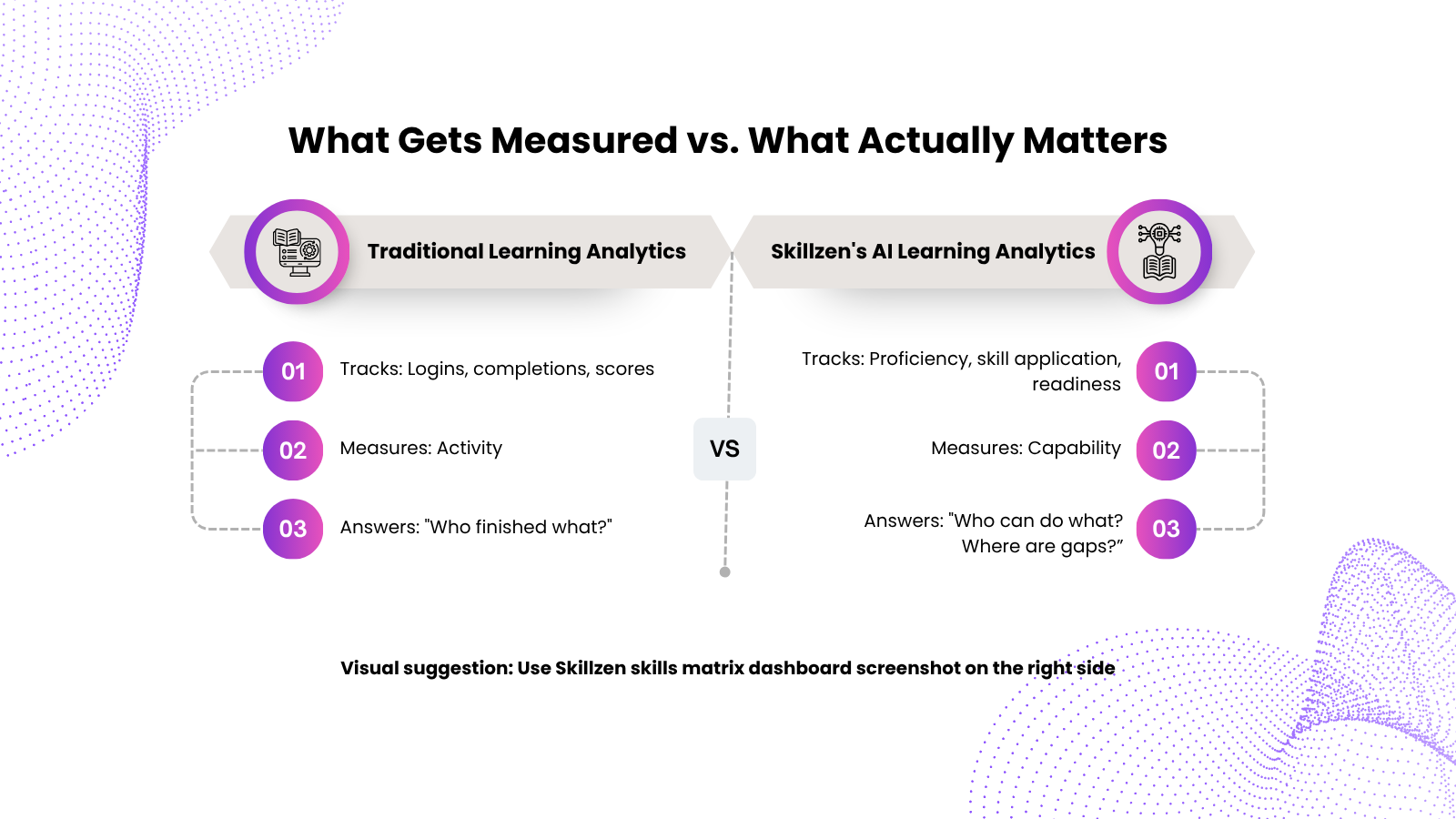
What Conventional Learning Analytics Really Measures

Conventional learning analytics systems are quite good at monitoring behaviour. They display your average time on task, quiz scores, module completions, and login frequency. This information is important for reporting and compliance. However, activity indicators are insufficient when your company needs to know whether engineers are prepared for the cloud migration or if the sales team can implement the new go-to-market plan. Since learning analytics was created to quantify consumption rather than abilities, it is unable to address capability problems on its own. 
 
The outcome? Despite investing in workforce learning analytics and producing eye-catching dashboards, organizations are still unable to detect skill gaps in the workforce before they have an adverse effect on performance. They are aware that individuals are learning. They are unsure of people’s performance abilities.  
 
A misleading sensation of progress is produced by this discrepancy between measurement and mastery. While crucial capabilities are still underdeveloped, L&D teams celebrate strong completion rates. While employees struggle with practical implementation, executives approve spending based on engagement numbers. The disconnect is structural rather than deliberate. Simply put, traditional learning analytics was created to validate people’s consumption rather than their abilities.
How Skillzen Fills Skill Gaps Rather Than Just Monitors Them

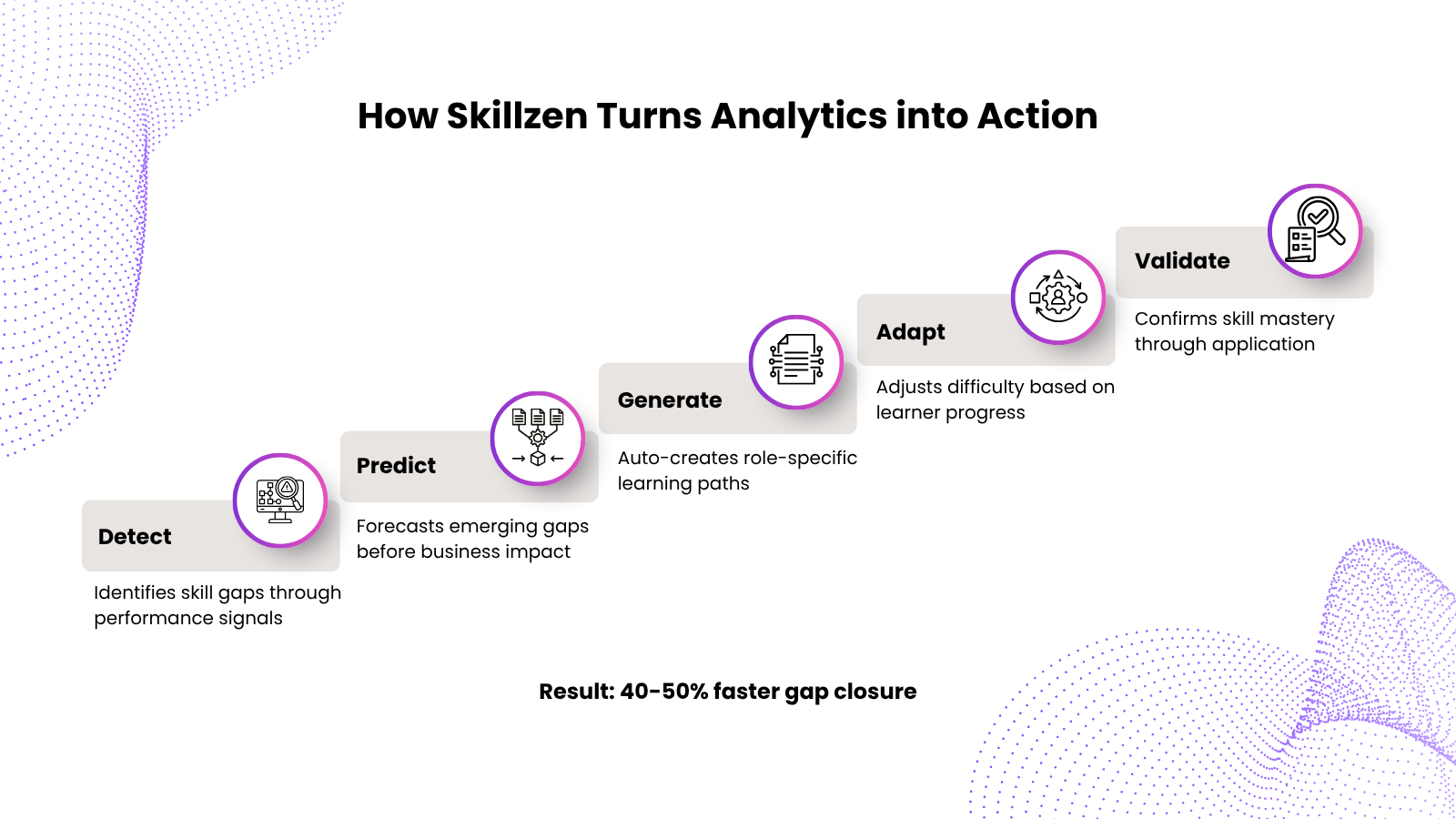
Skillzen does more than just find skill gaps. The platform employs AI learning analytics to identify the reasons for gaps, forecast the locations of future ones, and automatically modify learning to bridge them. 
 
The technology does more than simply highlight new skill gaps for L&D to manually fill when it finds them through performance signals. To transfer knowledge from short-term to long-term memory, it creates role-specific learning paths, modifies content difficulty in real time, and employs skill reinforcement strategies.  
 
This is the point at which Skillzen’s strategy deviates from conventional platforms. Skillzen acts rather than giving you a report on organizational skill shortages and letting you create courses by yourself. Adaptive learning journeys are created based on each learner’s demonstrated competency and are continuously modified in response to their performance.  
 
Personalization is just one aspect of the intelligence. Every interaction within the company is continuously analysed by Skillzen’s AI learning analytics, which finds trends in the development of abilities, common areas of difficulty for learners, and the interventions that lead to the quickest mastery. With every student, every course, and every skill certified, this combined intelligence makes the platform smarter.  
 
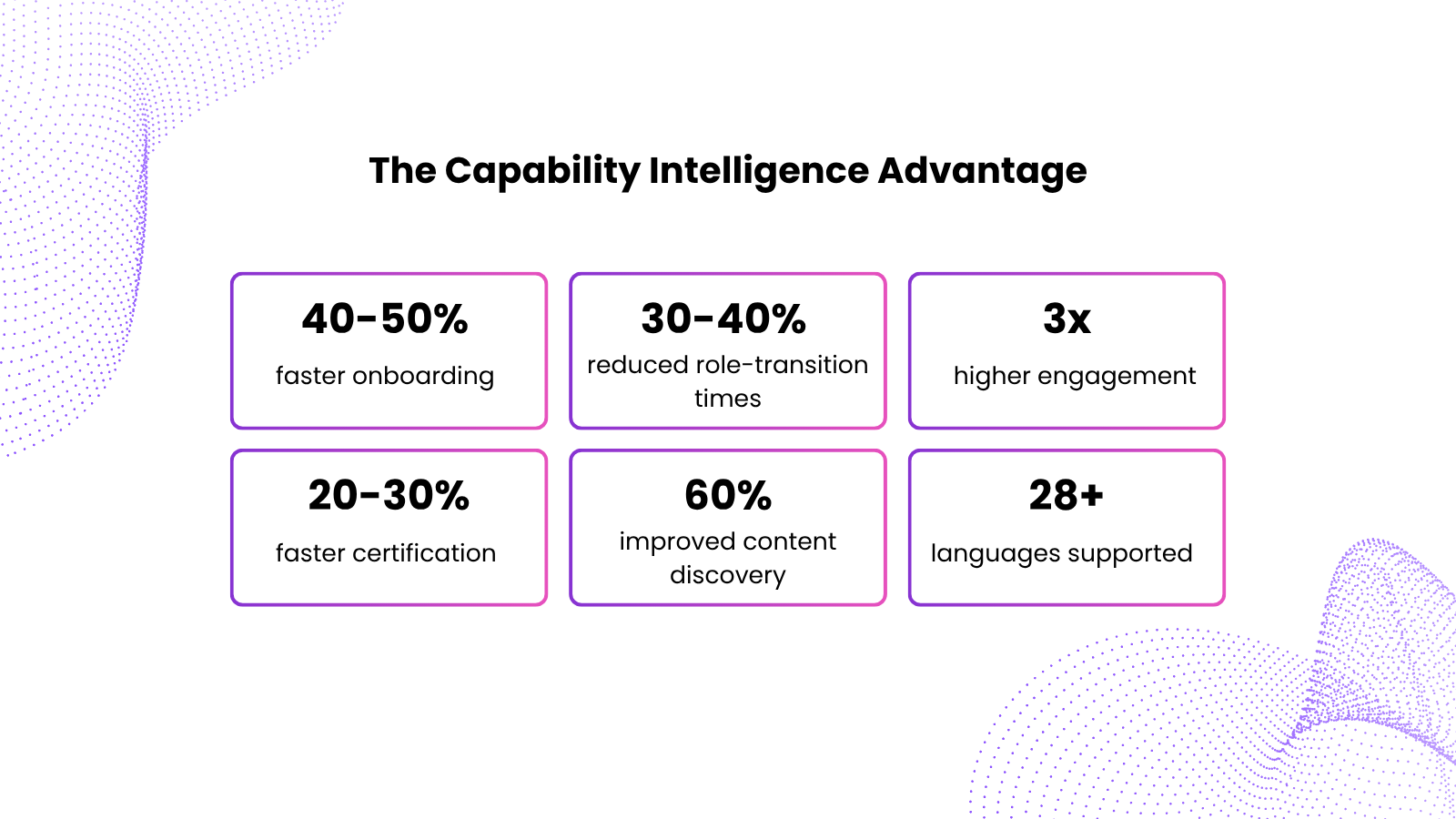
Skillzen doesn’t wait for L&D to step in, and organizations that adopt it report reducing skill gaps 40–50% faster. The AI learning analytics engine finds gaps, creates relevant information, and distributes it precisely when students need it. Role changes that used to take months now happen in a matter of weeks. New hires are 40–50% more productive. Prior to workforce readiness surpassing company needs, critical capabilities become stronger. 
The System That Converts Knowledge into Capability

Learning analytics was never intended to be the final goal. It is the beginning. What really matters is whether you produce reports or capabilities after identifying skill gaps. 
 
You are visible on traditional platforms. You may act using Skillzen, as it develops skills, whereas others display dashboards. AI learning analytics does more than just measure; it also makes predictions, adjusts, and fills in gaps on its own.  
 
Workforce skill gaps are more than just statistics to monitor for businesses undergoing fast change. These are hazards to capabilities that call for quick, wise action. Skillzen offers the infrastructure to act before it becomes a business issue, as well as the intelligence to see what’s coming.  
 
More than ever, the difference counts. Organizations cannot afford platforms that merely notify issues as change picks up speed and capabilities deteriorate more quickly. They require systems to address them. They require learning analytics that not only guides but also propels decisions, transforming insights into observable capabilities and data into action.  
 
This is the distinction between learning analytics that transforms and learning analytics that informs. 
27 3

What Contemporary Businesses Really Need in 2026: AI LMS vs. Conventional LMS vs. LXP

What Contemporary Businesses Really Need in 2026: AI LMS vs. Conventional LMS vs. LXP

Last year, your L&D team made an investment in a new learning platform. Courses are being taught, workers are signing in, and the boxes for compliance are checked. However, you are unable to confidently respond when leadership inquiries about worker preparedness for the impending change. The reason is that the infrastructure you’re using isn’t appropriate for the issue you’re attempting to resolve.  
 
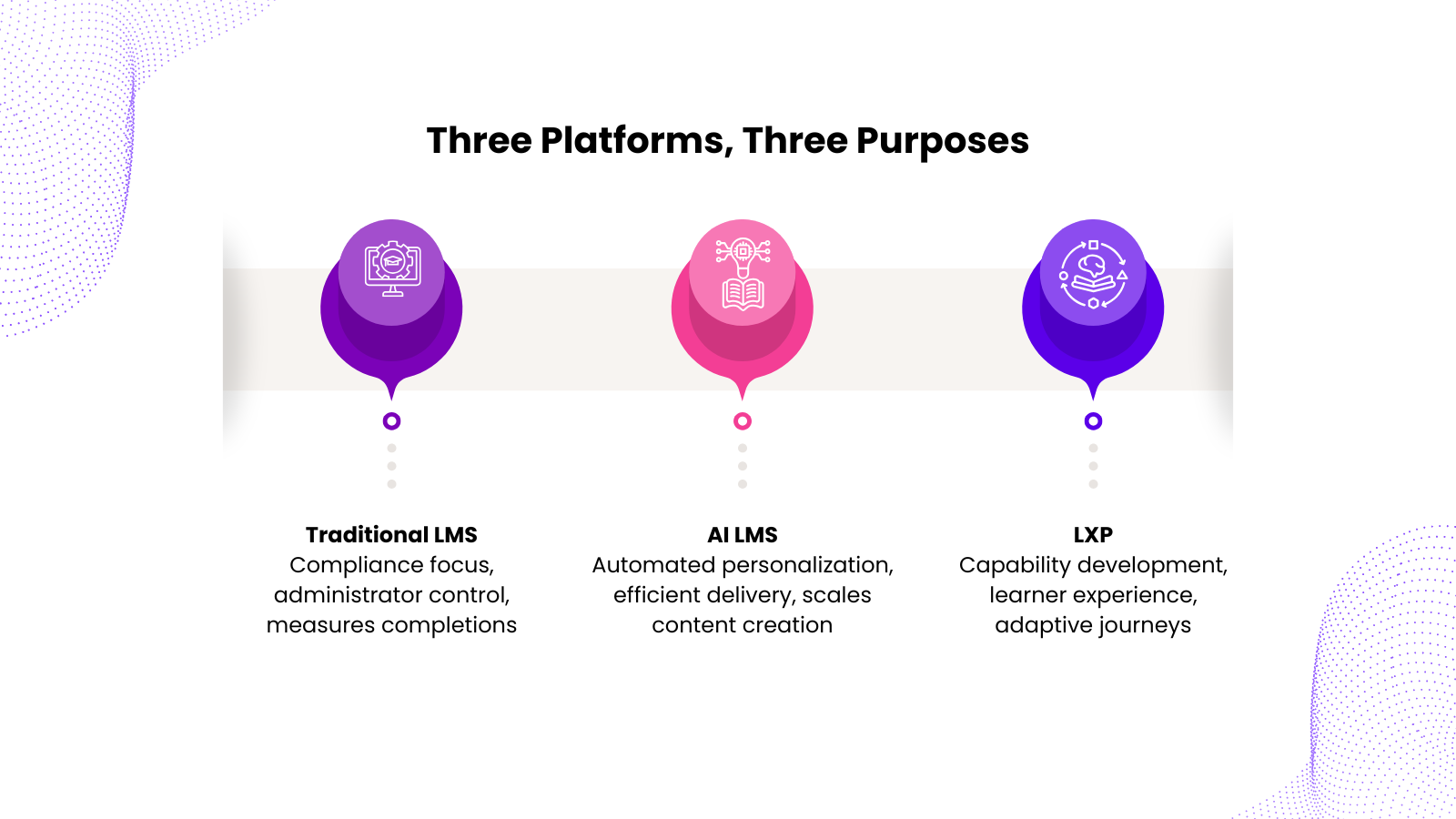
Three distinct categories now comprise the landscape of learning technology. Conventional LMS systems monitor compliance and manage material. AI-powered learning management systems automate the production of courses and customize their delivery. Instead of only delivering courses, LXP systems completely change the paradigm to build capability.  
 
It’s not about features to choose which one your company requires. It has to do with your goals. 

The Functions of Conventional LMS Platforms (and Where They End)

Conventional LMS systems were designed with control in mind. They create compliance reports, track completions, handle enrolments, and organize course libraries. This infrastructure is still crucial for enterprises with required programs or legal requirements.  
 
The drawback is that legacy LMS systems gauge activity rather than capability. They let you know who completed what and when they received a point. They don’t tell you who can do the job, who is prepared for the next position, or where important skill gaps are developing.  
 
Traditional systems are outdated when workforce agility is more important than completion rates. They are not learning systems; they are libraries.

How AI LMS Modified the Situation (But Not the Objective)

Artificial intelligence is used by AI LMS platforms to automate the construction of courses, customize suggestions, and lessen administrative work. When you upload a PDF, the platform creates a course in a matter of hours rather than weeks. 
 
This resolves actual issues. L&D teams accelerate, content grows more quickly, and AI LMS technologies provide real assistance for enterprises overwhelmed by backlogs in course creation. However, the learning process itself remains unresolved. The top-down reasoning still underpins most AI LMS systems. Administrators assign and create, and students consume and finish. The model did not change, but the delivery mechanism became more intelligent.  
 
Without change, intelligence only industrializes the previous method. Although you can design courses more quickly, you are still focusing on completion rather than capability.  

Why the Paradigm Shift Is LXP Platforms

LXP systems do more than simply automate conventional models. They completely flip it. Learners pull what they need rather than administrators pushing content. They browse adaptive ecosystems rather than static catalogues. The platform validates skills rather than completes tasks.  
 
This architecture is learner-centric and built for scalability. LXP platforms track proficiencycomprehend context, and modify learning paths in real time based on demonstrated ability rather than merely activity.  
 
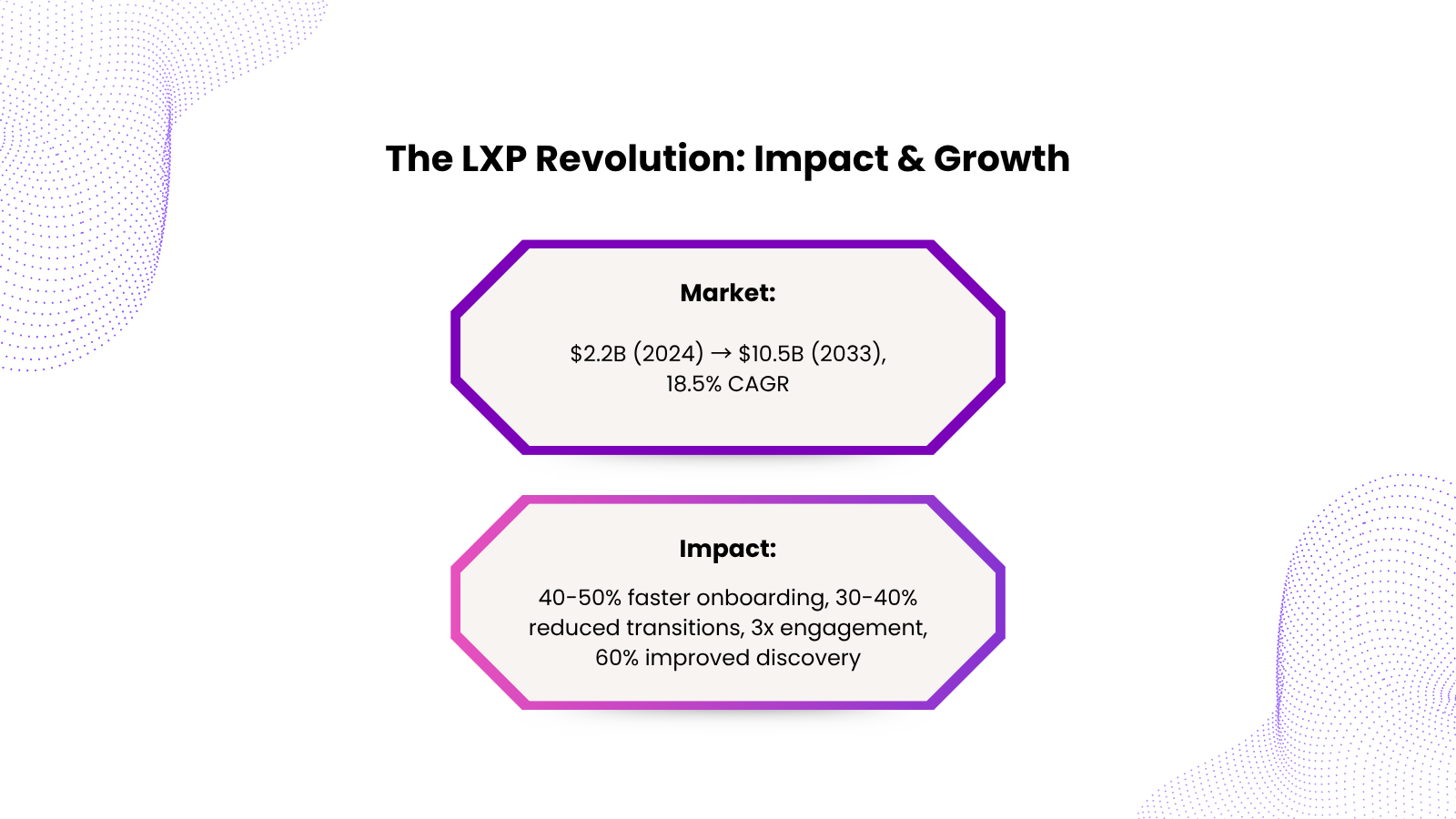
Businesses that use LXP platforms claim to reduce role-transition periods by 30–40% and increase recruit productivity by 40–50%. Not because learning is gamified, but rather because it is pertinent, timely, and directly related to what people need to do, they are witnessing three times higher engagement.  
 
The platform offers more than simply course recommendations. It creates capability paths based on performance signals, role, and context. Instead of using multiple-choice exams, it uses application to validate skills.

What Contemporary Businesses Really Need

If your priority is compliance, traditional LMS platforms still serve that purpose. If your bottleneck is course creation speed, AI LMS platforms solve that constraint. But if your challenge is workforce capability and transformation readiness, you need LXP platforms. 
 
The real difference lies in what outcomes you’re optimizing for. AI LMS systems make existing processes faster. LXP platforms change what’s possible. One optimizes for efficiency. The other optimizes for impact.  
 
For enterprises navigating constant change, the question isn’t which platform has more features. It’s which infrastructure aligns with what you’re trying to build. A workforce that can execute, adapt, and perform when it matters most. That’s not a content management problem. It’s a capability development challenge. 

19 1

The ‘Paper Trail’ Illusion: Why Digitisation Doesn’t Equal Intelligent Document Processing 

The 'Paper Trail' Illusion: Why Digitisation Doesn’t Equal Intelligent Document Processing

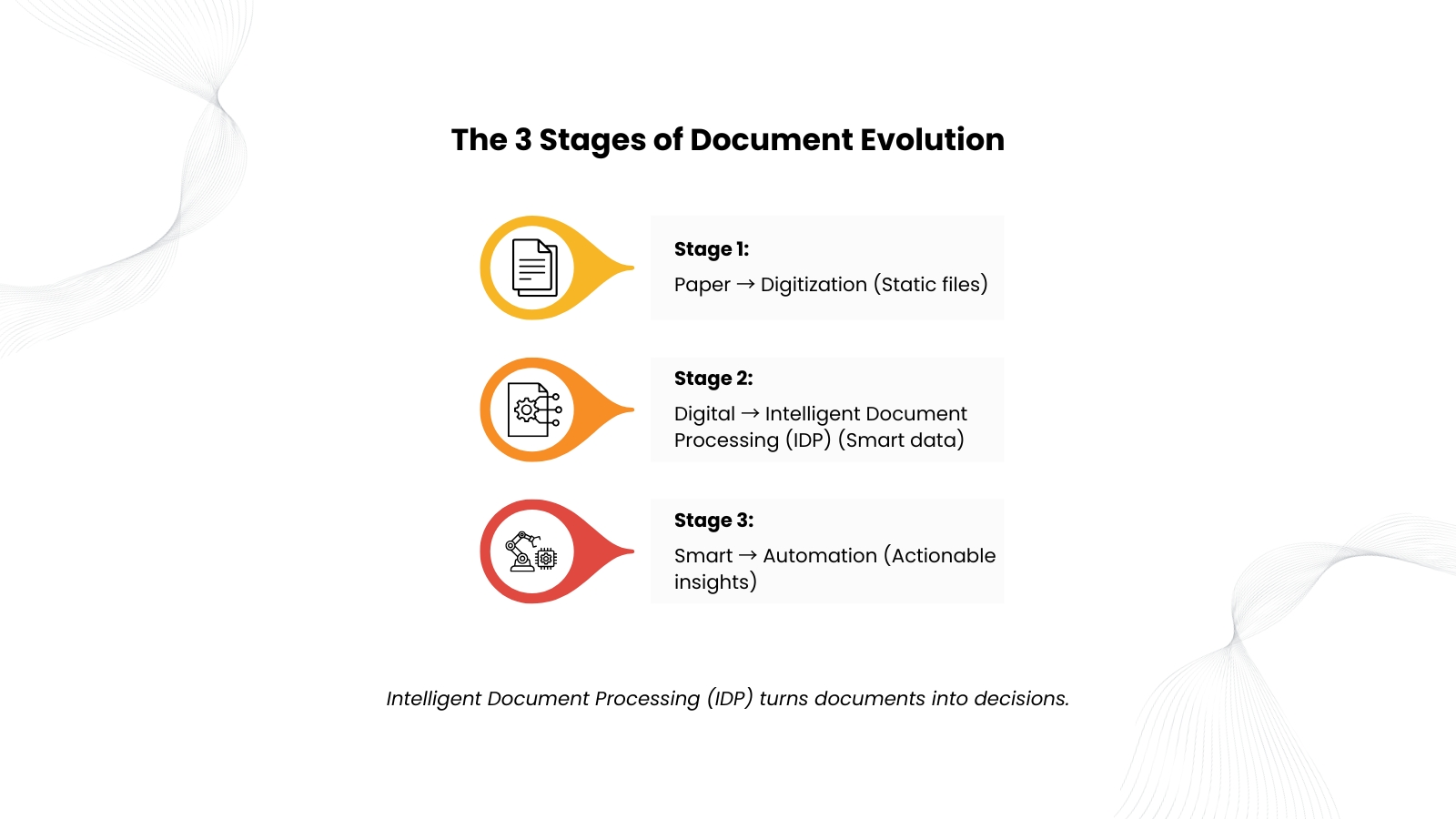
Every organisation today is digitising its documents increasingly from digital archives to PDFs and scans. Leaders celebrate the move to a “paperless” office, and teams finally have access to files at their fingertips. For a portion of time, it appears to be progress. 
Then the true picture emerges. Documents are still hard to find. Hours are wasted by teams while they look for the appropriate version. Unstructured files contain vital information that is buried deep inside them, which causes decisions to be delayed. Although the digital transformation has been completed, the company has not become any more intelligent. 
The truth isDigitization doesn’t equal intelligence. Therefore, this is the point at which the illusion of the “paper trail” is destroyed. 

The Real Problem is the Lack of Meaning, not Paper.

Take into consideration a library in which every book has been digitised and uploaded to a computerised database. The books are there, but without titles, authors, or categories, they’re effectively useless. This is what occurs when businesses are entirely focused on digital transformation without taking into consideration what else may occur in the future.  
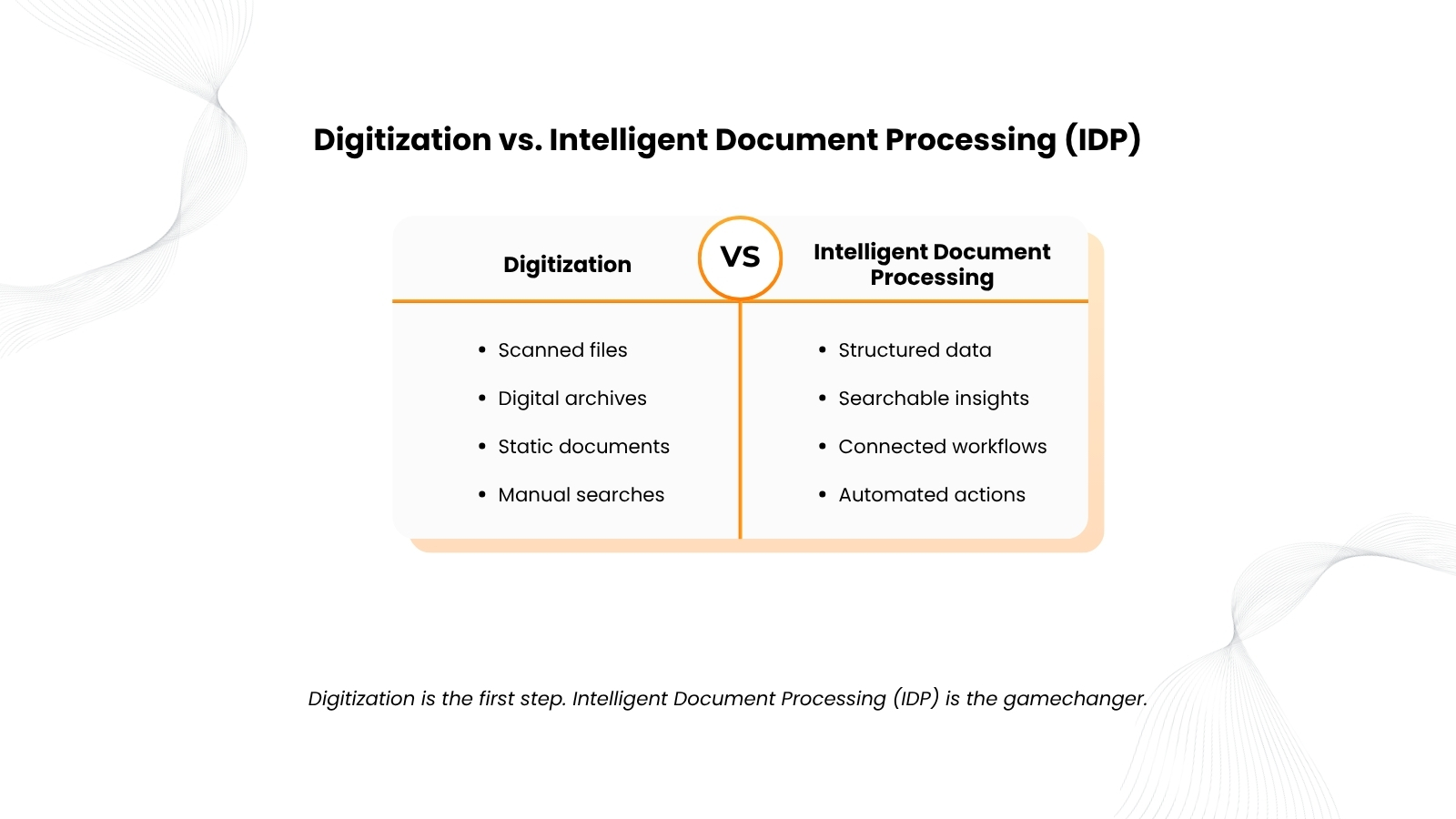
Intelligent Document Processing IDP isn’t just about turning paper into pixels. The goal is to transform those pixels into insights that can be put into action. You may think of it as the distinction between a digital archive and a system that is intelligent, searchable, and connected. 

Why Intelligent Document Processing IDP Goes Beyond Digitisation

  1. From Static to Smart

Paper is converted into digital files through the process of digitisation, but Intelligent Document Processing IDP transforms that digital data into intelligent assets. It extracts meaning, tags documents with context, and links them to workflows. In an instant, your data is not only being stored, but it is also performing tasks for you. 

  1. From Searching to Finding

With digitisation, you can store documents, but with Intelligent Document Processing IDP, you can find them instantly. There will be no more time wasted or manual searches. Just the right information at the right time. 

  1. From Manual to Automated

Intelligent Document Processing IDP) minimises the amount of effort, while digitisation reduces the amount of paper. Self-directed invoices are sent out. Contracts flag risks automatically. Insights are generated by reports without the use of human input. Instead of chasing after data, your team focuses on utilising it. 

The Bottom Line

Simply undergoing a digital transition is the initial step. The real power comes when you move beyond digitisation to Intelligent Document Processing IDP. This is the element that differentiates a digital archive from a system that is intelligent, linked, and capable of taking action. The question that must be answered is not whether you digitised your documents. It’s a matter of how quickly you can make them intelligent. 

26 3

The Learning System Your Employees Really Require (Hint: It’s Not What You Think)  

The Learning System Your Employees Really Require (Hint: It's Not What You Think)

Imagine this, new course has just been released by your L&D team. Completion rates appear to be high, you have a green dashboard, and the leadership is impressive. 
 
The gap you set out to reduce is still very much open three months later.  
 
The harsh reality is that completion metrics are only a vanity scoreboard. Instead of measuring impact, they assess activity. Furthermore, most learning management systems are built to maximize this appearance of advancement.  
 
Whether or not your platform records completions are not the true questionit’s if it develops the skills necessary to advance your company. 

The System That Gains Knowledge While Your People Gain Knowledge

Conventional systems follow a set logic, which is to provide material, monitor completion, and produce reports. They are not learning architects, but rather record-keepers.  
 
This is completely reversed by contemporary LMS characteristics. Consider adaptive intelligence in place of static delivery. The platform tracks each learner’s engagement, areas of difficulty, and what works and what doesn’t. It not only monitors advancement but also gains knowledge from it.  
 
Does a sales representative find it difficult to handle objections? The platform introduces micro-scenarios, modifies difficulty, and distributes reinforcement across ideal intervals. Technical concepts are raced through by an engineer. It speeds up their journey and adds complexity at an early stage. This isn’t segmentation-based personalization. It’s observation-based intelligence. 

When Your Dashboard Says "So What"

The majority of LMS platforms and features excel at the fundamentals, such as keeping track of logins, documenting completions, and calculating scores. However, that is not strategic intelligence; rather, it is operational housekeeping.  
 
The breakthrough occurs when your system responds to various queries like, Which teams are prepared to launch the product in Q2? Before they affect delivery, where are important skill gaps developing? Which educational strategies are associated with better performance?  
 
The possibilities are altered by this transition from activity reporting to capability intelligence. L&D begins anticipating requirements rather than responding to demands.

Skills, Not Syllabi

Here’s where legacy thinking breaks down entirely. Traditional systems organize learning around courses and curricula, but your business doesn’t operate on curriculum logic. It operates on capabilities. 
 
Can your team execute the new go-to-market strategy? Do your engineers have the skills for the architecture shift you’re planning? Modern LMS features organize around skills, not subjects. They map roles to required capabilities. They track proficiency, not completion. They validate what people can do, not what they’ve watched.  
 
This architecture enables workforce agility. The difference between managing courses and building capabilities isn’t theoretical. It shows up in measurable business outcomes that directly impact your bottom line.


The shift to intelligent LMS features and platforms isn’t a technology upgrade. It’s a strategic repositioning of how your organization builds, validates, and deploys capability. 

The Real ROI

Completions are not used to calculate the return on learning investment. It’s measured in readiness, performance, and adaptability. Can your workforce execute when priorities shift? Can they absorb new capabilities as fast as the market demands them?  
 
The right system makes this possible through intelligence, adaptability, and a relentless focus on what people can do. Organizations making this shift report faster certification cycles, improved content discovery, and learning experiences that scale across languages and every device.  
 
Your learning management system should build capability, not just track completions. Recognizing that gap is where transformation begins.

25 2

AI-Powered Analytics: Converting Data-Rich to Insight-Led Learning and Development

AI-Powered Analytics: Converting Data-Rich to Insight-Led Learning and Development

Data has always been abundant in learning and development, but insight has always been lacking. Dashboards are filled with completion rates, attendance records, and assessment results, yet judgment is frequently used. This gap between data and action is growing intolerable as firms deal with quicker skill transitions and more stringent performance standards. Here, AI and automation are transforming how L&D decisions are made not by increasing the number of reports, but by radically altering the process of generating insight.

From Activity Reporting to Impact Understanding

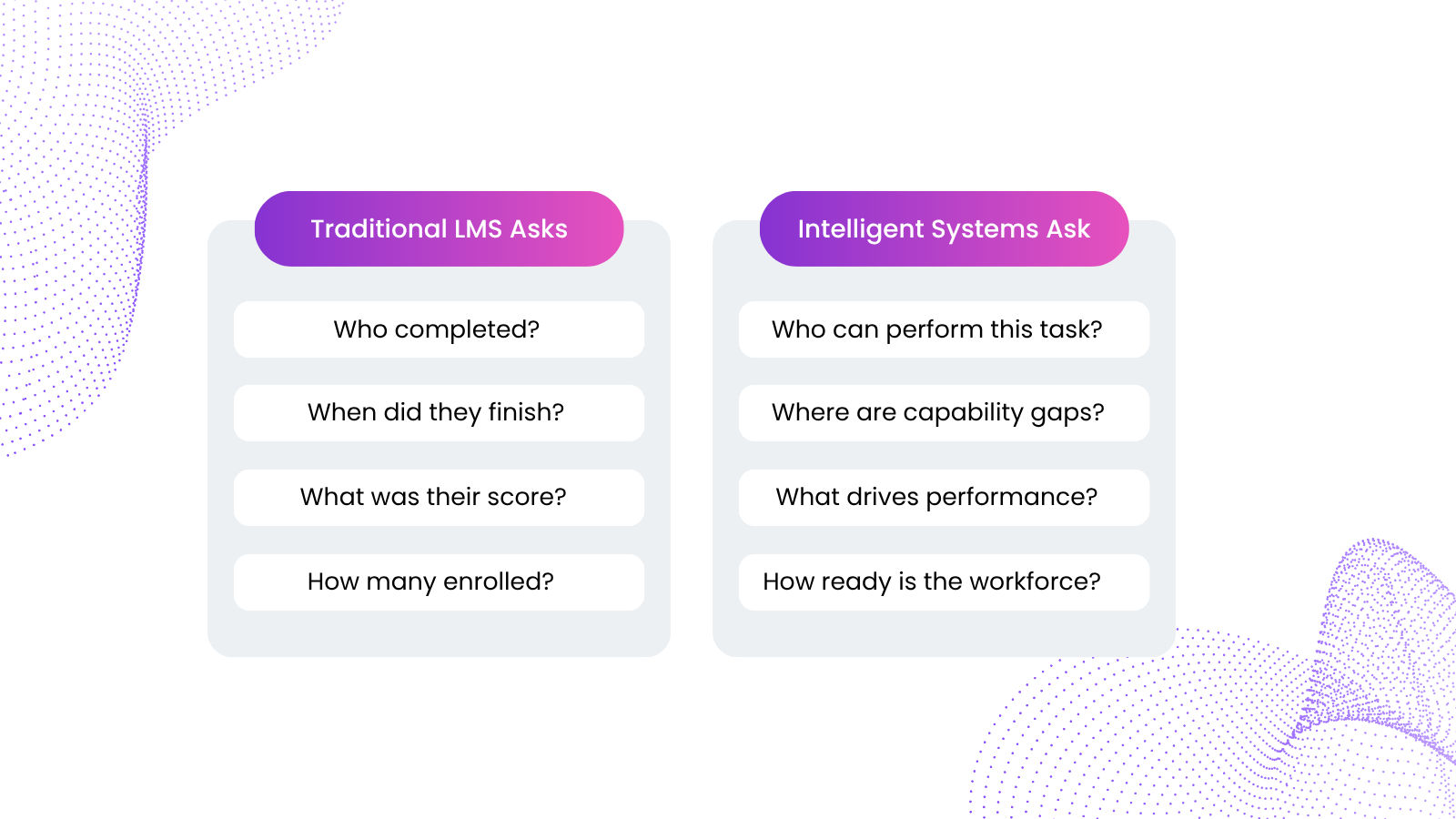
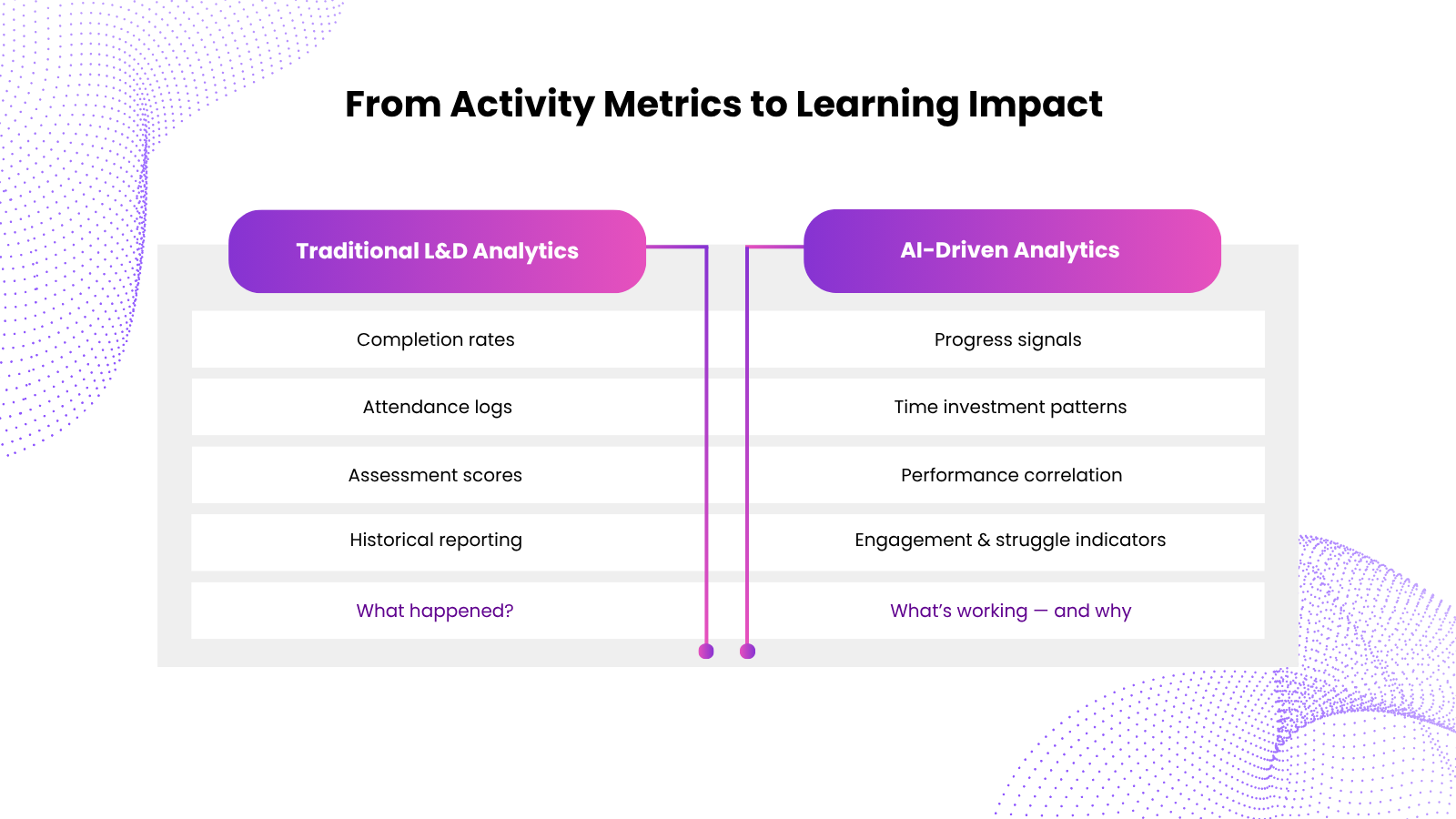
Conventional L&D analytics concentrate on Who finished a course? How much time did it take? What was their score? These indicators are helpful for tracking operations, but they don’t provide much information regarding application, readiness, or actual capability growth. 
 
The emphasis is shifted from action to impact via AI-driven analytics. Granular learning behaviours are tracked by contemporary platforms like Skillzen, which provide a far more comprehensive view of how learning occurs throughout the company. 
 
This includes thorough progress tracking that shows learners where they are in their journey in real time and identifies individuals who have accelerated or stagnated. Time investment analysis aids L&D in understanding how employees allocate their learning hours among skills and modules in addition to completion. Performance correlation shows which learning strategies produce the best results by linking assessment results with time spent. Engagement patterns show where drop-offs happen, which formats are popular, and when students are most engaged. Struggle indicators identify ideas or modules where workers require assistance before their performance suffers. 
 
This analytical depth turns unprocessed data into useful intelligence through AI in L&D.

Automation as a Multiplier for Decisions

Administrative efficiency is only one aspect of automation in L&D. Program scheduling, reminders, and enrolment management are useful, but cognitive support is where the real transformation occurs. 
 
Learning paths can be dynamically modified using AI and automation in response to student behaviour, engagement signals, and new skill gaps. When students struggle or become disengaged, interventions may be initiated automatically. Without human supervision, feedback loops run endlessly.  
 
Crucially, human expertise cannot be replaced by machines. By reducing cognitive load, it frees up L&D leaders to concentrate on strategy rather than coordination.

Converting Signals into Strategic Knowledge

The capacity of AI-driven analytics to link learning data with business context is one of its most potent contributions. It is possible to analyse learning behaviours, performance results, role evolution, and skill demand collectively rather than separately.  
 
L&D teams can confidently respond to strategic questions because to this integrated picture. Which skills are improving and which are stagnating? Where is the measurable impact of learning investment? As corporate priorities change, how should programs change?  
 
Learning transitions from a support role to a strategic partner in line with organizational goals when AI is integrated into L&D.

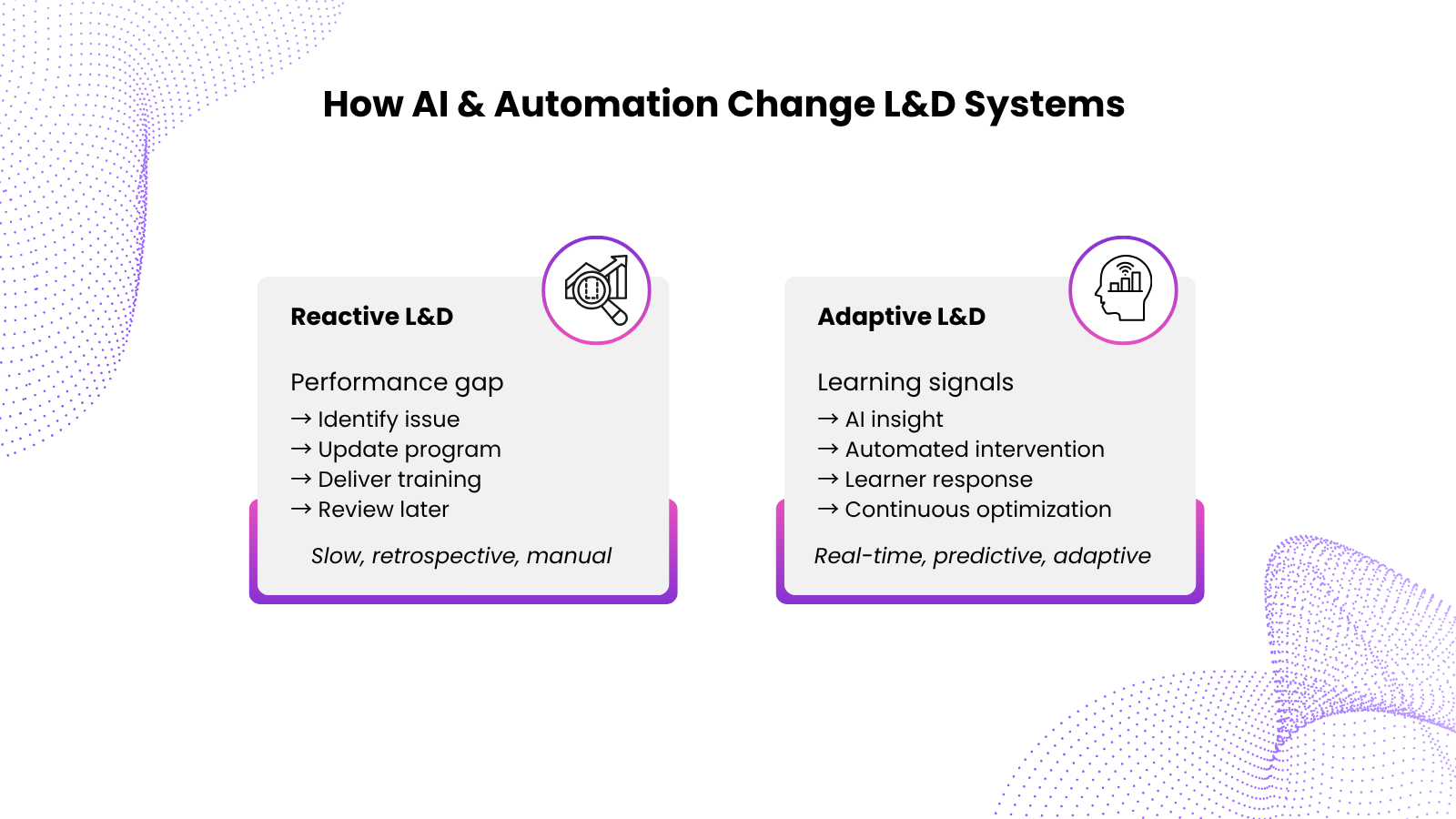
Systems: From Reactive to Adaptive

L&D systems react slowly in the absence of intelligence. Programs are changed on a regular basis, needs are determined after performance gaps emerge, and insights frequently come too late to affect results.  
 
Automation and AI make L&D systems more adaptable. They continuously learn from interaction and outcome data, optimize learning journeys, improve suggestions, and change with the workforce. Instead of reacting after change, learning systems start to react at its speed.

A New Role for L&D Leaders

The job of L&D leaders is changing in tandem with the development of AI-driven analytics. They are now more valuable in interpreting insight, forming strategy, and directing organizational competence than in managing content or programs. 
 
AI makes everything clear. Scale is provided via automation, and direction is provided by leadership.  
 
When combined, they make it possible to make better decisionsnot because people give up, but rather because they have more knowledge. 

Stronger Impact, Wiser Decisions

The goal of L&D transformation is not to substitute algorithms for human judgment. It involves using technology that can recognize trends, foresee requirements, and take large-scale action to supplement human decision-making.  
 
AI in L&D and intelligent automation are becoming crucial to making learning responsive, quantifiable, and in line with business objectives as firms manage continuous change. The product is an L&D function that is clever by design in addition to being efficient.

16 5

Why AI Implementation Needs Your Workforce: The Key to Decision Intelligence

Why AI Implementation Needs Your Workforce: The Key to Decision Intelligence

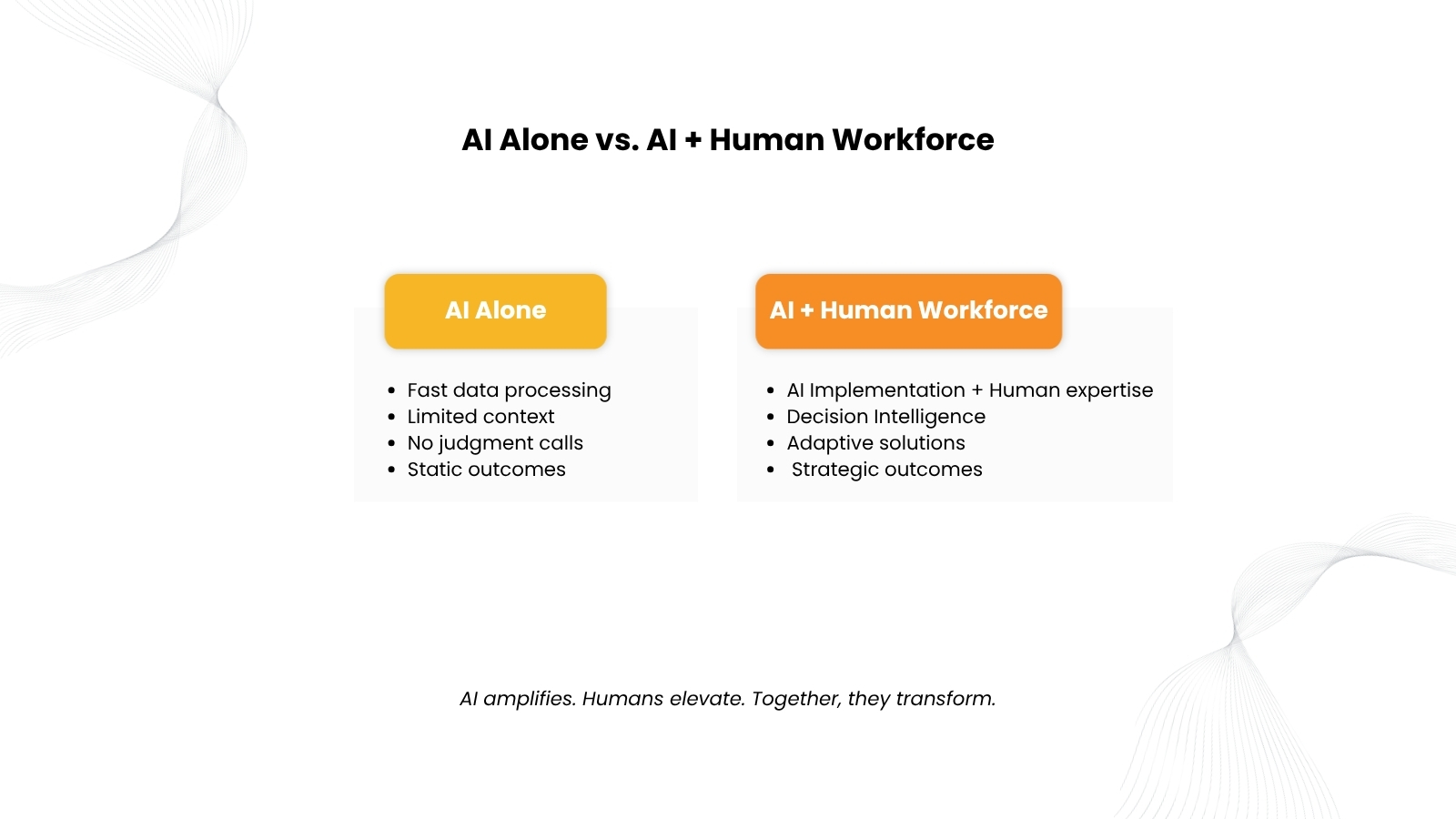
It is a common misconception that artificial intelligence is here to take the place of humans. As for the truth, AI Implementation not only requires your staff but also thrives because of it. Firms that can unleash decision intelligence, the kind of insight that produces actual, measurable outcomes, are the ones that are the most successful. These firms are the ones that blend the strengths of both employees and robots.

The Real Problem: Gap Between AI and People

Imagine an orchestra of the highest calibre. Without the conductor and musicians, the music is little more than noise, even though the instruments are of high quality and the written composition is flawless. It is the result of businesses concentrating solely on AI implementation and not caring about the people who are responsible for making it work. AI can process data quickly, but it is unable to comprehend context, form judgments, or motivate a group of people. Here is where the manpower you have available comes into play. To achieve decision intelligence, it is not only about having the appropriate tools but also about having the right people employing those tools.

The Key to Unlocking the Power of AI Implementation for Your Workforce

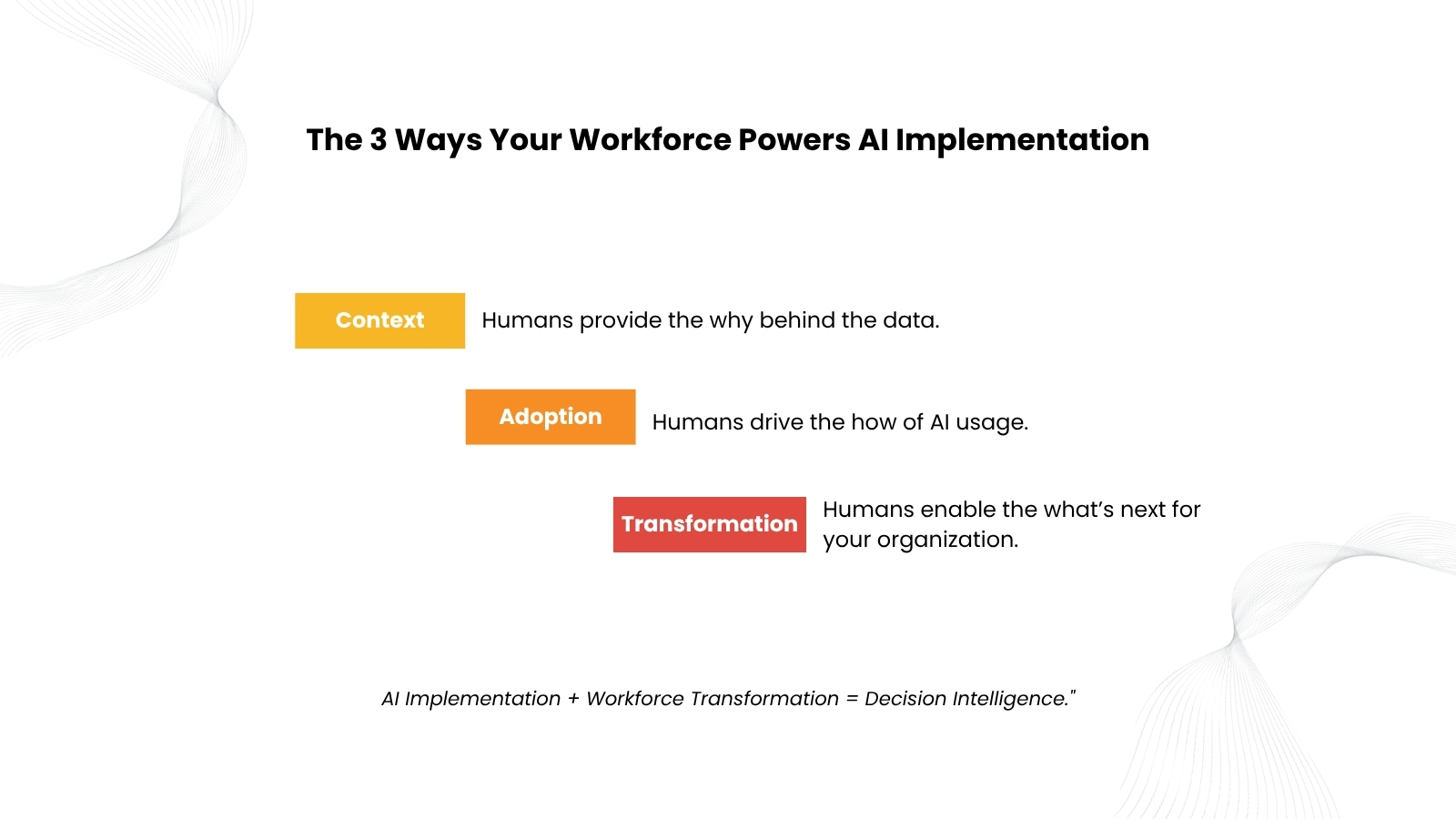
1. Humans Provide the Context

Artificial intelligence can crunch numbers and recognise patterns, but it is unable to explain why this is significant. Bringing the context, which includes expertise of the industry, insights from customers, and strategic thinking, that your team brings to the table, is what transforms raw data into decision intelligence.


2. Humans Drive Adoption

If your team does not make use of the best AI implementation in the world, it is pointless. Your workforce does not merely absorb artificial intelligence; rather, they advocate for its use. They determine use cases, improve processes, and make certain that the technology is in line with the requirements of the actual world.


3. Humans Enable Workforce Transformation

AI causes a change not only in the way you operate but also in who you are as an organization. Using AI in the appropriate manner, your workforce will be able to transition from manual jobs to high-value activities. Through the utilization of Decision Intelligence, they transform into strategists, innovators, and decision-makers, so enabling them to propel the company forward.


The Bottom Line

AI Implementation is about empowering your workforce and not replacing them. When you combine the speed and scalability of AI with the insight and intuition of your people, you unlock Decision Intelligence, the kind of strategic advantage that sets your organisation apart.

The question isn’t whether AI can work without your people. It’s how soon you’ll bring them together to create something extraordinary.

51

What Businesses Need: From AI-Powered Learning to Actual Skill Development  

What Businesses Need: From AI-Powered Learning to Actual Skill Development  

There is a measuring issue with enterprise learning. Dashboards turn green, modules are finished, and courses are delivered. However, performance stays the same, competence gaps continue, and the return on L&D investment remains elusive 
 
Effort is not the problem. It’s concentration. Instead of focusing on talent development, most firms are still optimizing for content delivery. This is the distinction between capability and activityfinishing modules and resolving issues, and systems that develop true competency and AI-powered training that automates material. 

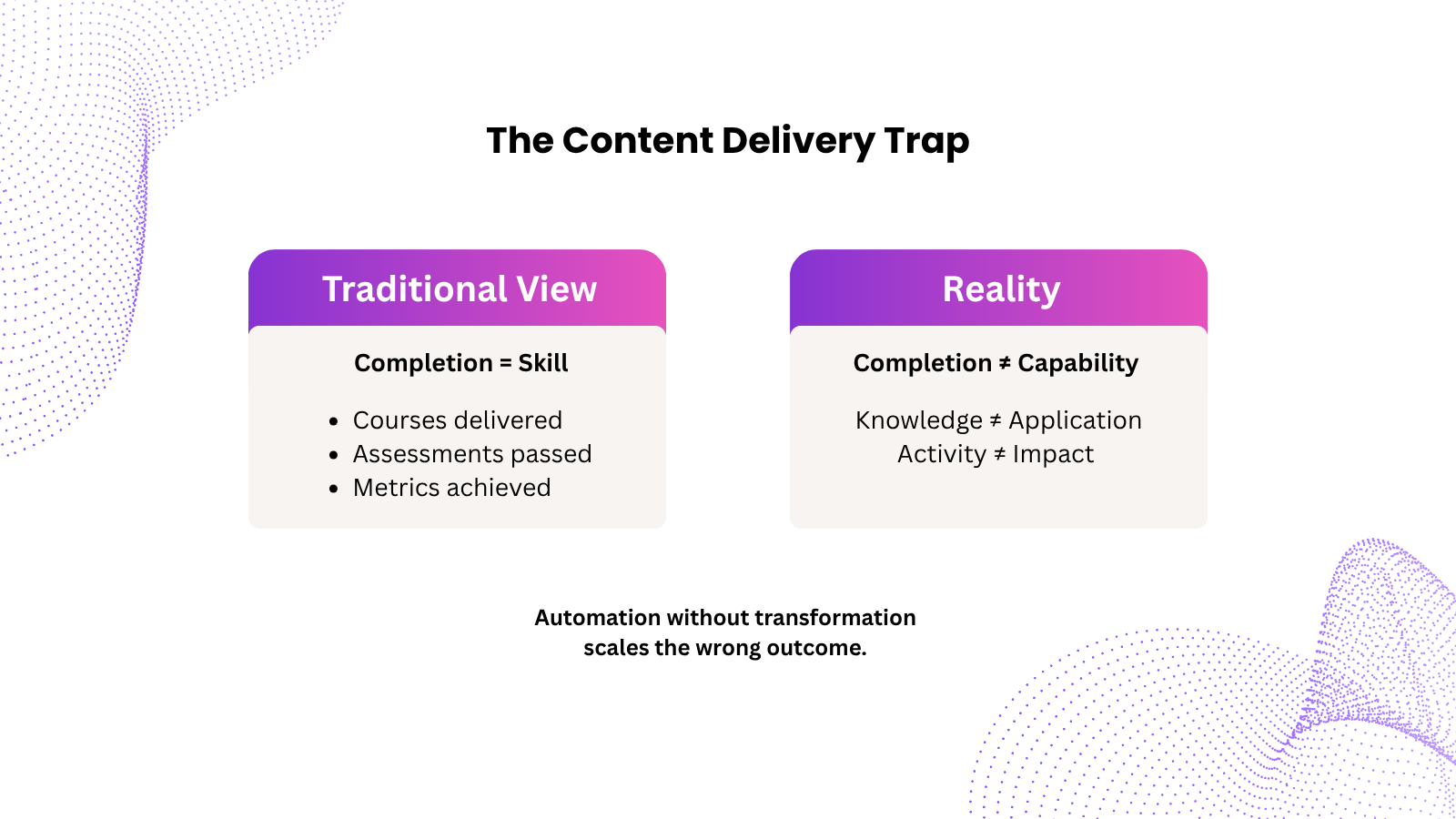
The Trap of Content Delivery

Conventional L&D presumes that finishing a course equates to gaining new skills. Based on this idea, organizations have long made investments in content libraries and completion measures. However, capability is not assured by completion. Workers may complete courses without being able to use the knowledge in the workplace.  
Platforms driven by AI have increased the speed and scalability of content. However, automation runs the risk of increasing activity rather than actual capacity if results are not reconsidered.

What's Really Needed for Skill Development

The way real skill development works is different. It begins with capability rather than content. Now, what can someone do? What should they do next? What separates the two? 
This is addressed by four essential components that content delivery overlooks in a truly AI-powered skill development platform.  
The first is skills mapping, which links positions to necessary competencies and makes development specific rather than general. Second, competency tracking that assesses students’ abilities rather than their intake. Third, adaptive progression, which modifies format, intervention, and difficulty according to demonstrated competence. Fourth, application validation that verifies abilities transfer into performance on the job.  
The design, implementation, and evaluation of learning systems are altered by this transition from delivery to development.  

The Significance of Skills-Based Learning Management

Skills-based learning management, where every choice is based on capabilities rather than curriculum, is the way of the future for organizational learning. Organizations ask, “Who can perform this task?” rather than, “Who completed this course?”  
 
This method changes the way that education is organized. Skills, not subjects, are the foundation of pathways. Competence, not memory, is measured by assessments. Learners’ abilities, not the amount of material they have completed, determine their progress.  
 
Workforce adaptability is also made possible by skills-based learning management. Organizations may redeploy talent more quickly, spot capability gaps earlier, and upskill precisely rather than haphazardly when skills are visible and validated.  
 
However, infrastructure is needed for this. Skills intelligence was not intended for legacy LMS platforms. Although they monitor enrolment and completion rates, they do not have the capability architecture required for contemporary workforce development.
What Makes an AI-Powered Platform for Skill Development Unique

A platform for skill development driven by AI does more than just expedite course delivery. It has a distinct perspective on learning.  
 
Instead of relying solely on self-evaluation, it uses performance signals to identify skill gaps. Based on role, context, and proven competence, it tailors learning paths. Instead of using multiple-choice questions, it uses application, practice, and feedback to validate capability.  
 
It is crucial because it links education to economic results. Which abilities influence performance? Where is capability increasing or remaining unchanged? When company demands change, how should development priorities change as well?  
 
Instead of responding to course requests, this intelligence allows L&D to function strategically, coordinating skill development with company objectives. 

From Capability Outcomes to Activity Metrics

A change in measuring is necessary to move from content to skill development. Readiness, proficiency, and performance impact are more important than completion rates and engagement scores.  
 
Training systems with AI capabilities are excellent at monitoring activity. Capability is monitored via skills-based learning management systems. The distinction establishes whether learning creates genuine value or only fulfils compliance requirements.  
 
Businesses that make this change claim improved worker agility, quicker time-to-competency, and better insight into personnel preparedness. They go from overseeing classes to developing talents, from monitoring finishes to confirming abilities.

The Way Ahead

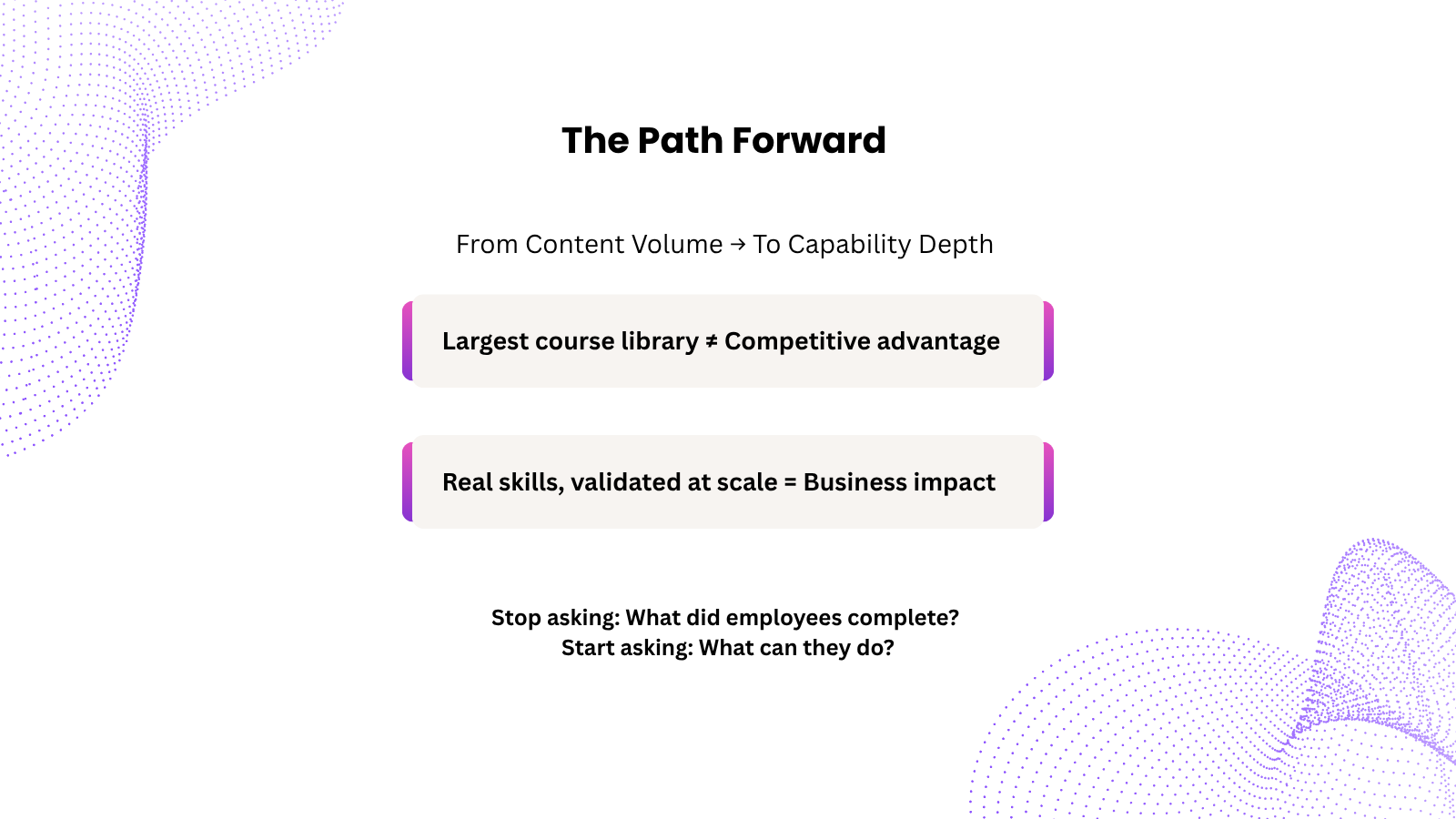
The issue of enterprise learning is the challenge of capability, and no longer that of content.  
Organizations that leverage AI-powered skill development platforms to generate and certify genuine talents at scale will take the lead, not those with the biggest course libraries.  
Better content delivery is not the way of the future for L&D. Performance and commercial impact are driven by quantifiable skill development.

50 2

The Pedagogical Framework for Adaptive AI Education 

The Pedagogical Framework for Adaptive AI Education 

Instead of truly transforming learners, corporations have spent decades investing in learning technologies designed to deliver knowledge. However, consuming alone does not result in true learning. It is brought about by application, experience, and cognition. 
 
Every pupil is not taught by a great instructor in the same way. To ensure that every student can comprehend, apply, and develop, they observe how each learner thinks, modify their strategies, reinforce concepts when necessary, and reconfigure their approach. They adapt their instruction in real time to ensure that genuine learning occurs because they have an innate sense of who needs more time, who needs a challenge, and who needs a different explanation. 
 
This function is now mirrored by AI, which serves as a highly customized instructor for each student. However, AI in learning and development adapts continuously and individually, using the same pedagogical theories of learning that guide effective teaching, but delivering them with far greater precision, consistency, and scalability than a human teacher overseeing a room full of diverse abilities. 
 
The pedagogical theories of learning that enable intelligent learning are broken down in an organized manner below, along with how AI enhances each one.

Layer 1: Learning Theories: Knowing How People Learn

The cornerstone of any instructional design is learning. They describe how learning occurs, how it is kept, and what motivates performance.

Learning Through Experience: The Influence of Action

Kolb’s experiential learning cycle serves as a reminder that knowledge develops in four stages: exploration, conceptualization, reflection, and experience. Managing actual projects is how you learn project management, not by reading about it.

These days, AI in learning and development makes large-scale experiential learning possible by:

  • Labs online
  • Situation-based difficulties
  • Branching simulations that adjust to the choices made by learners
By simulating real-world outcomes, these environments guarantee active learning rather than passive learning, which is in perfect harmony with fundamental educational theories of learning.

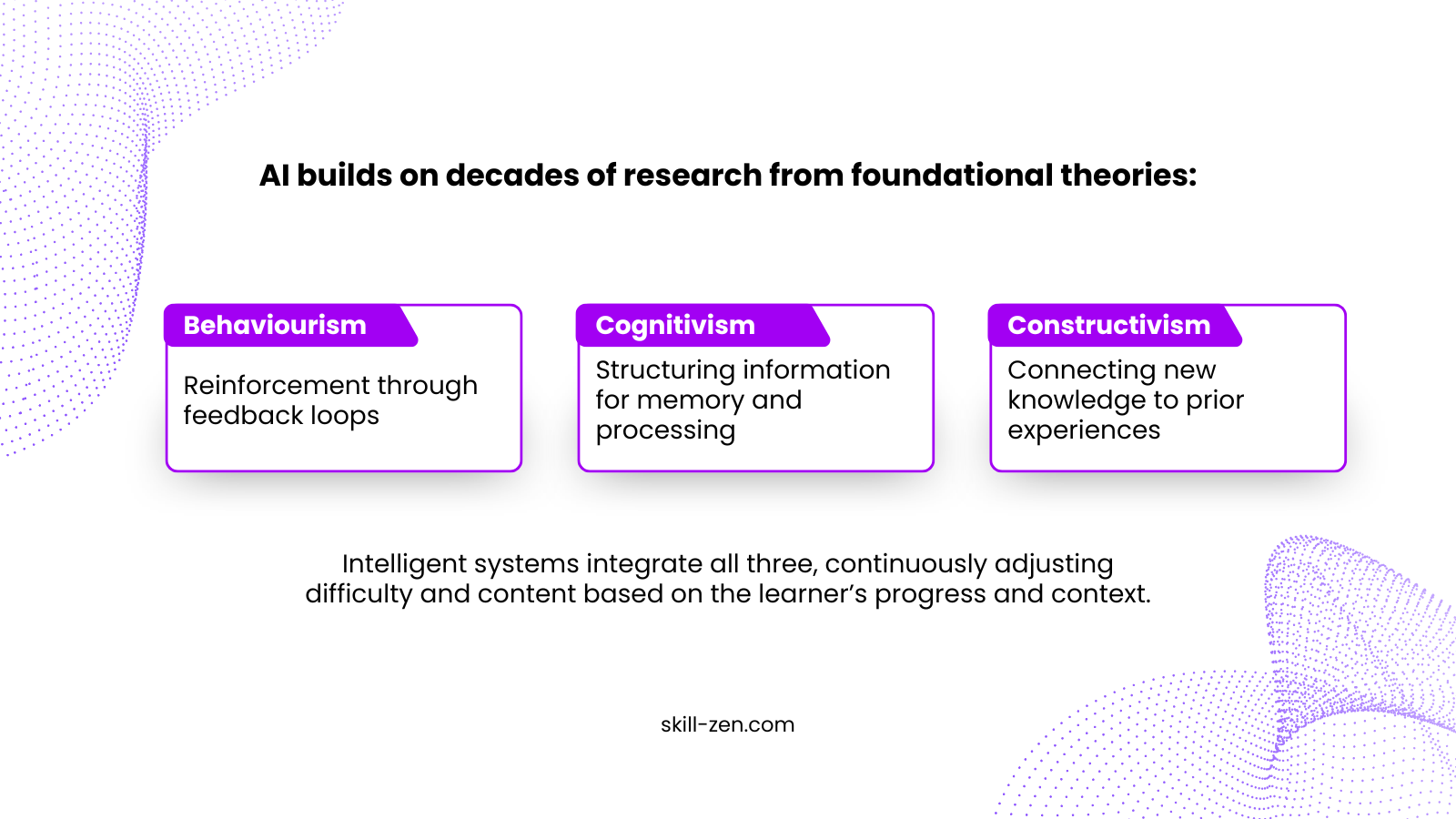
Constructivism, Cognitivism, and Behaviourism: The Three Main Frameworks

By strengthening learning, organizing knowledge, and expanding on prior knowledge, AI combines constructivism, behaviourism, and cognitivism.

For instance, a system that provides additional practice when you’re having trouble, goes over fundamental concepts again when necessary, and unlocks more difficult tasks when you’re ready.

Layer 2: The Architecture of Learning through Instructional Design Models

Creating experiences that are in line with human cognition comes next after we have a better understanding of how learning takes place. Instructional design models are crucial in this situation. 
 
Systematic and Continuous Improvement or ADDIE  

 
The foundation of instructional design has long been ADDIE (Analysis, Design, Development, Implementation, Evaluation). By transforming Evaluation into a real-time feedback engine, AI in learning and development revolutionizes ADDIE. AI continuously evaluates learning efficacy and instantaneously modifies content rather than waiting for post-training assessments.  
 
Climbing the Cognitive Ladder with Bloom’s Taxonomy  

 
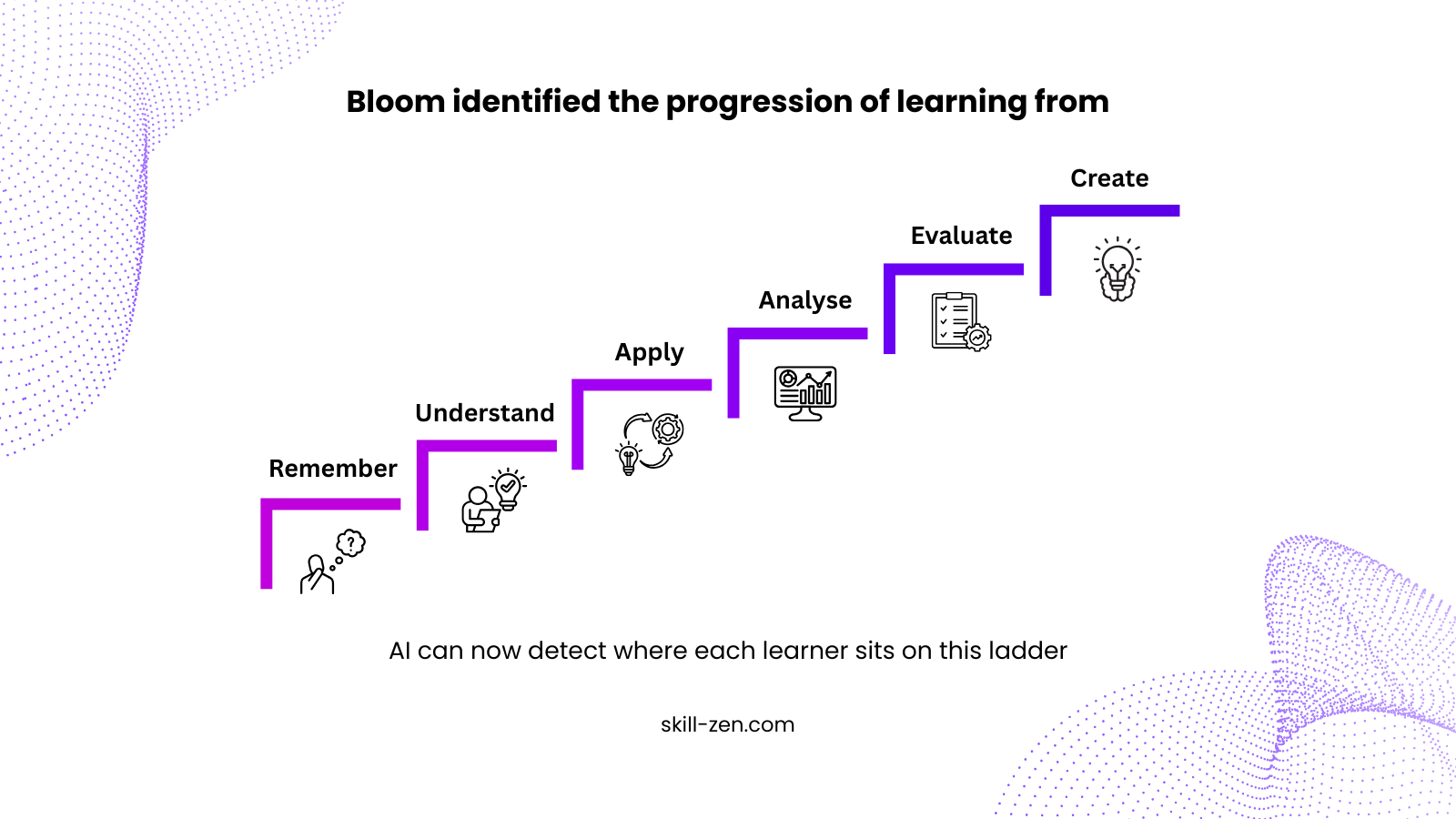
AI matches learning challenges to a learner’s cognitive level using Bloom’s Taxonomy.  
 
An example would be an instructor who, once you’ve learned the fundamentals, gives you more difficult, analytical problems or goes over the principles again when you find it difficult to apply a concept. 

This respects pedagogical theories of learning while avoiding boredom and overwhelm.  
 
Gagné’s Nine Events: Organizing the Educational Process 
 
Gagné’s nine events describe the optimal flow of instruction, from grabbing learners attention to improving their recall. Each event is personalized by AI, which determines when students require further examples, when they are prepared to progress, and what promotes long-term memory retention.  
 
Problem-Centred Learning: Merrill’s First Principles  
 
Merrill places a strong emphasis on finding solutions to practical issues. Here, AI shines by selecting tasks that correspond to ability levels and modifying difficulty in response to performancea crucial role AI plays in learning and growth. 

These hazards indeed exist, but they also present opportunities. Enhancing credibility, lowering regulatory exposure, and establishing firms as reliable partners are all possible with strong DPDP compliance. The following infographic shows how compliance can become advantageous rather than obligatory. 

Layer 3: Learning Techniques: The Real Process of Learning

Learning strategies influence how students engage with experiences and content.  
 
Microlearning: Mastery in Tiny Steps  

 
Bite-sized content fits modern attention spans and increases retention. AI reflects contemporary educational theories of learning by anticipating when a student needs a concept and delivering microlearning precisely on time.  
 
For instance, if a learner consistently falters on a safety compliance issue, the AI immediately plays a 60-second refresher video on the subject before they proceed.  
 
Problem-Based Learning: Development via Difficulty  

 
Problem-based learning immerses students in real-world situations rather than starting with theory. AI creates a clear route from bewilderment to mastery by personalizing each task.  
 
Flipped Classroom: Putting Participation First  
 

Students use interactive time for application and consume content on their own. Another effective application of AI in learning and development is the analysis of pre-work and customization of activities to bridge knowledge gaps.  
 
Spaced Repetition: Overcoming the Curve of Forgetting  
 
Ebbinghaus demonstrated how quickly information fades in the absence of evaluation. AI pushes information into long-term memory by scheduling spaced repetition according to each learner’s forgetting curve.  
 
Adaptive Learning: The Highest Level of Customization  
 
All of these methods come together in adaptive learning. Based on performance in real time, AI modifies delivery, tempo, sequence, and difficulty. A fundamental tenet of all pedagogical theories of learning is that no two learners travel the same path because no two learners are alike.  
 
Pedagogically Intelligent AI’s Future  
 
The next development in education is the result of combining intelligence with pedagogy. AI transcends its use as a delivery method. It turns into an adaptable companion that enhances the learning process overall, increases capacity, and speeds up mastering. Learning will continue to change from a static process into a dynamic, customized environment that changes with each student as AI in learning and development develops. 

13 5

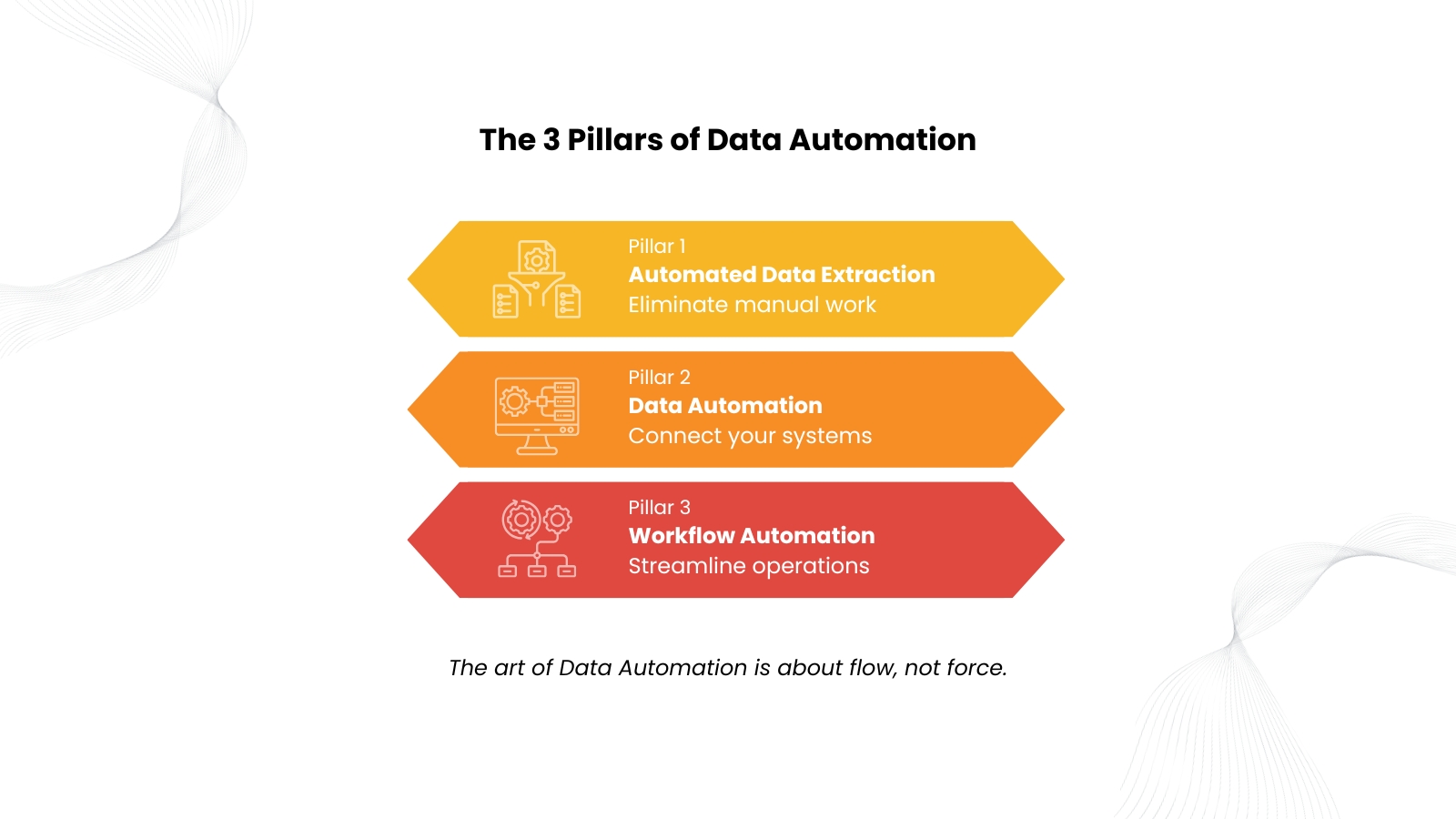
The Art of Data Automation: How to Streamline Operations Without Chaos 

The Art of Data Automation: How to Streamline Operations Without Chaos

The amount of data that is present in emails, PDFs, spreadsheets, and shared files is overwhelming every firm in the modern world. You have the resources, the teams, and the desire to make things better, but for some reason, the more you try to arrange everything, the more chaotic it seems to be. The data is still being entered manually by the teams. Due to the absence of certain information, decisions are delayed, and despite the presence of all the technology, your activities appear to be slower rather than faster.  
For the truth of the matter, the issue is not the data itself; rather, it is the absence of structure, and here is where the skill of data automation comes into play. 

The Lack of Flow problem

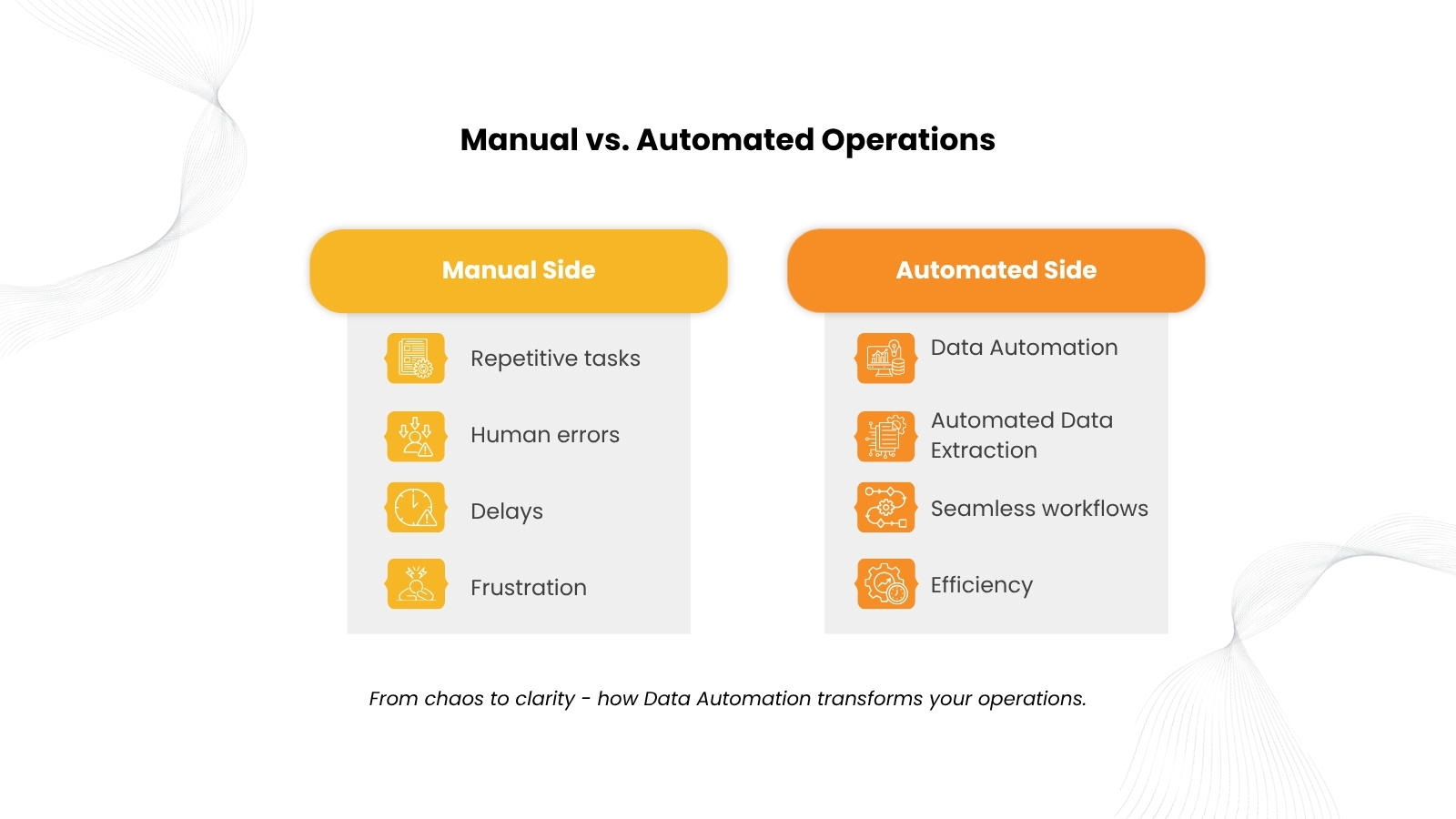
When a river flows easily, it fuels the whole ecosystems, but when dammed up, it creates stagnation, inefficiency and frustration. That’s what is going on in your operations today. There is data but no flow. Without Data Automation, your teams are caught in a cycle of manual work, mistakes, and delays. 
This is where Data Automation makes the difference. It doesn’t just move information from here to there; it modifies how your operations run. 

How Data Automation Streamlines Operations Without Chaos

  1. Remove the Menial Tasks

Using automated data extraction, your team is freed from the stress of their tasks. The processing of invoices, documents, and reports is done automatically, which enables your staff to focus on the most important aspects of the situation. Not only will there be no more manual entry, but there will also be no more wasted hours. 

  1. Join the Dots

Through the process of data automation, not only is data extracted, but it also develops links between the data. Because information is seamlessly transferred from one system to another, it is ensured that your teams will have access to the necessary data at the appropriate moment. Both silos and seeking will be eliminated in the future. 

  1. Workflow Automation in Action

Take into consideration a scenario in which invoices can be authorized without the need for manual checks, reports can be generated without the involvement of humans, and decisions can be taken in a short amount of time. 

Workflow automation has the ability to do this. Keeping a steady tempo is not the only factor to consider. Accuracy, consistency, and tranquillity are also important. 

The Bottom Line

You do not have to make your operations chaotic in order to accomplish your goals. By utilizing Data Automation, it is possible to change chaos into clarity, manual labour into efficiency, and irritation into concentration. All these transformations are achievable.  
The question of whether you are able to simplify your procedures is not relevant to the discussion at hand. It is the promptness with which you will bring about the desired outcome. 

49 2

What Distinguishes a Traditional LMS from an AI-Native Learning Platform?

What Distinguishes a Traditional LMS from an AI-Native Learning Platform?

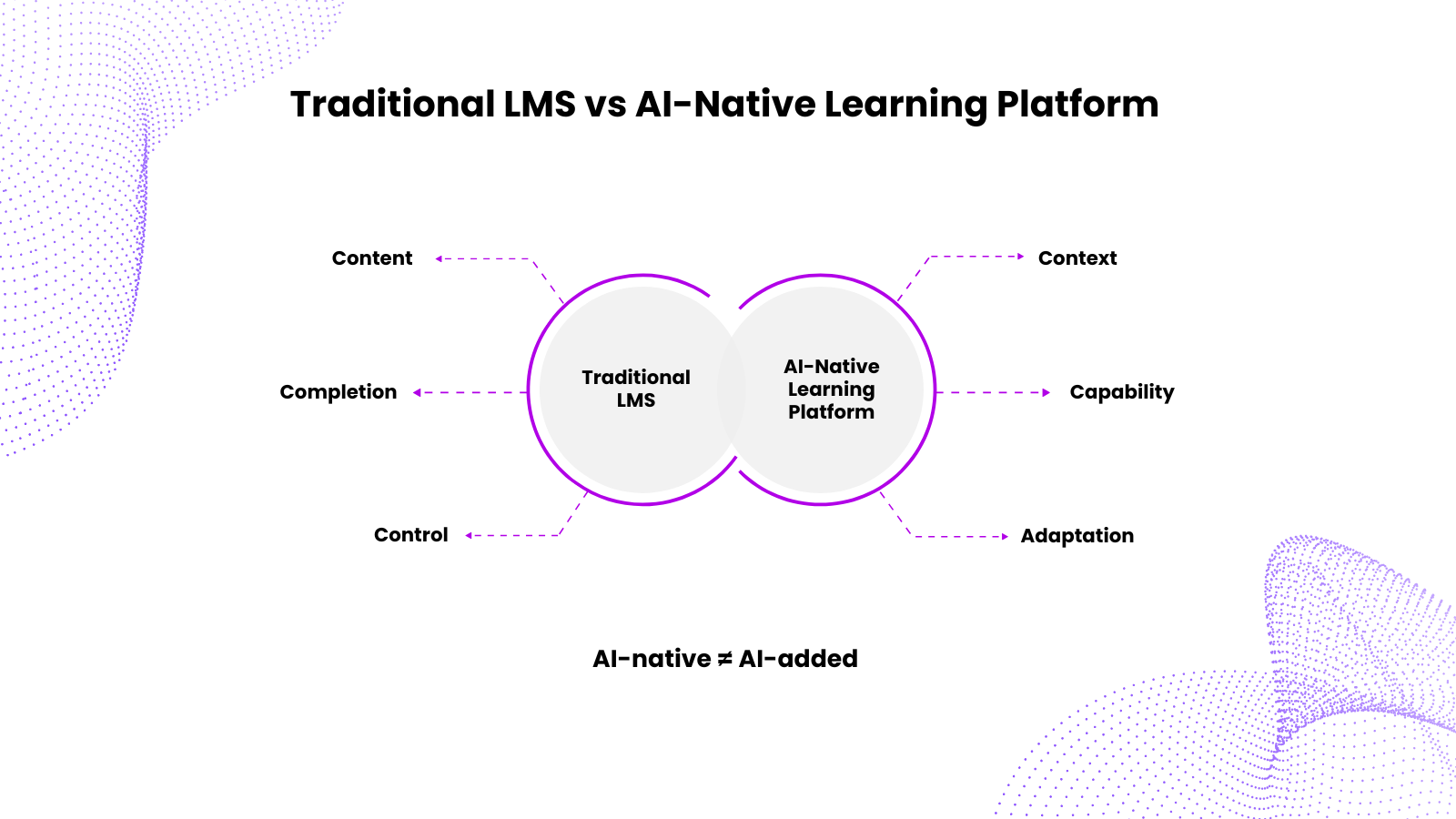
We are reaching a turning moment in enterprise learning. Learning management systems promised control, consistency, and scale for many years. They provided structure, but not flexibility. Today, businesses are facing a harsh reality which is, that learning systems built for content management cannot keep up with capability development as jobs change more quickly than curricula and abilities deteriorate more quickly than they can be taught. 
 
This is where the transition from a conventional LMS to an AI-native platform startsnot as a feature enhancement, but rather as a fundamental rethinking of how learning functions within the company.

Managing Education to Facilitating Performance

Conventional LMS systems were designed to address operational queries such as who finished what? At what score and when? These methods are effective for systematic training, onboarding, and compliance, but modern Enterprise solutions demand learning that adapts to individuals, contexts, and real work. 
 
Courses are not the beginning of an AI-powered platform. It starts with the learner, their role, their goals, and the problems they are trying to solve. Learning is no longer an event to be scheduled but a continuous process embedded into daily work.

AI-Added Is Not AI-Native

Many platforms today claim intelligence because they’ve added recommendations or chatbots on top of legacy architectures, but an AI native platform is designed with intelligence at its core. AI is the operating system, not just a layer.

This distinction is important. Data from learner behaviour, performance signals, and feedback loops is always flowing in AI-native systems. As the learner gains knowledge, so does the platform. This makes it possible for enterprise solutions to transition from static paths to real-time, adaptive learning experiences.  
 
An AI-powered platform anticipates demands, finds gaps, and dynamically modifies learning methodologies in addition to responding to inputs.

Learning with a Contextual Understanding

Learning rarely occurs in isolation in real-world organizations. It takes place in the face of uncertainty, pressure, and shifting priorities, because they view learning as being disconnected from context, traditional LMS platforms struggle in this area.  
 
Situational learning is understood by an AI-native platform. It detects whether a student is experimenting, having difficulty, using, or becoming proficient in a skill. This makes learning a performance enabler rather than a distraction by enabling micro-interventions, reflecting prompts, and just-in-time support.  
 
This contextual intelligence is essential for contemporary enterprise solutions. It guarantees that learning is in line with company objectives rather than just learning metrics. 

From Capability Systems to Content Libraries

The shift away from content fixation is one of the most significant changes brought about by AI-native platforms. Although content is still important, it is no longer the focus 
 
An AI-powered platform emphasizes capabilities, such as what people can accomplish, rather than what they have eaten. Through practice, feedback, and interaction, skills are deduced, confirmed, and strengthened. The platform gradually creates a dynamic skills graph that is specific to each function and learner.  
 
Enterprise solutions can assess learning effects in terms that are important, such as preparedness, confidence, and performance on the job, thanks to this capability-first approach. 

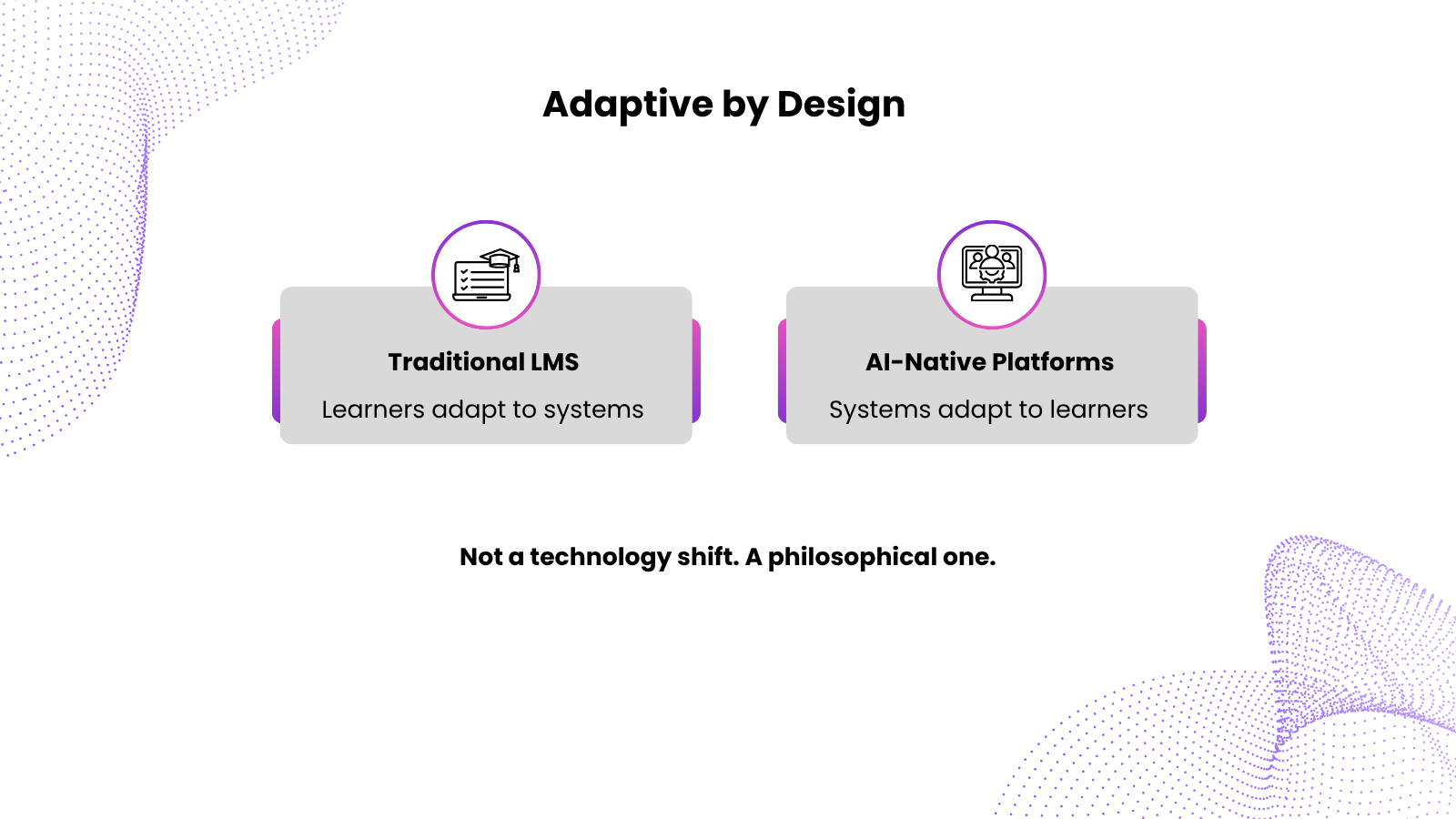
Enterprise Learning's Future Will Be Adaptive by Design

Learning systems must change from being passive repositories to becoming cognitive partners as AI transforms the workplace. Human judgment and instructional design are not replaced by an AI-native platform. By managing complexity at scale, it magnifies them.  
 
An AI-powered platform’s true potential is in its capacity to bridge intent and execution, coordinating personal development with corporate objectives. This is a need, not a luxury, for businesses managing ongoing change.  
 
In the end, there is no technological difference. It is philosophical. Conventional LMS solutions require students to adjust to the system. In the coming years, enterprise learning will be redefined by AI-native platforms that adjust the system to the learner.