Every organisation today is digitising its documents increasinglyfrom digital archivesto PDFs and scans. Leaders celebrate the move to a “paperless” office, and teams finally have access to files at their fingertips. For a portion of time, it appears to be progress. Then the true picture emerges. Documents are still hard to find. Hours are wasted by teams while they look for the appropriate version. Unstructured files contain vital information that is buried deep inside them, which causes decisions to be delayed. Although the digital transformation has been completed, the company has not become any more intelligent. The truth is, Digitization doesn’t equal intelligence. Therefore, this is the point at which the illusion of the “paper trail” is destroyed.
The Real Problem is the Lack of Meaning, not Paper.
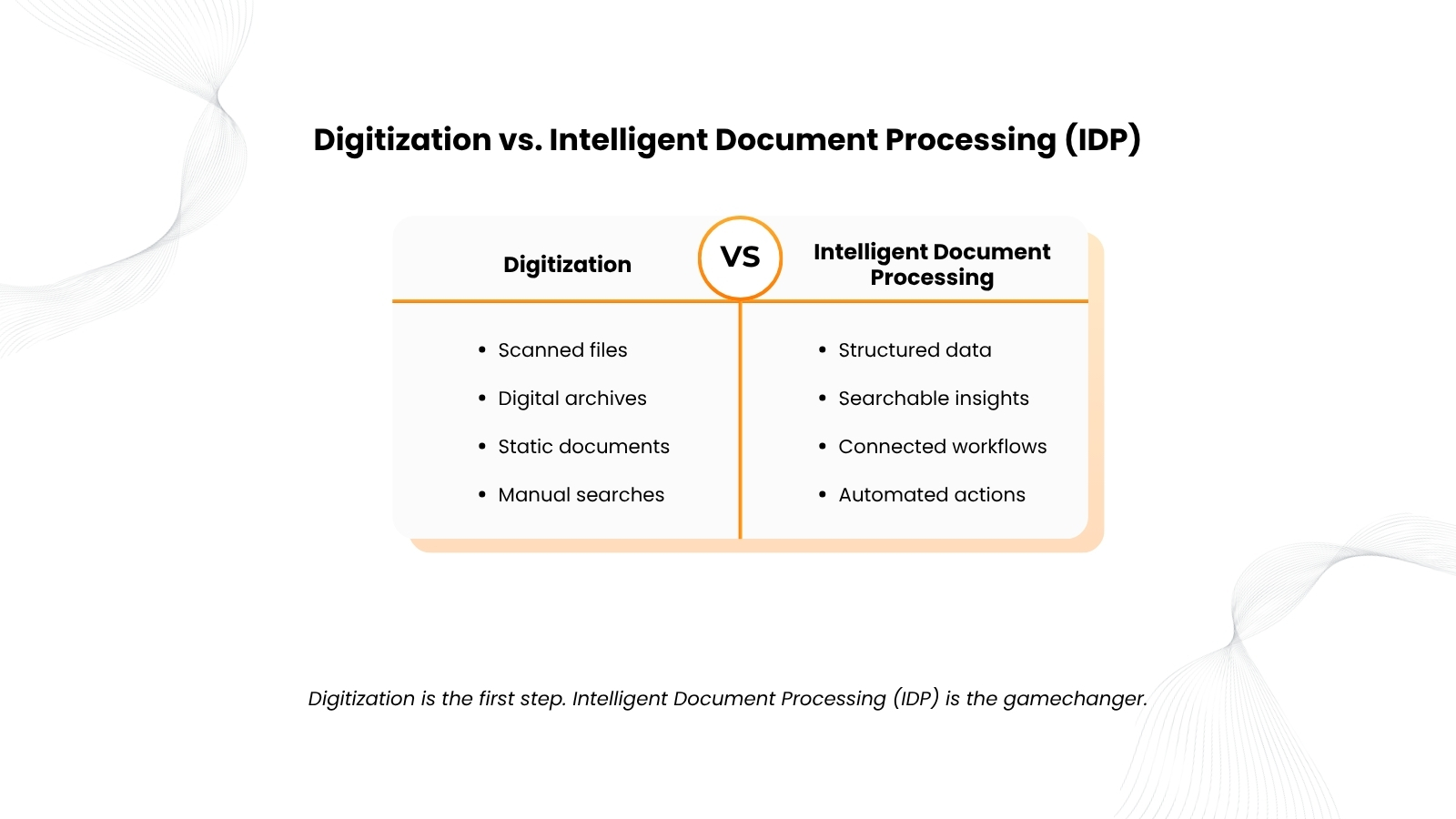
Take into consideration a library in which every book has been digitised and uploaded to a computerised database. The books are there, but without titles, authors, or categories, they’re effectively useless. This is what occurs when businesses are entirely focused on digital transformation without taking into consideration what else may occur in the future. Intelligent Document ProcessingIDPisn’tjust about turning paper into pixels. The goal is to transform those pixels into insights that can be put into action. You may think of it as the distinction between a digital archive and a system that is intelligent, searchable, and connected.
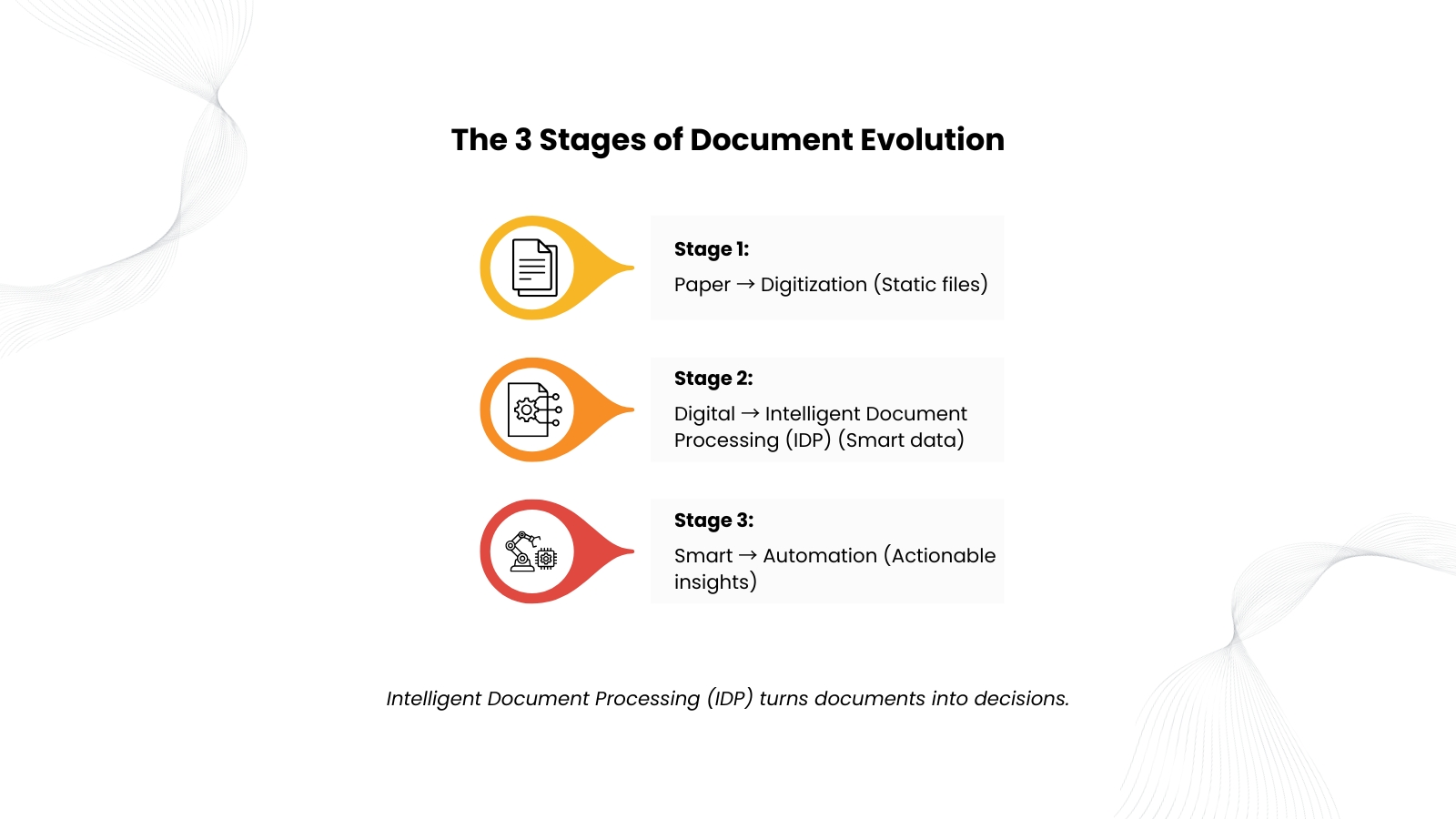
Paper is converted into digital files through the process of digitisation, but Intelligent Document Processing IDP transforms that digital data into intelligent assets. It extracts meaning, tags documents with context, and links them to workflows. In an instant, your data is not only being stored, but it is also performing tasks for you.
From Searching to Finding
With digitisation, you can store documents, but with Intelligent Document Processing IDP, you can find them instantly. There will be no more time wasted or manual searches. Just the right information at the right time.
From Manual to Automated
Intelligent Document Processing IDP) minimises the amount of effort, while digitisation reduces the amount of paper. Self-directed invoices are sent out. Contracts flag risks automatically. Insights are generated by reports without the use of human input. Instead of chasing after data, your team focuses on utilising it.
The Bottom Line
Simply undergoing a digital transition is the initial step. The real power comes when you move beyond digitisation to Intelligent Document Processing IDP. This is the element that differentiates a digital archive from a system that is intelligent, linked, and capable of taking action. The question that must be answered is notwhether you digitised your documents.It’s a matter of how quickly you can make them intelligent.