Leadership may relax knowing the company is “compliant” after your compliance team completed another round of instructor-led learning sessions with 95% attendance and completion.
Three months later, an audit finds that staff workers cannot remember basic policies, resulting in a regulatory breach that costs millions of dollars. Instructor-led learning and AI-only solutions that value efficiency over human contact cannot solve enterprise-scale compliance training. Companies that successfully conduct compliance training in 2026 mix methods rather than choosing one.
Why instructor-led learning fails to ensure compliance
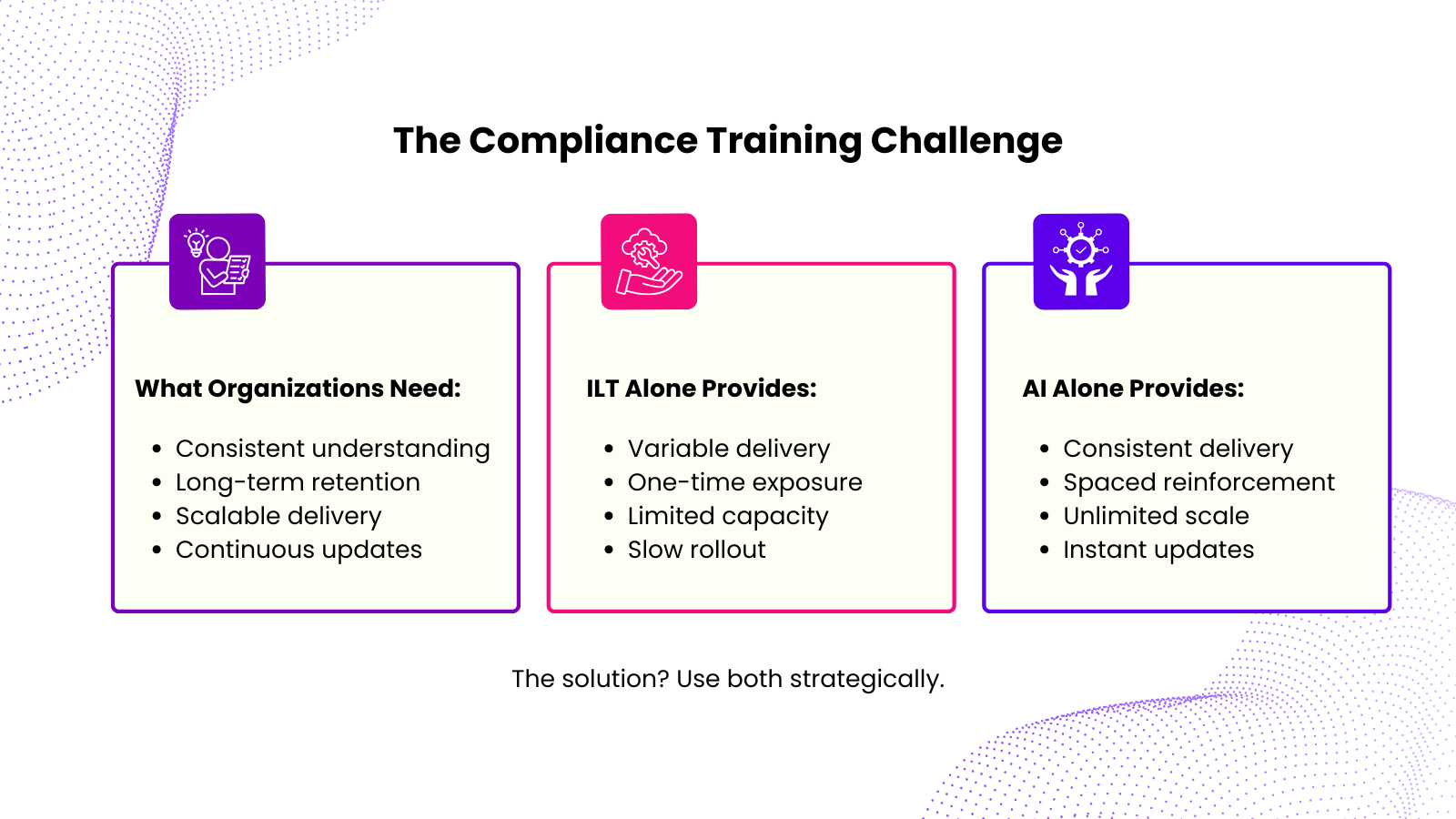
Instructor-led classes are beneficial. Peer chats about real circumstances, skilled facilitators who handle tough issues, and accountability-fostering relationships. Ethics, harassment prevention, and crisis management are too complex for videos. Most compliance training programs merely teach once, assess personnel, and have leadership sign off. Research shows that 70% of material is forgotten within days without reinforcement, thus when audited, employees recall the training but not what they learnt. Compliance training at scale is one of the biggest issues for traditional instructor-led learning sessions. The scale issue makes it impossible for organizations with distributed workforces to gather everyone at once. Compliance training is a logistical nightmare because instructor-led sessions are scheduled across time zones, languages, and locations, putting critical updates in a training backlog for months while the organization’s operations are at danger. There is also the consistency gap, where facilitators highlight different points, one session hurries through case studies, and geographical disparities in delivery contribute to varied comprehension of universal policies. Variability creates liability when compliance depends on consistent information.
Why AI-Only Compliance Education Fails
AI-based LMS platforms solve the scalability problem by learning thousands of workers in many languages and locations, tracking completions, producing reports, and instantly updating content as requirements change. AI-only compliance training has its drawbacks because employees dealing with actual compliance issues must ask “what if” questions that algorithms cannot predict, complex ethical scenarios require human discussion rather than multiple-choice questions, and cultural nuances in harassment or discrimination require facilitators who can handle delicate conversations with context and empathy Without responsibility or human engagement, compliance training becomes a checkbox exercise that prioritizes tasks over learning. Pure digital compliance training systems also struggle with engagement, with employees clicking through lessons to finish rather than learning policies.
Effective Model: Strategic Integration
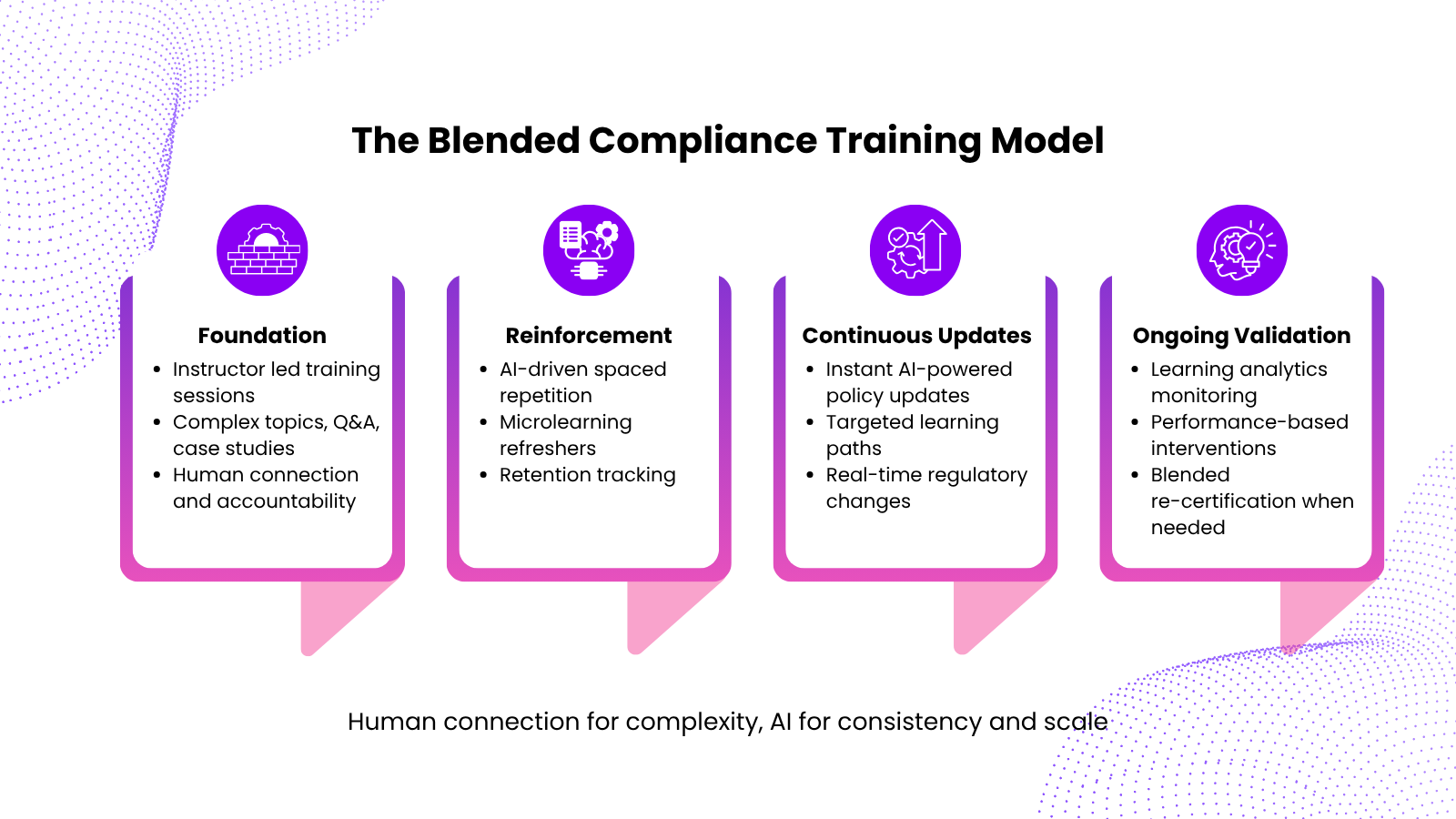
The breakthrough is using instructor-led learning sessions for foundation and complexity on topics like ethics frameworks, investigation procedures, and crisis response protocols, where nuance matters and questions vary widely and human facilitators establish baseline understanding and accountability that pure digital delivery cannot match. Eachone’s strengths are employed with AI. After basic instructor-led learning sessions, AI-Based LMS platforms reinforce skills through microlearning modules that provide brief refreshers before high-risk activities, spaced repetition that keeps policies current without another classroom session, and learning analytics that determine who is retaining information and who needs intervention before compliance risks arise. AI handles rapid updates throughout the organization when rules change, allowing LXP platforms to incorporate new needs without laying off thousands of personnel. Instructor-led learning sessions can only discuss complex changes.
This in Practice
In this blended model, new hires attend instructor-led learning sessions on core policies like harassment prevention, data privacy, and ethics so facilitators can establish culture, answer questions, and create personal accountability within 48 hours. AI then reinforces skills through short scenario-based questions, policy refreshers, and progress tracking. When regulations change, AI-based LMS platforms deploy updates immediately through adaptive learning paths so affected employees receive targeted modules within hours rather than months. Complex changes that require interpretation still receive instructor-led learning, but only for those directly affected. Learning analytics show which departments have retention gaps, which topics need reinforcement, and who’s at risk before they become a compliance issue, so L&D can schedule targeted instructor-led learning sessions according to data rather than annual requirements. This creates compliance training that scales without sacrificing depth, maintains consistency without losing human connection, and allows ongoing learning without coordination issues.
Infrastructure that allows it
This model requires technology designed for integration rather than replacement, where modern LXP platforms track who attended in-person sessions and automatically trigger reinforcement sequences based on what was covered. The system organizes instructor-led learning just when complexity requires it and handles everything else through intelligent automation. It remembers when policies were last reviewed, which employees need refreshers, and where knowledge gaps are growing. This foundation allows compliance training programs to influence people’s thinking and behaviour and reduce millions in violations.
The Non-Choice
Still wondering whether to utilize instructor-led leaning or AI for compliance training? You’re on the wrong track. The better question is, how do we use both strategies optimally? Not selecting sides is the answer. Compliance training should respect human and technological strengths. When individuals need to discuss, argue, and acquire genuine understanding, use instructor-led learning. When they need to stay sharp, recall what matters, and keep up with changing laws, use AI.