The dashboard for your learning platforms is full. Completion rates reached 92%. The average involvement time appears to be high. Enrolment in the course is now open. “Are we ready for the transformation?” asks the leadership. The answer isn’t there when you scroll through the data. This is because conventional L&D measurements were created for a different time, because it was simple to monitor, as they measure activity. Clicks, logins, and completion. However, tracking activities doesn’t reveal whether your employees can execute, adapt, or perform when it counts most. The metrics used by next-generation learning platforms are completely different.
What Conventional L&D Metrics Really Monitor
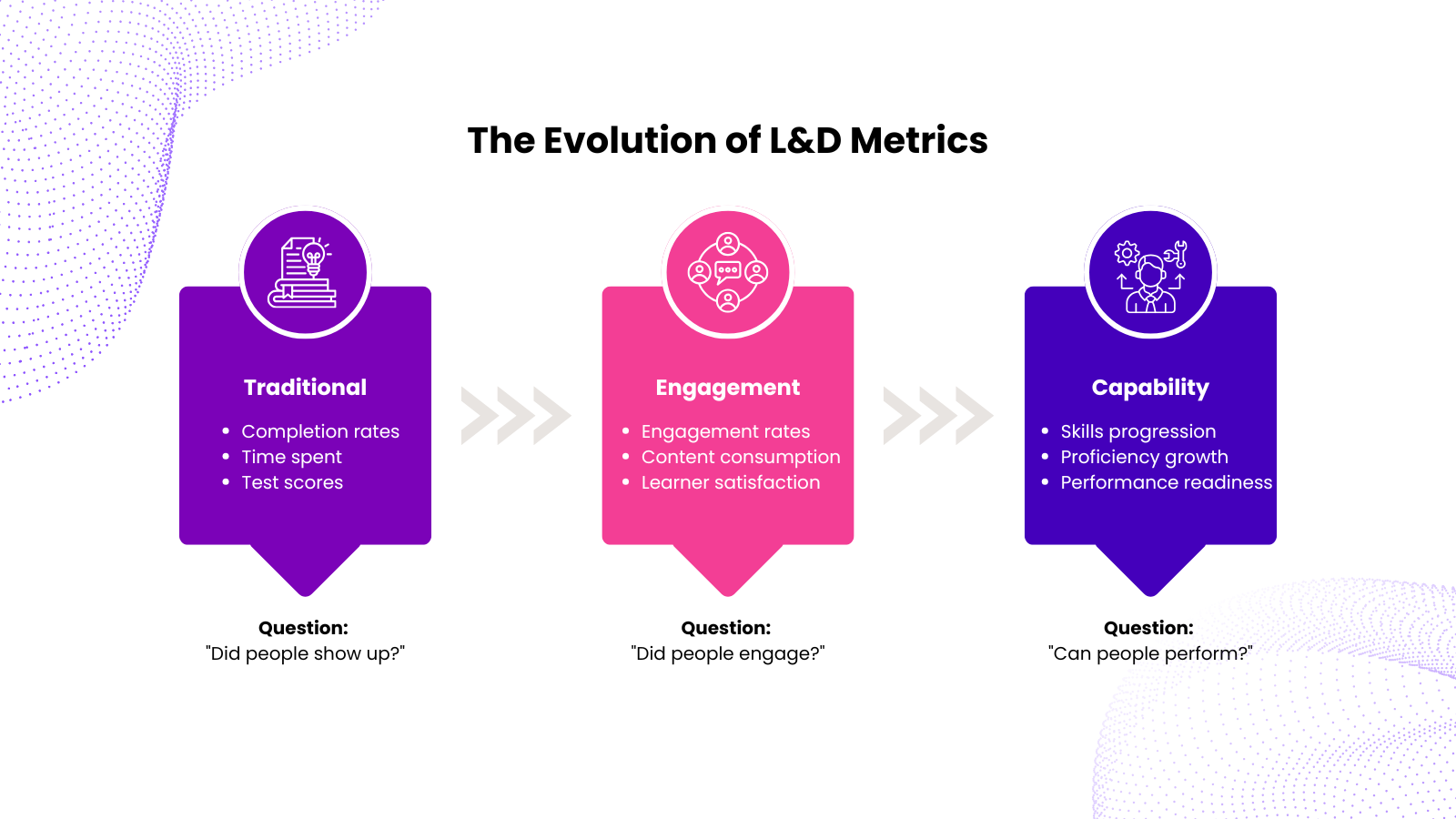
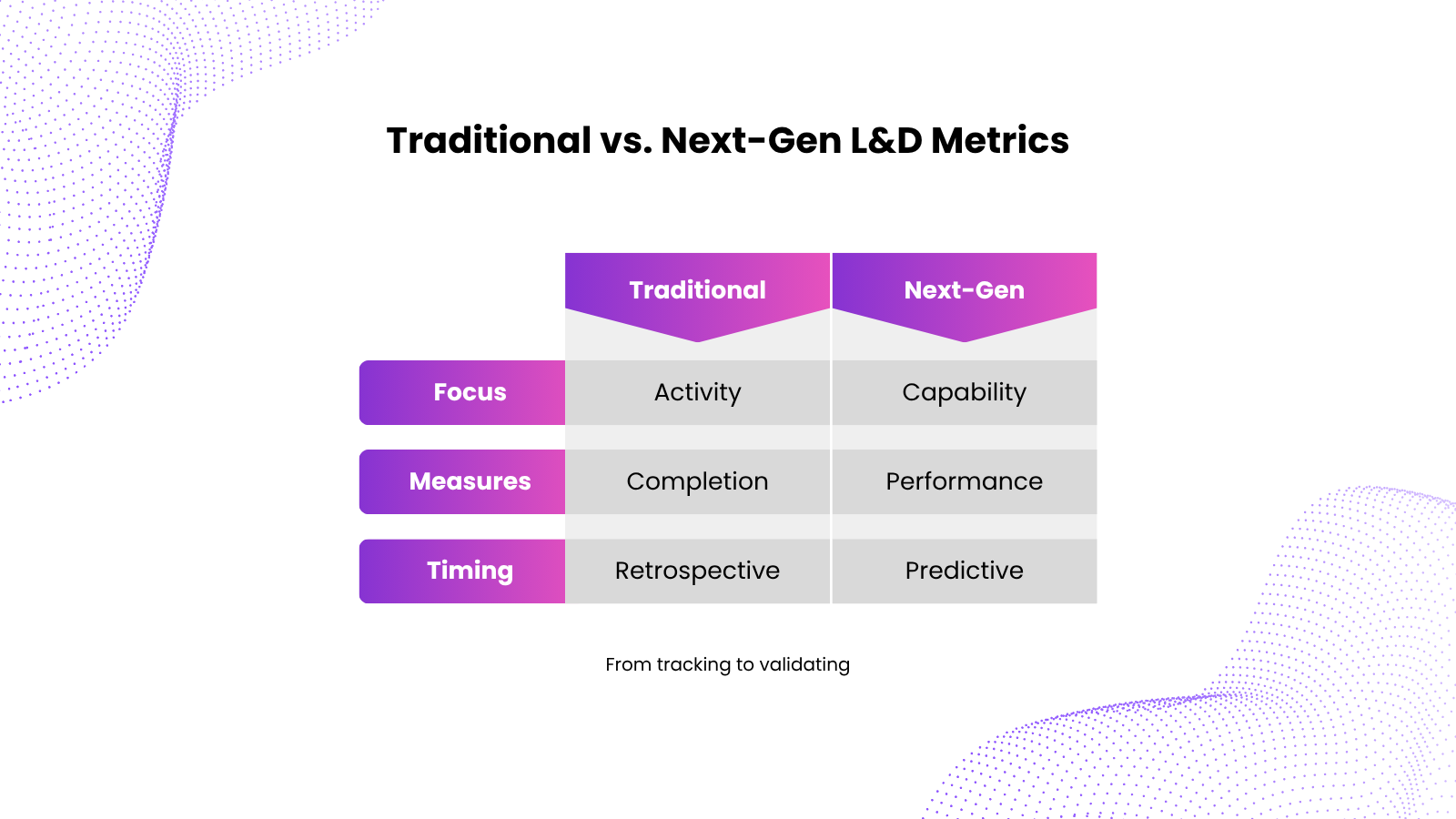
For many years, L&D metrics concentrated on easily measurable factors, such as completion percentages, assessment scores, time spent in classes, and participation rates. In compliance-driven settings where the objective was to demonstrate that individuals attended required programs, these measures were useful. As these figures were easy to record and publish, traditional learning platforms built their dashboards around them. HR might show that it is committed to staff development, as L&D may exhibit activity. Charts showing an upward trend were visible to executives. When businesses discovered that high completion rates were unrelated to capability growth, a problem arose. Teams completed leadership development courses but were unable to take the lead. Despite completing product training, sales representatives found it difficult to interact with customers. Despite passing tests, engineers were unable to apply their knowledge to actual tasks. One topic is addressed by traditional L&D metrics, and this is“Did learning occur?” However, they are unable to address the important questions, which are “Can people perform? Where are gaps in capability emerging? Does education have an impact on business?”.
What Next-Generation Learning Platforms Assess Instead
The foundation of contemporary learning systems is a radically new idea that measure competence rather than conformity,monitors skill development rather than just involvement, and verifies people’s abilities rather than just what they’ve eaten. Development of Skills Over Time Next-generation learning platforms monitors learnersprogress from novice to competent to proficient rather than completion percentages. They track the development of skills throughout the workforce, determining who is progressing, who is stagnating, and where interventions are required before performance declines. Effectiveness of Skill Reinforcement Knowledge and capability are separated by skill reinforcement. Platforms for advanced learning monitor the transfer of knowledge from short-term to long-term memory. They determine the best intervals for reinforcement, measure retention curves, and confirm that learning continues after the test. Indicators of Performance Readiness Learning and business outcomes are linked by the most advanced L&D indicators. Can this group implement the new plan? Are these workers prepared to change roles? Which groups will be impacted by upcoming initiatives due to major capacity gaps? Real-time answers to these queries are possible with AI learning platforms that incorporate learning analytics. These AI learning systems forecast future events in addition to reporting past events. Which patterns of skill development point to future success? Where are gaps starting to appear before they become issues? Which interventions promote the quickest growth in capability?
The Intelligence That Transforms Everything
Better measurement is only one aspect of the advancement of L&D metrics. Better results are the goal. Organizations may finally link learning investment to business effect when next-generation learning platforms assess skill development rather than completions. Infrastructure built from the ground up for capability measurement is needed for this change. As they were not designed with skills intelligence in mind, traditional learning platforms are unable to retrofit these contemporary L&D measures. Instead of developing capabilities, they were designed to manage material. Instead of asking, “Did people finish the course?”, AI learning platforms ask, “Can people perform the task?”. What is measured, how it is measured, and what is made feasible are all altered by that question. Predictive capability modelling, automated skill gap detection, adaptive skill reinforcement scheduling, and real-time workforce readiness indicators are just a few of the L&D metrics made available by the intelligence built into these platforms. These aren’t small advancements over conventional measurement. They represent a basic rethinking of what learning platforms ought to monitor. The development of L&D measures isn’t a nice-to-have improvement for companies who take workforce capability seriously. The infrastructure is what distinguishes learning impact from learning activity. In addition to measuring differently, next-generation learning platforms measure what really counts.