17 9

How Learning Analytics Transforms Skill Gaps into Business Opportunities 

How Learning Analytics Transforms Skill Gaps into Business Opportunities

Skill gaps are more than just an HR challenge. They’re a hidden obstacle to business growth. When employees lack the right skills, productivity slows, innovation stalls, and opportunities are missed. Yet, many organizations still treat skill gaps as an abstract issue, relying on outdated methods like guesswork or annual reviews to address them. 

The solution is Learning analytics. By harnessing data-driven insights, organizations can identify, measure, and close skill gaps with precision, turning a potential weakness into a strategic advantage. Here’s how learning analytics doesn’t just fix skill gaps but transforms them into opportunities for business growth. 

The Hidden Impact of Skill Gaps

Skill gaps don’t just affect individual performance; they have a ripple effect across the entire organization. When employees lack critical skills: 

  • Teams struggle to meet goals, leading to missed deadlines. 
  • Projects get delayed, slowing down progress. 
  • Customer satisfaction drops, affecting reputation and revenue. 
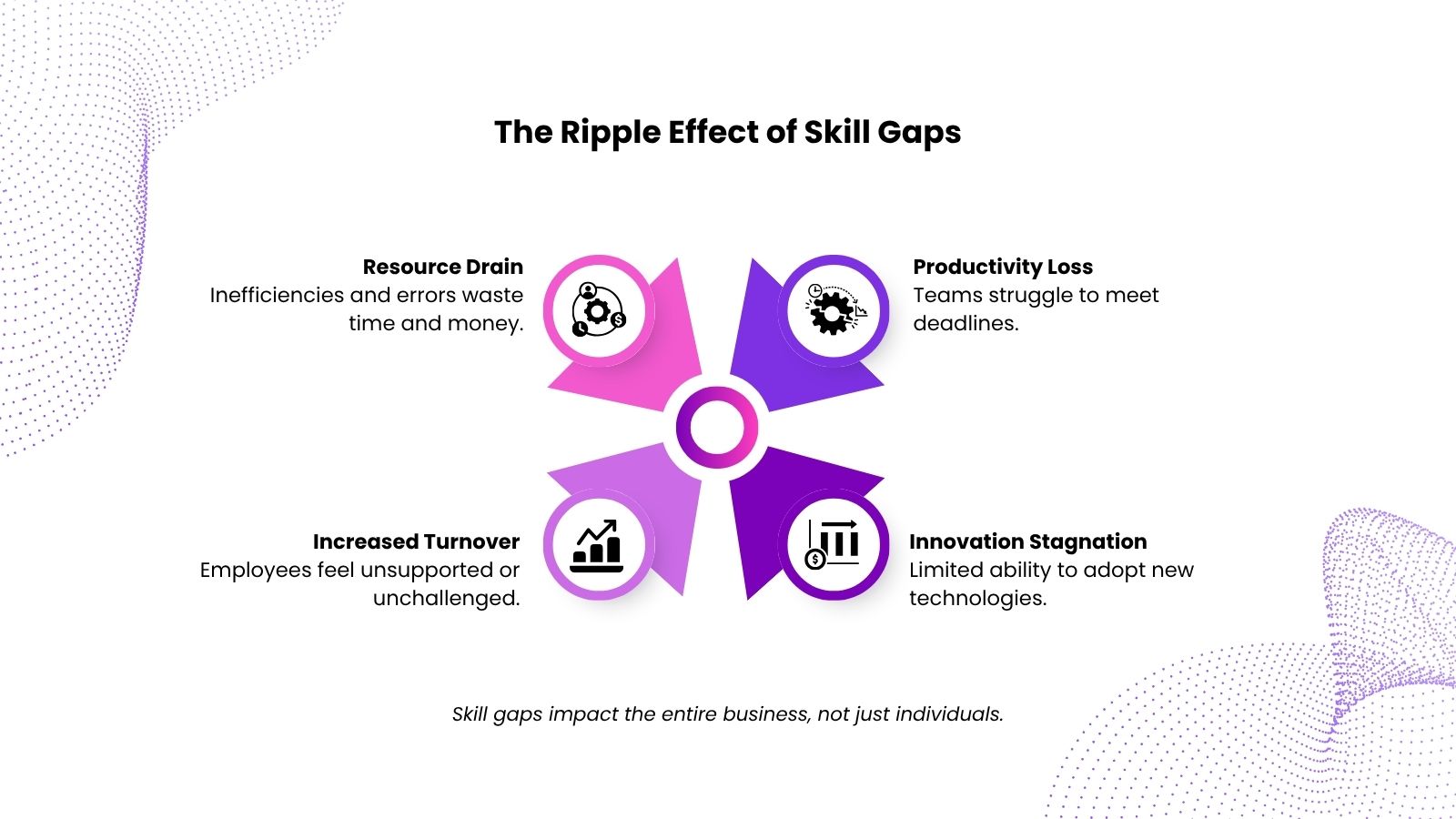
Over time, these gaps can stifle innovation, increase turnover, and drain resources. Yet, many companies still address skill gaps reactively, waiting until they become glaring problems. This is where learning analytics changes the game. 

How Learning Analytics Uncovers and Addresses Skill Gaps

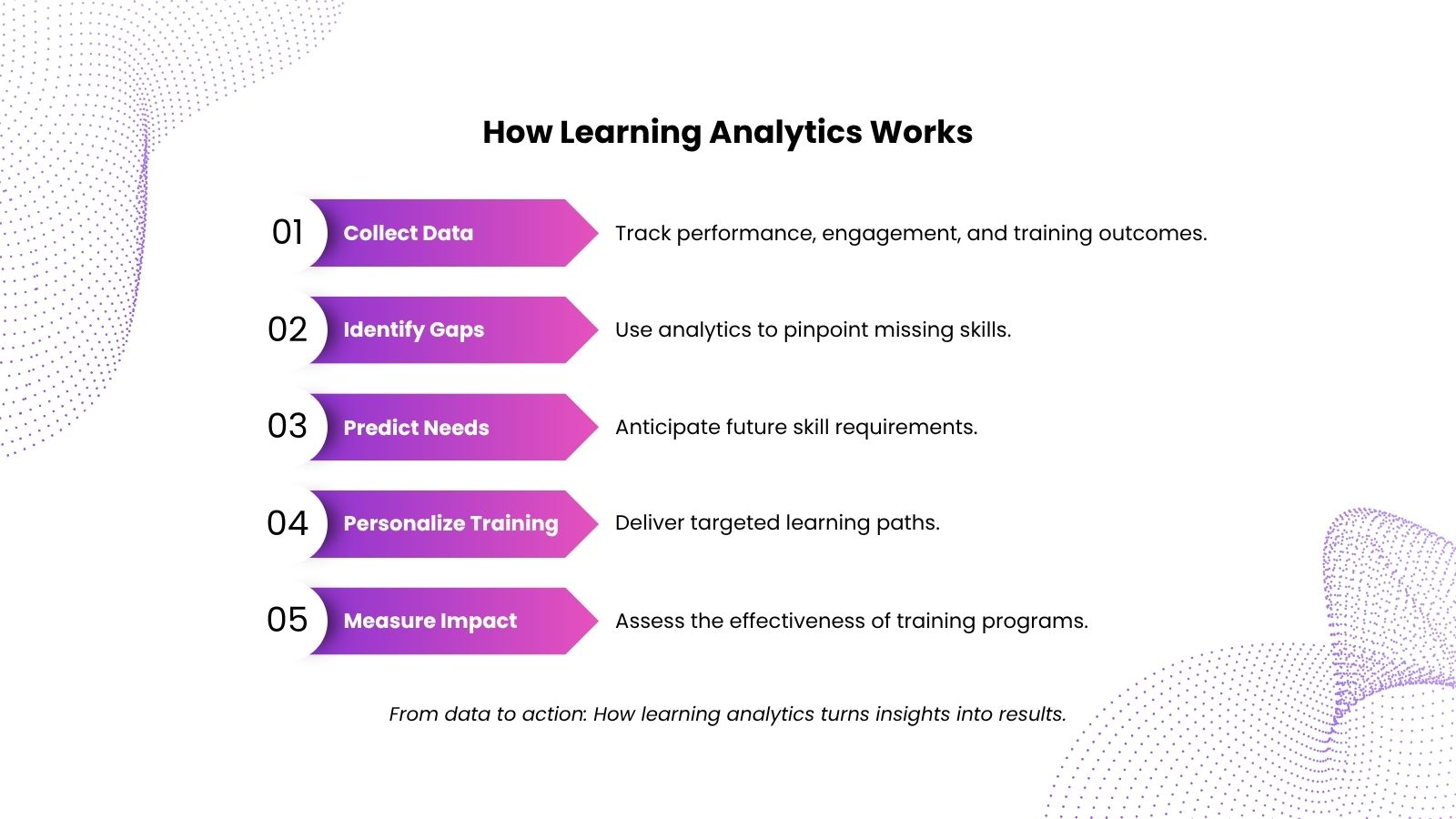
Traditional methods of identifying skill gaps, such as manager feedback or annual reviews, are slow, subjective, and often incomplete. Learning analytics, on the other hand, provides real-time, objective data to pinpoint exactly where gaps exist. 

  1. Data-Driven Skill Assessments

Learning analytics uses performance data, quiz scores, and engagement metrics to identify: 

  • Which skills are missing across teams or departments. 
  • Which employees are struggling with specific competencies. 
  • Which training programs are effective and which are not. 

This data-driven approach removes guesswork, allowing organizations to target their efforts where they’re needed most. 

  1. Predictive Insights for Future Needs

Learning analytics doesn’t just look at current skill gaps, rather, it predicts future ones. By analyzing trends in learning behavior, course completions, and performance data, organizations can: 

  • Anticipate skill gaps before they impact business operations. 
  • Align training programs with upcoming business needs. 
  1. Personalized Learning Paths

Once skill gaps are identified, learning analytics helps tailor training to individual needs. For example: 

  • An employee struggling with data analysis might receive targeted modules on Excel or SQL. 
  • A team lacking leadership skills could be enrolled in a customized leadership development program. 

This personalized approach ensures that training is relevant, efficient, and effective, closing gaps faster and with less wasted effort. 

How Addressing Skill Gaps Drives Business Growth

Fixing skill gaps isn’t just about improving individual performance; it’s about unlocking the full potential of your workforce. Here’s how learning analytics helps organizations grow by addressing skill gaps: 

  • Boosts Productivity and Efficiency: When employees have the skills they need, they work faster, smarter, and with fewer errors. 
  • Fuels Innovation: Skill gaps often hold organizations back from adopting new technologies or strategies. By proactively closing these gaps, companies can adopt new tools and develop new products or services with confidence. 
  • Improves Employee Retention and Engagement: Employees who feel supported in their growth are more engaged, loyal, and motivated. 
  • Aligns Learning with Business Goals: Learning analytics ensures that training programs are directly tied to business objectives, delivering measurable results. 

The Proof: A Real-World Example

A global manufacturing company used learning analytics to identify skill gaps in its workforce. By analyzing performance data and training outcomes, they discovered that 30% of their employees lacked critical digital skills needed for a new automation initiative. Using this insight, they: 

  • Developed targeted upskilling programs for the affected employees. 
  • Reduced onboarding time for new hires by 40%. 
  • Increased operational efficiency by 25% within six months. 

From Challenge to Opportunity

Skill gaps don’t have to be a roadblock; they can be a catalyst for growth. With learning analytics, organizations can: 
Identify gaps with precision, not guesswork. 
Predict future needs before they become problems. 
Personalize training to maximize impact. 
Align learning with business goals to drive real results. 

The organizations that thrive in the coming years won’t be the ones that ignore their skill gaps—they’ll be the ones that use learning analytics to transform them into opportunities. 
Skillzen blog banner - 26-27 4

How AI-Based LMS Makes Learning Smarter and More Efficient 

How AI-Based LMS Makes Learning Smarter and More Efficient

In today’s fast-paced workplace, traditional Learning Management Systems (LMS) often fall short. Employees expect personalized, engaging, and efficient learning experiences, while organizations need scalable, data-driven training that delivers measurable results. This is where AI-Based LMS steps in, transforming the learning experience by making it smarter, more adaptive, and deeply personalized. 

The Problem with Traditional LMS

Most traditional LMS platforms function like static digital libraries. They store courses, track completions, and generate basic reports, but they fail to engage learners or drive real behaviour change. The one-size-fits-all approach leads to disengagement, as employees either find the content too easy or too difficult. Without personalization or adaptability, the growth potential is lost. 

How AI-Based LMS Elevates Learning

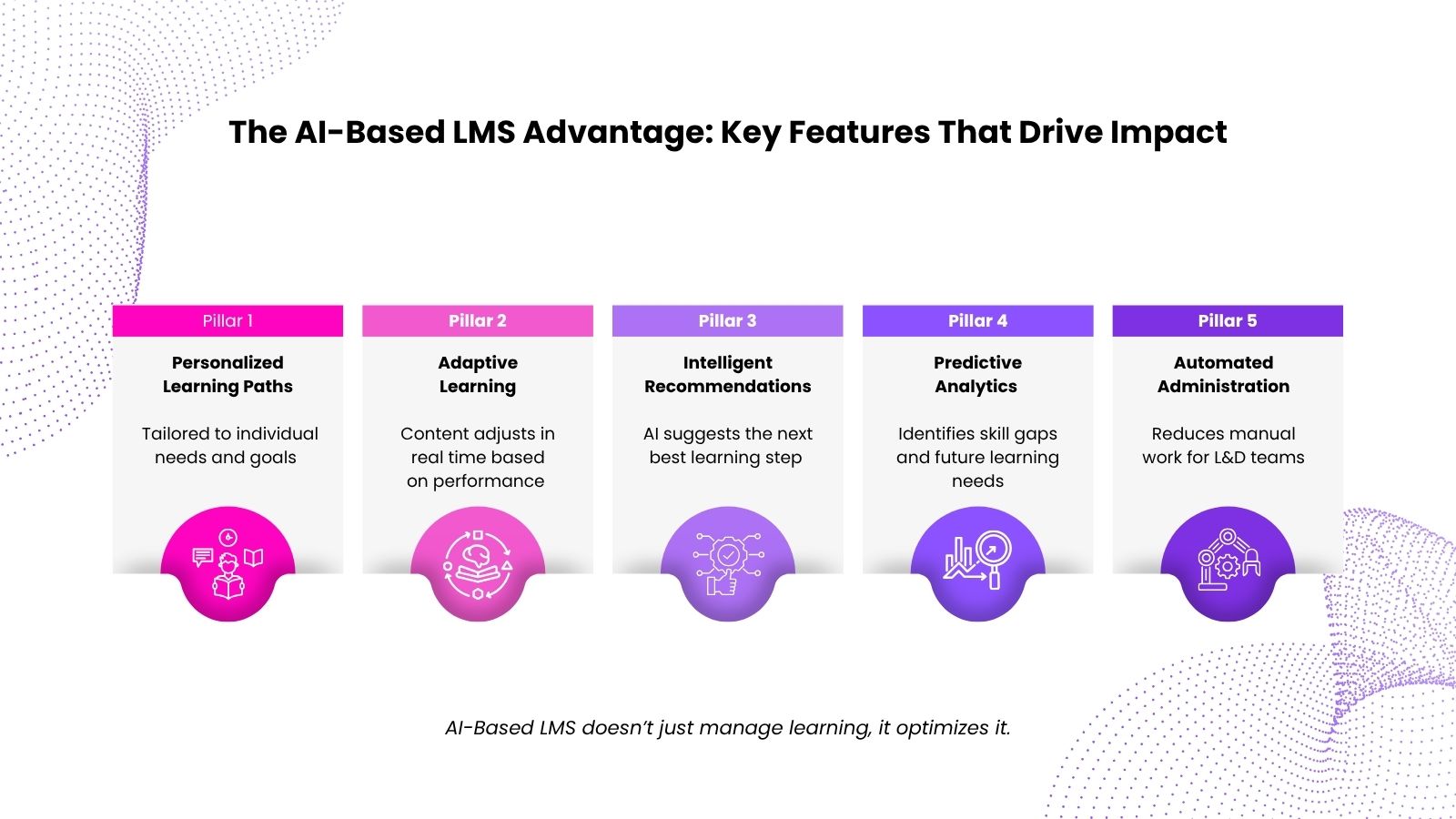
Personalized Learning Paths: Tailoring Content to Individual Needs 


In a traditional LMS, all employees receive the same training modules, regardless of their roles, skill levels, or career aspirations. This often results in disengagement, as the content may not align with their specific needs. 


An AI-Based LMS changes this by analyzing learner data such as past performance, role requirements, and skill gaps to create customized learning paths. For example, a sales representative might receive training focused on negotiation techniques, while a software developer could be directed to advanced coding modules. This ensures employees engage with relevant, challenging, and actionable content. 


Adaptive Learning: Content That Evolves with the Learner 


Traditional LMS platforms deliver content in a linear, rigid format. If a learner struggles with a concept, they’re either left behind or forced to repeat the same material, neither of which is effective for long-term retention nor engagement. 


An AI-Based LMS addresses this by continuously assessing a learner’s performance and adjusting the difficulty and pacing of the content in real time. For instance, if an employee excels in a module, the system can skip redundant content and move them to more advanced topics. Conversely, i

Intelligent Content Recommendations: Guiding Learners to What’s Next 


In a traditional LMS, employees often don’t know what to learn next, or they’re overwhelmed by too many options, leading to decision fatigue and low engagement. 

An AI-Based LMS acts like a personal learning concierge, recommending courses, articles, videos, and other resources based on the learner’s role, career goals, and past learning behaviour. For example, if a marketing employee completes a course on digital advertising, the AI might recommend advanced modules on SEO, content strategy, or data analytics. 


Predictive Analytics: Anticipating Learning Needs Before They Arise 


Traditional LMS platforms provide basic reporting, such as completion rates and quiz scores, but they don’t offer actionable insights into skill gaps, future training needs, or business impact. 

An AI-Based LMS leverages predictive analytics to analyze patterns in learning data, allowing organizations to anticipate emerging skill gaps, identify employees at risk of falling behind, and align training with future business objectives. 


Automated Administration: Freeing Up L&D Teams for Strategic Work 


Managing a traditional LMS can be time-consuming, with L&D teams spending countless hours assigning courses, tracking completions, and generating reports. 

An AI-Based LMS automates these administrative tasks, such as enrolling employees in courses, sending reminders for incomplete training, and generating customized reports on learning progress and compliance. 

The Future of Learning: AI-Based LMS as a Strategic Asset

The learning experience of the future isn’t just about delivering content, but about creating a smart, adaptive, and personalized journey for every employee. AI-Based LMS platforms make this possible by personalizing learning paths, adapting content in real time, recommending the right next steps, predicting skill gaps, and automating administrative tasks. 

The organizations that thrive in the coming years will be the ones with the smartest, most adaptive learning systems. 

9 6

5 Ways Your Corporate Training Program Can Be Enhanced by Training Companies 

5 Ways Your Corporate Training Program Can Be Enhanced by Training Companies

Organisations invest heavily in corporate training programs, yet many still grapple with poor engagement, low retention, and unclear ROI. The issue isn’t the intent, but the execution. Most training initiatives function like short-lived campaigns: a burst of activity, a flurry of completions, and then silence. Skills fade, behaviours revert, and the business impact remains elusive. 

Here’s the truth: Training companies that deliver real results don’t just provide content; they build systems. Systems that transform learning from a one-time event into a continuous, measurable, and business-driven process. The best corporate training programs focus on closing skill gaps, driving performance, and cultivating a culture of growth. 

So, how do top training companies achieve this? They focus on five key systems that turn training from a cost centre into a competitive advantage. 

The Learning Engagement Gap: Why Most Training Fails

Picture a corporate training program like a library without a catalogue. Thousands of resources like videos, slides, and quizzes piled high, but no way to find what’s relevant, track progress, or apply what’s learned. Employees log in, click through, and forget. The organisation sees activity, but not capability. 

This is the Learning Engagement Gap: the disconnect between what’s taught and what’s retained, between activity and impact. Most training companies fall short here. 

The best training companies don’t just fill the gap; they eliminate it by turning training into a system of engagement, measurement, and reinforcement. 

The 5 Systems That Turn Training into Results

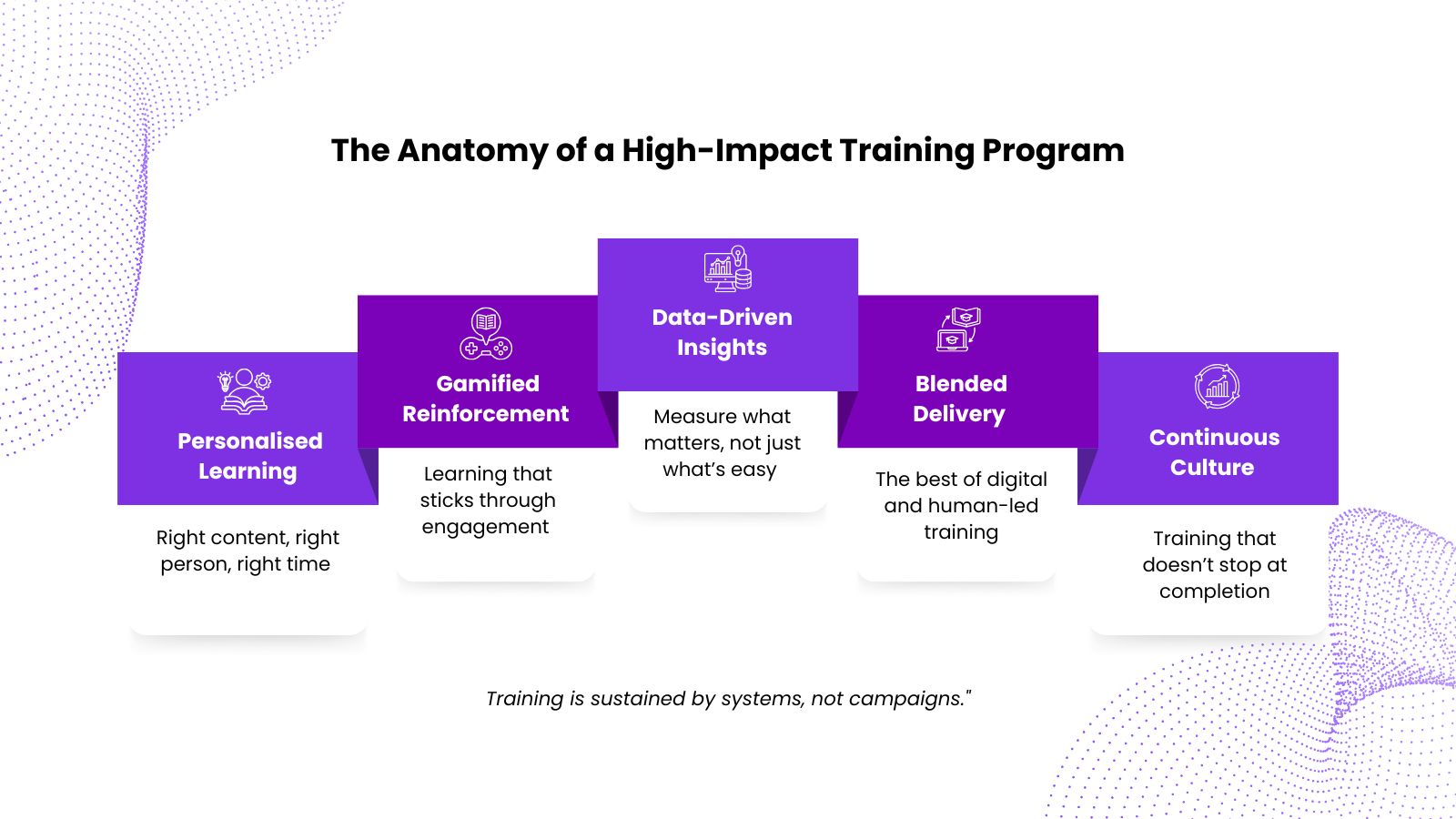
  1. ThePersonalisedLearning Path System 

Most corporate training programs treat all learners the same, but employees have different roles, skill levels, and learning styles. A one-size-fits-all approach leads to disengagement and wasted resources. 

How Top Training Companies Fix It: 
They implement adaptive learning paths that tailor content to individual needs using AI and data analytics. This ensures employees engage with relevant, challenging, and actionable content, leading to higher completion rates and better skill retention. 


  1. The Gamified Reinforcement System

Traditional training is often dull, and boredom kills retention. Studies show employees forget 70% of what they learn within 24 hours if it’s not reinforced. 

How Top Training Companies Fix It: 
They turn learning into a game by incorporating leaderboards, badges, rewards, and microlearning. This makes training engaging, fun, and sticky, so employees retain more, apply more, and actually enjoy the process. 


  1. The Data-Driven Insights System

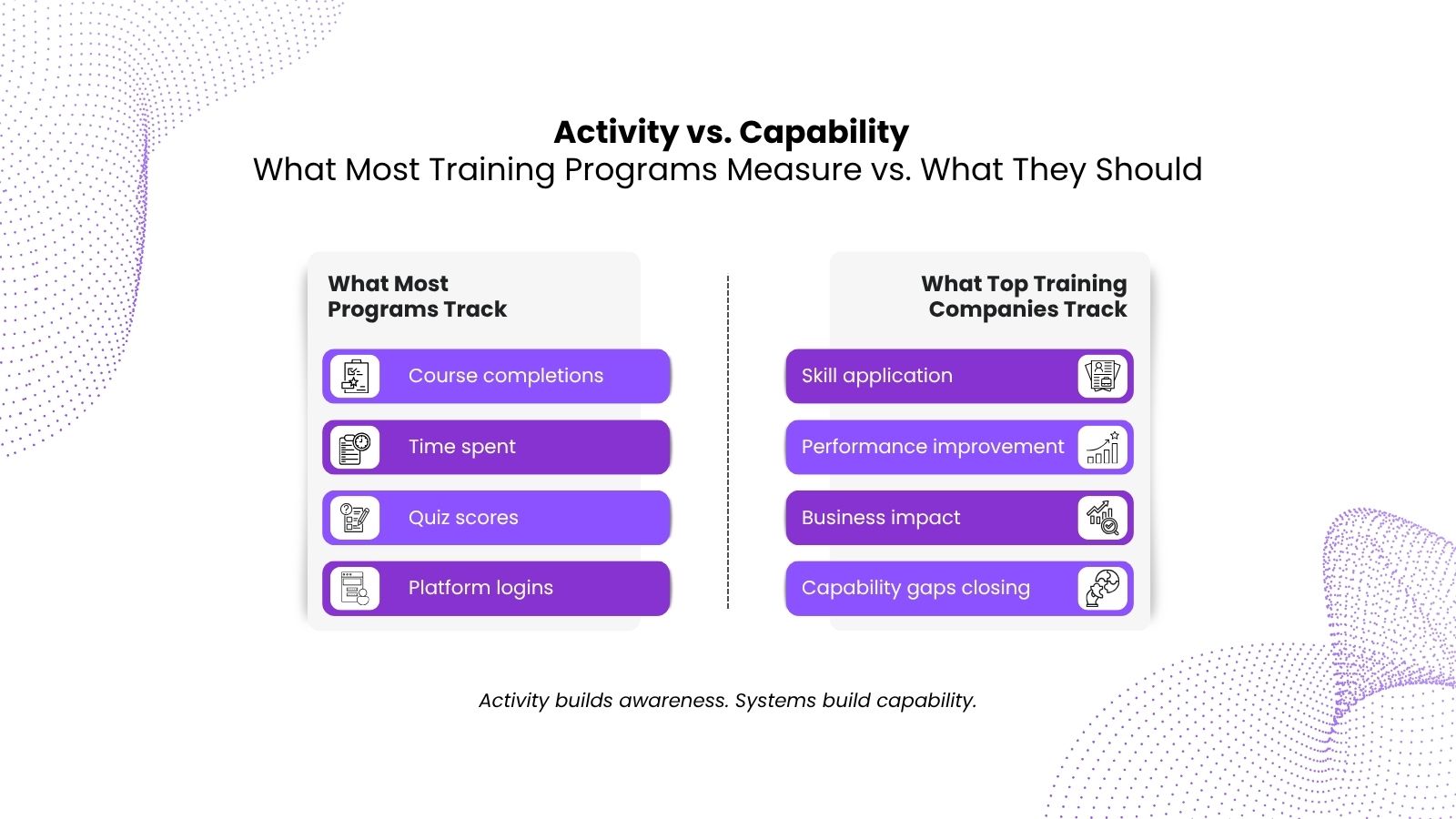
You can’t improve what you don’t measure. Yet most corporate training programs focus on vanity metrics like completion rates, time spent, and quiz scores without tying them to business outcomes. 

How Top Training Companies Fix It: 
They track what matters: 

          Skill progression 

          Behaviour change 

          Business impact 

This allows organisations to move from guessing to knowing and continuously refine their programs for maximum impact. 


  1. The Blended Delivery System

Some training companies swear by e-learning, while others insist on instructor-led sessions. The best? They blend both. 

How Top Training Companies Fix It: 
They combine digital modules for flexibility, live workshops for complex skills, and social learning for engagement. Employees get the best of both worlds: the convenience of digital and the personal touch of human interaction. 


  1. The Continuous Learning Culture System

The biggest mistake in corporate training programs? Treating training as a one-time event. Skills fade, behaviours revert, and the impact disappears. 

How Top Training Companies Fix It: 
They build a culture of continuous learning by embedding learning into daily workflows, encouraging peer-to-peer knowledge sharing, and providing ongoing coaching. This ensures training doesn’t end, but evolves, and employees keep growing. 

The Proof: A Real-World Transformation

A global tech firm struggled with low engagement and poor retention in its corporate training program. After partnering with a training company that implemented the five systems above, they saw: 

  • 40% increase in course completion rates 
  • 30% improvement in skill application 
  • 20% boost in employee productivity 

The difference? They stopped treating training as a campaign and started building it as a system. 

Training Is What You Build, Not What You Launch

The training companies that deliver real results aren’t the ones with the most content they’re the ones with the best systems. Systems that: 

  • Personalise learning to the individual 
  • Gamify reinforcement to make it stick 
  • Measure what matters, not just what’s easy 
  • Blend delivery methods for maximum impact 
  • Sustain learning as a culture, not a one-time event