How AI-Based LMS Makes Learning Smarter and More Efficient

In today’s fast-paced workplace, traditional Learning Management Systems (LMS) often fall short. Employees expect personalized, engaging, and efficient learning experiences, while organizations need scalable, data-driven training that delivers measurable results. This is where AI-Based LMS steps in, transforming the learning experience by making it smarter, more adaptive, and deeply personalized. 

The Problem with Traditional LMS

Most traditional LMS platforms function like static digital libraries. They store courses, track completions, and generate basic reports, but they fail to engage learners or drive real behaviour change. The one-size-fits-all approach leads to disengagement, as employees either find the content too easy or too difficult. Without personalization or adaptability, the growth potential is lost. 

How AI-Based LMS Elevates Learning

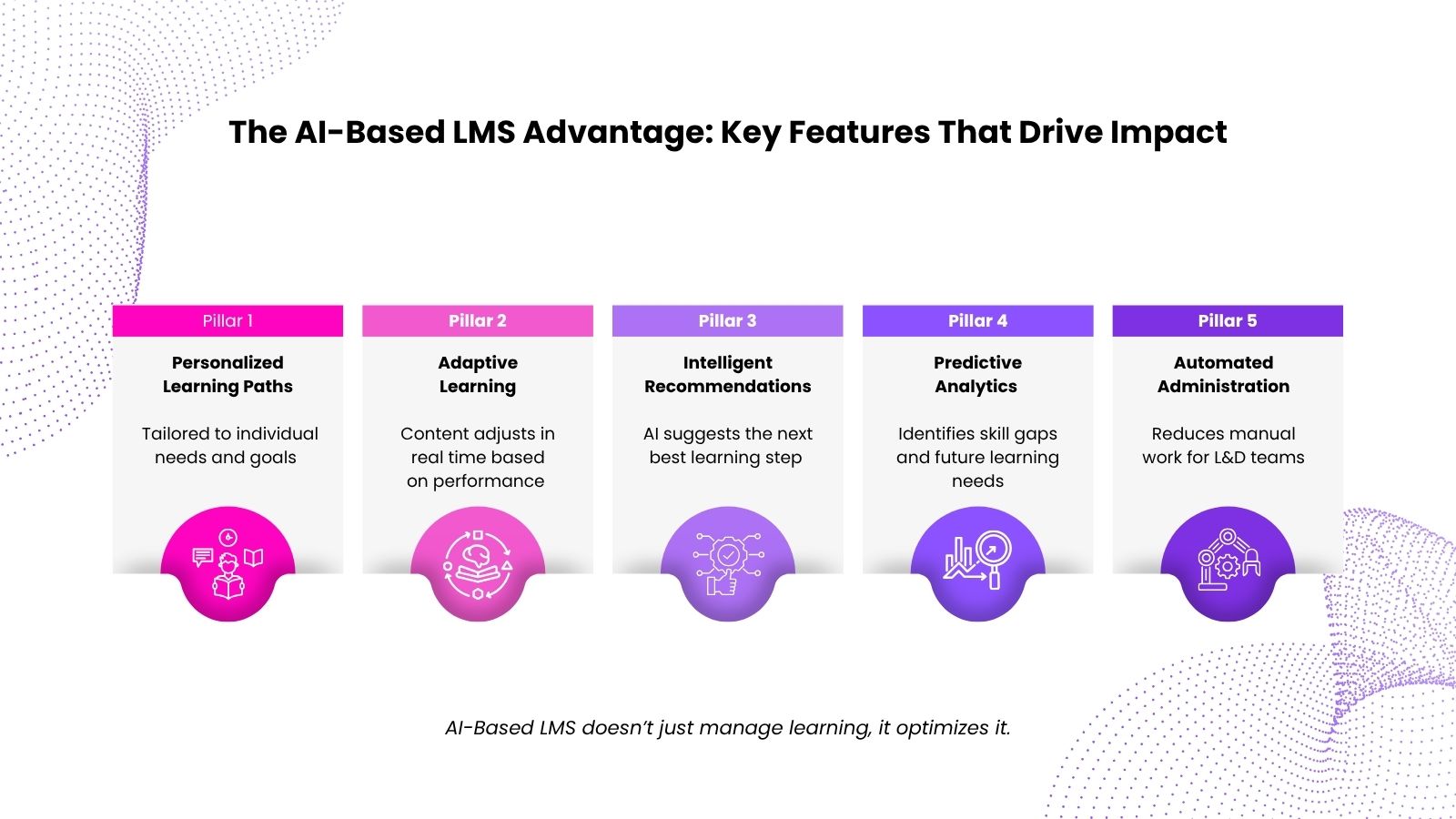
Personalized Learning Paths: Tailoring Content to Individual Needs 


In a traditional LMS, all employees receive the same training modules, regardless of their roles, skill levels, or career aspirations. This often results in disengagement, as the content may not align with their specific needs. 


An AI-Based LMS changes this by analyzing learner data such as past performance, role requirements, and skill gaps to create customized learning paths. For example, a sales representative might receive training focused on negotiation techniques, while a software developer could be directed to advanced coding modules. This ensures employees engage with relevant, challenging, and actionable content. 


Adaptive Learning: Content That Evolves with the Learner 


Traditional LMS platforms deliver content in a linear, rigid format. If a learner struggles with a concept, they’re either left behind or forced to repeat the same material, neither of which is effective for long-term retention nor engagement. 


An AI-Based LMS addresses this by continuously assessing a learner’s performance and adjusting the difficulty and pacing of the content in real time. For instance, if an employee excels in a module, the system can skip redundant content and move them to more advanced topics. Conversely, i

Intelligent Content Recommendations: Guiding Learners to What’s Next 


In a traditional LMS, employees often don’t know what to learn next, or they’re overwhelmed by too many options, leading to decision fatigue and low engagement. 

An AI-Based LMS acts like a personal learning concierge, recommending courses, articles, videos, and other resources based on the learner’s role, career goals, and past learning behaviour. For example, if a marketing employee completes a course on digital advertising, the AI might recommend advanced modules on SEO, content strategy, or data analytics. 


Predictive Analytics: Anticipating Learning Needs Before They Arise 


Traditional LMS platforms provide basic reporting, such as completion rates and quiz scores, but they don’t offer actionable insights into skill gaps, future training needs, or business impact. 

An AI-Based LMS leverages predictive analytics to analyze patterns in learning data, allowing organizations to anticipate emerging skill gaps, identify employees at risk of falling behind, and align training with future business objectives. 


Automated Administration: Freeing Up L&D Teams for Strategic Work 


Managing a traditional LMS can be time-consuming, with L&D teams spending countless hours assigning courses, tracking completions, and generating reports. 

An AI-Based LMS automates these administrative tasks, such as enrolling employees in courses, sending reminders for incomplete training, and generating customized reports on learning progress and compliance. 
The Future of Learning: AI-Based LMS as a Strategic Asset

The learning experience of the future isn’t just about delivering content, but about creating a smart, adaptive, and personalized journey for every employee. AI-Based LMS platforms make this possible by personalizing learning paths, adapting content in real time, recommending the right next steps, predicting skill gaps, and automating administrative tasks. 

The organizations that thrive in the coming years will be the ones with the smartest, most adaptive learning systems. 

Shopping Basket