Why 95% of AI Projects Fail: Using Pedagogical Intelligence to Close the Learning Gap
The Divide's Disruptive Reality
The information is depressing. Only two of the nine major sectors that is technology and media, clearly exhibit structural disturbance, while the other seven are essentially unaltered (MIT NANDA, 2025).
Although GenAI is now widely used in departments like marketing, analytics, and customer service, few businesses have been able to convert this acceptance into new business models or revised workflows.
What went wrong?
The Learning Gap in AI
The AI learning gap, or the discrepancy between knowledge acquisition and output generation, is at the core of this 95% failure rate.
Although GenAI technologies are capable of creating regulations, responding to inquiries, and summarizing documents, they are not able to learn from comments or context. “The core barrier to scaling is not infrastructure, regulation, or talent,” according to the MIT paper. It’s education.
Organizations cannot develop long-lasting, dynamic knowledge with AI systems that forget context with each prompt.
This turns into a serious weakness in learning and development. Even internal AI trials fail to produce quantifiable capability increase, and employees who use public chatbots for upskilling frequently disclose confidential information.
Instead of being a performance enhancer, AI in learning and development turns into a productivity experiment.
Pedagogical Intelligence via Data Processing
Pedagogical intelligence, the study of how people learn, think, and retain information, holds the key to the solution. Pedagogically intelligent systems employ spaced repetition, cognitive scaffolding, and contextual feedback loops to guarantee that students remember and apply knowledge, in contrast to generative systems that merely produce content.
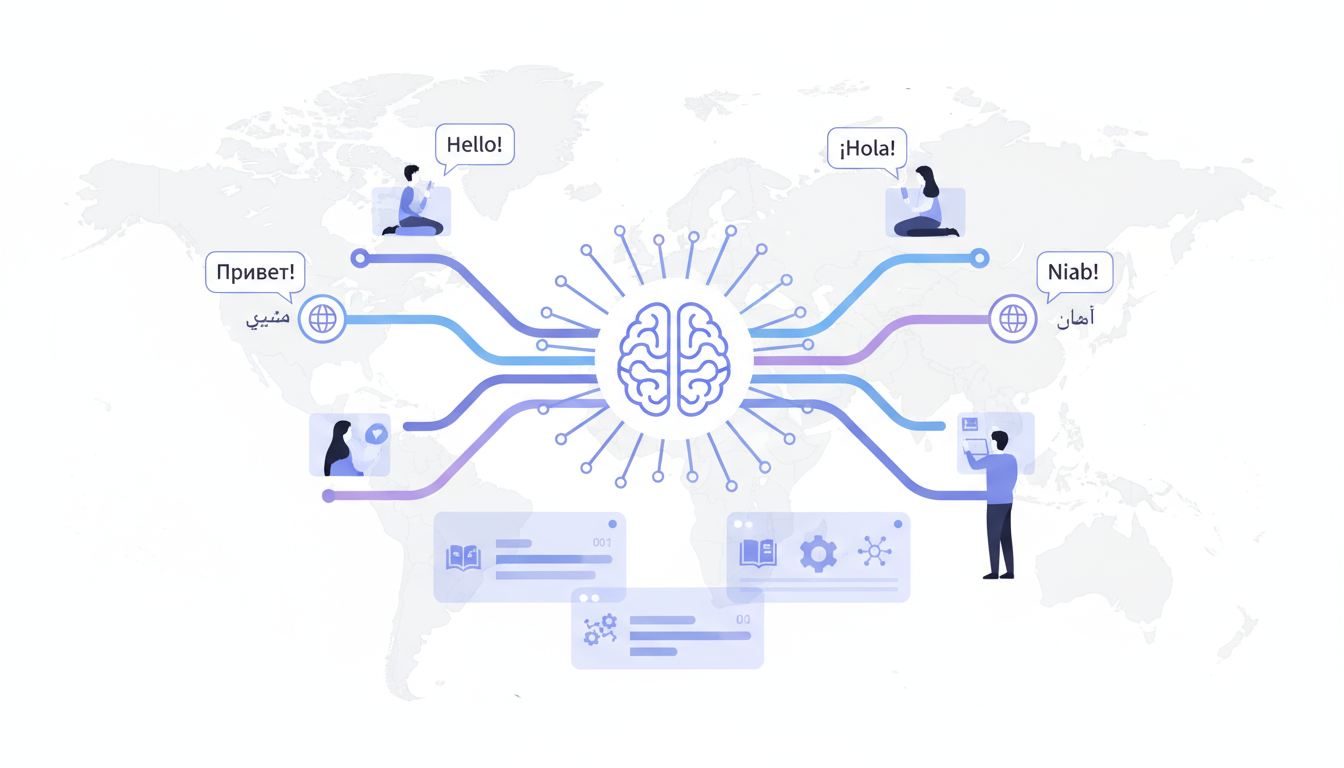
By adjusting to a learner’s speed, past knowledge, and performance data, these technologies tailor every learning experience when paired with human-centered learning design. With each encounter, they keep changing, reiterating lost ideas and expanding comprehension over time.
Agentic AI: Learning Systems' Future
Agentic AI is the next advancement in AI for learning and development. It is an AI that acts, remembers, and learns in addition to responding.
Because agentic systems incorporate contextual awareness and permanent memory, they can develop over time rather than starting from scratch with every encounter.
This implies that in a learning environment, the system maintains enterprise-grade security while tracking student progress, dynamically adjusting difficulty, and providing individualized feedback.
Agentic AI enables businesses to safely scale intelligent learning within their own ecosystem, as contrast to public AI solutions that expose data.
Why Skillzen Is on the Correct Side of the Argument
By using quick tools rather than intelligent solutions, the majority of businesses are currently experimenting on the wrong side of the GenAI Divide.
By fusing pedagogical intelligence with agentic AI, Skillzen creates a safe, flexible platform that synchronizes learning objectives with corporate objectives.
By transforming each course into a dynamic feedback loop that promotes quantifiable skill transformation, Skillzen helps businesses create learning systems that learn rather than chasing automation.
Beyond Automation in the Future of L&D
The real value of AI is found in its ability to elevate human knowledge and promote lifelong learning, not in its speed.
Faster content and larger course libraries are not the future of AI in learning and development. It has to do with more intelligent, flexible learning environments that change as the workforce does.
And it starts by using pedagogical intelligence, agentic AI, and a human-cantered strategy that transforms knowledge into actual capabilities to close the AI learning gap.