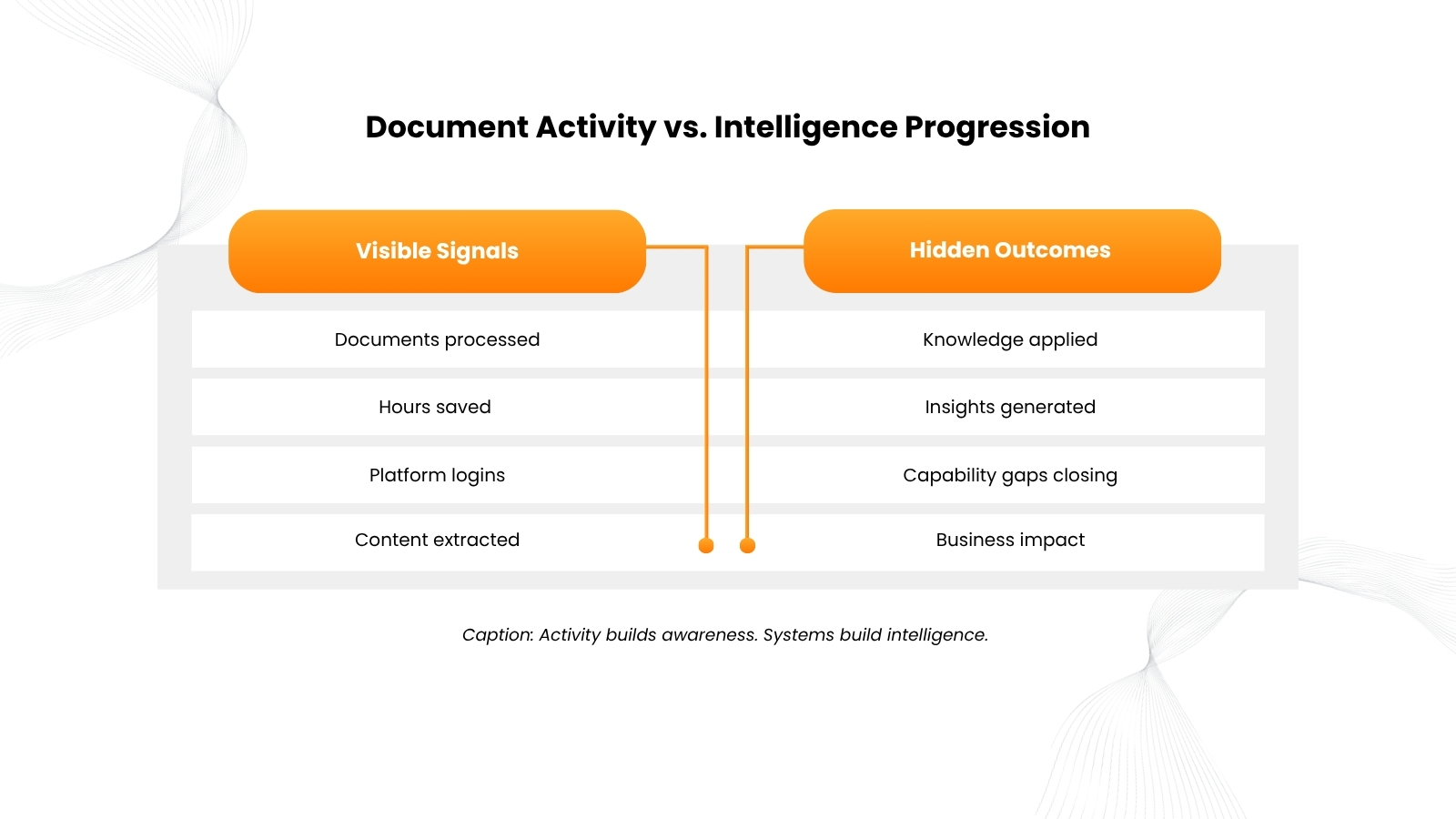
Every organization today is investing in AI. New automation tools get deployed, workflows get digitized, dashboards multiply, and for a while everything looks like progress. Document processing numbers go up, teams feel more “digital,” and leaders nod approvingly at the activity reports.
Then six months pass, and something uncomfortable becomes clear.
Employees still waste hours hunting for a single clause buried in a PDF, decisions still rely on manual checks, and managers have quietly gone back to prioritizing delivery over organization. The company is processing more documents than ever, yet it hasn’t become any smarter.
Here’s why: most Metadata Management initiatives are built like campaigns, not systems. They generate noise, activity, and the feeling of progress, without ever building Scalable Intelligence.
The Real Problem Is Context, Not Documents
Think about a traditional library. Thousands of books, beautifully shelved, with no catalogue, no tags, and no index. All that knowledge just sits there, locked and useless. That’s exactly how most organizations treat their documents today.
Invoices, contracts, reports, and emails exist somewhere, but the meaning inside them is scattered. Without Metadata Management, documents become digital clutter, and clutter does not scale.
This is where the AI Librarian enters, not as a person, but as a capability that reads every document, understands its context, and attaches invisible tags describing what it is, what it contains, and why it matters. “Who approved this? What’s the risk level? Is it compliant?”, when these questions go unanswered, automation becomes very expensive.
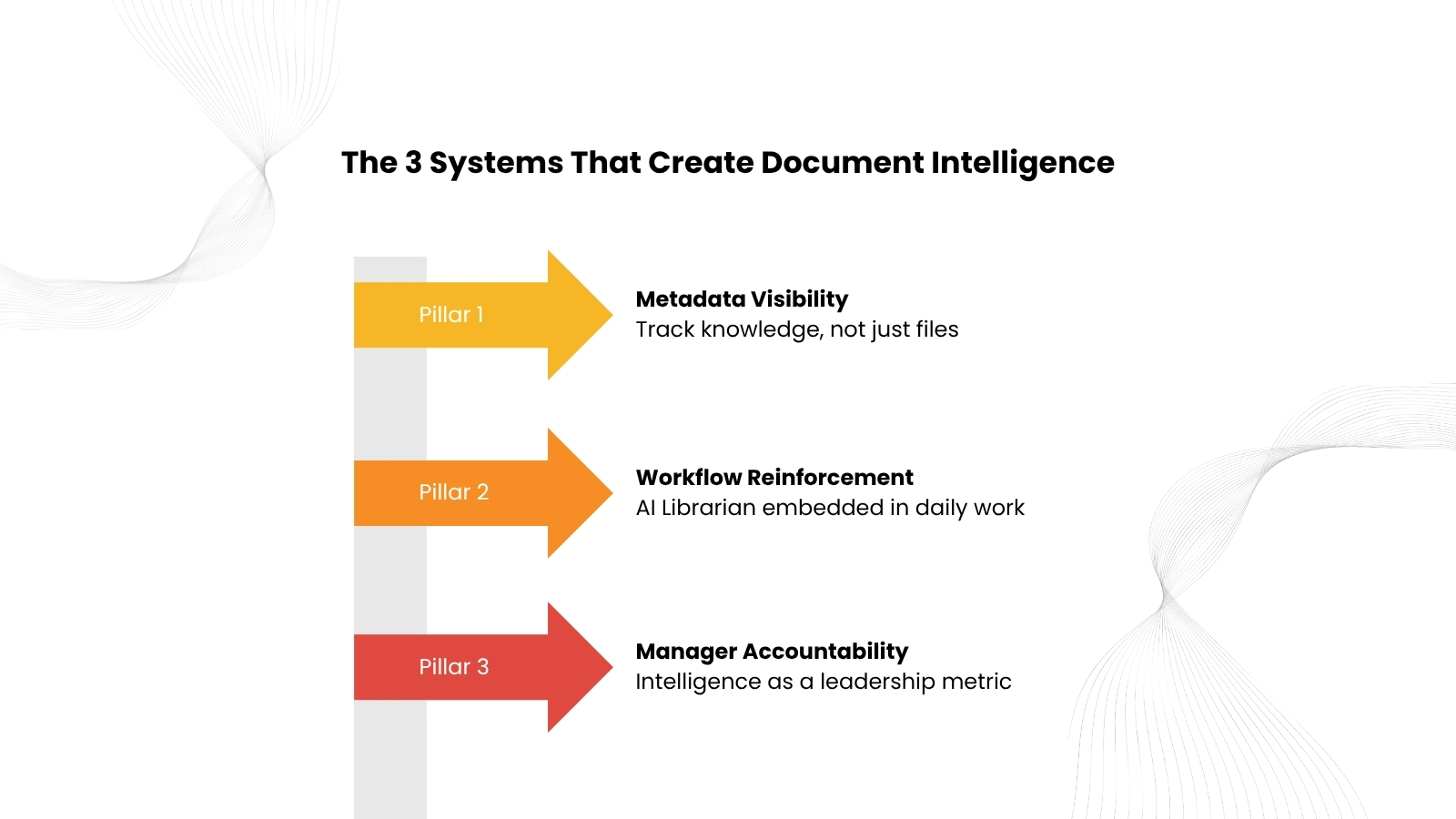
The 3 Systems That Turn Activity into Scalable Intelligence
System 1: The Metadata Visibility System
Most companies track what documents were processed, but almost none track what insights were gained. A Metadata Management visibility system changes the question entirely, from “How many invoices did we process?” to “Where are the gaps, and where do we intervene before a risk becomes a cost?”
System 2: The Workflow Reinforcement System
Most AI initiatives treat intelligence as a one-time event: deploy, extract, move on. In that gap, the data fades before it influences a single decision. Durable Scalable Intelligence requires the AI Librarian to live inside the workflow by tagging documents, linking records, routing to the right approver, and learning from every correction. That’s AI as the backbone of work, not a bolt-on.
System 3: The Manager Accountability System
No document intelligence culture survives if managers are spectators. IT owns the automation, managers own the output, and that gap is exactly where Scalable Intelligence gets lost. A managers accountability system makes intelligence-building a leadership expectation with visibility into data quality and accountability for how knowledge gets used. Real in daily decisions, not quarterly reviews.
Intelligence Is What You Build, Not What You Launch
The organizations winning in the age of AI aren’t the ones with the most tools. They’re the ones that have built the most infrastructure treating Metadata Management as a strategic asset, embedding the AI Librarian as a foundation rather than a feature, and holding leaders accountable for outcomes, not outputs.
People don’t need more tools. They need environments that help them turn information into action. A true document intelligence culture isn’t defined by how many documents you process. It’s defined by how much smarter your organization becomes with every single one of them.