India officially launched the Digital Personal Data Protection framework in November 2025, a move that is generally anticipated to result in high operational re-engineering and compliance expenses. According to industry estimates, many businesses will need to make one-time investments of between ₹1 crore and ₹18 crore due to new regulations pertaining to consent management, data governance, audits, and breach reporting. Early comments on DPDP Compliance concentrated on disruption, risk, and regulatory pressure as it became a board-level issue. However, a few top IT services companies are indicating a different reality. Since they currently comply with international data privacy laws like GDPR, many anticipate little disruption. These firms view Digital Personal Data Protection as an extension of current practices rather than a fundamental reset because they have established enterprise-grade security controls, privacy-by-design procedures, and mature governance structures.
The Hype: Serious Compliance Concerns
A number of duties included by the DPDP framework have sparked concerns in a variety of industries. Consent-driven data processing, thorough data mapping and audits, strong consent-management systems, more stringent controls for sensitive data, and severe consequences for infractions are some of these. DPDP Compliance may seem complicated and resource-intensive to businesses that are unfamiliar with organized privacy governance. There is extra pressure on industries like telecom, fintech, healthcare, and platforms with internal AI systems, particularly if a lot of personal data is processed. The hazards related to digital personal data protection greatly grow in the absence of unambiguous data ownership and consent visibility.
The Truth: A lot of people are already ready
Much of this preparation is already finished for major Indian IT services companies. Years of servicing global clients have required alignment with international frameworks such as GDPR, HIPAA, and CCPA. Dedicated privacy-by-design teams, including Data Protection Officers and DPIA processes, are now standard practice. Enterprise-grade tools for consent, security, and governance are already embedded into operations. As a result, DPDP Compliance for these firms is largely about formalising and localising existing controls. However, organizations that work closely with Indian citizen dataparticularly in public infrastructure, government projects, or consumer-facing fintech, will need deeper alignment with Digital Personal Data Protection requirements.
What This Means for AI, Data-Driven, and Learning-Tech Companies
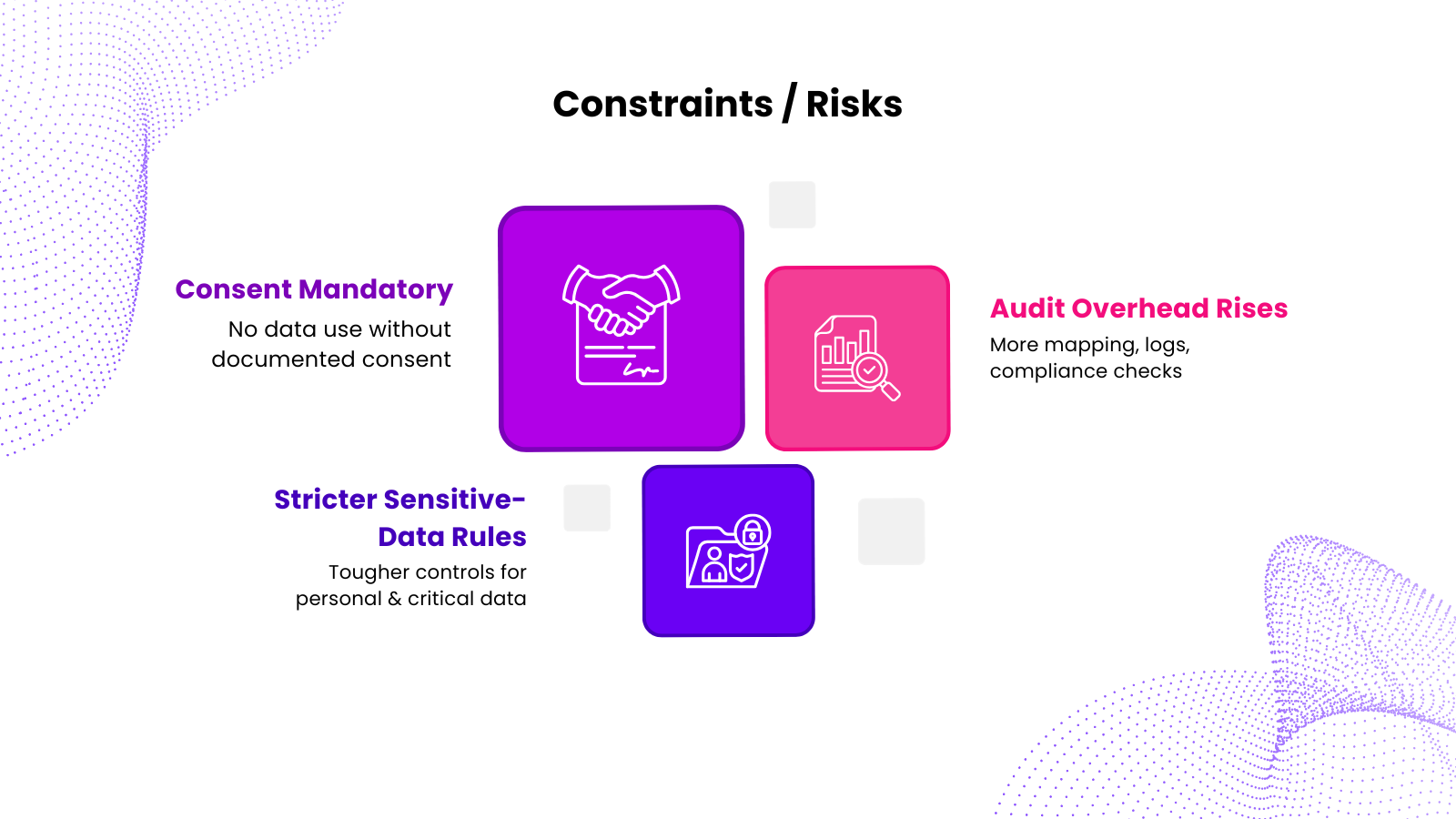
For companies building AI tools, learning platforms, SaaS solutions, or data-intensive applications, DPDP Compliance introduces both constraints and opportunity. Stricter consent requirements and accountability measures will influence how data is collected, stored, and used for personalization and model training. At the same time, Digital Personal Data Protection encourages more responsible data practices. Privacy-first system design, transparent governance, and controlled data usage can strengthen user trust and reduce long-term regulatory risk. Organizations that adapt early can convert compliance into a competitive advantage rather than a cost centre. As DPDP rules take effect, organizations must navigate new challenges around consent enforcement, sensitive data handling, and audit readiness. The infographic below highlights the key compliance risks enterprises must manage under Digital Personal Data Protection.
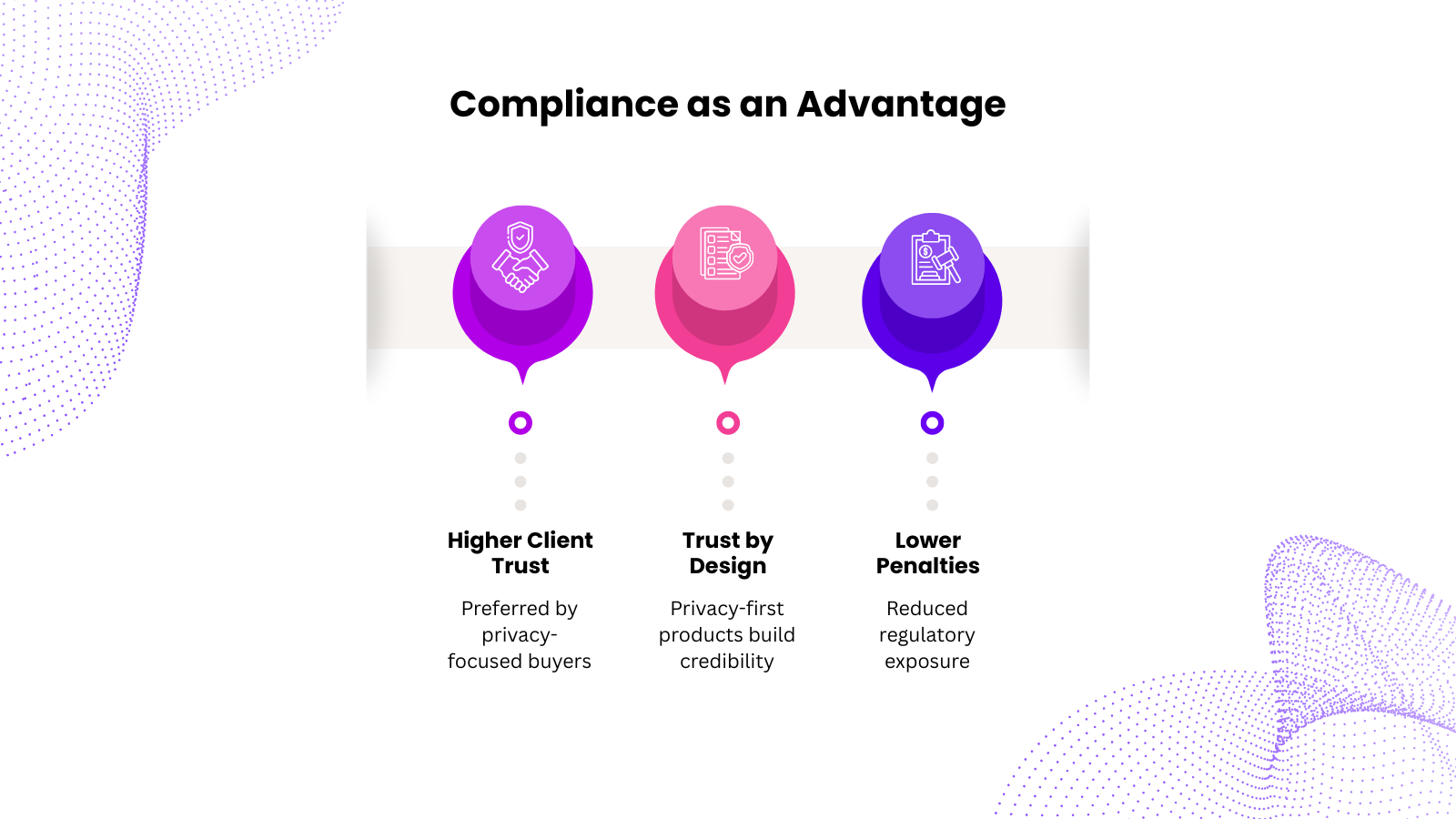
These hazards indeed exist, but they also present opportunities. Enhancing credibility, lowering regulatory exposure, and establishing firms as reliable partners are all possible with strong DPDP compliance. The following infographic shows how compliance can become advantageous rather than obligatory.
What Indian IT and Tech Companies Need to Do Now
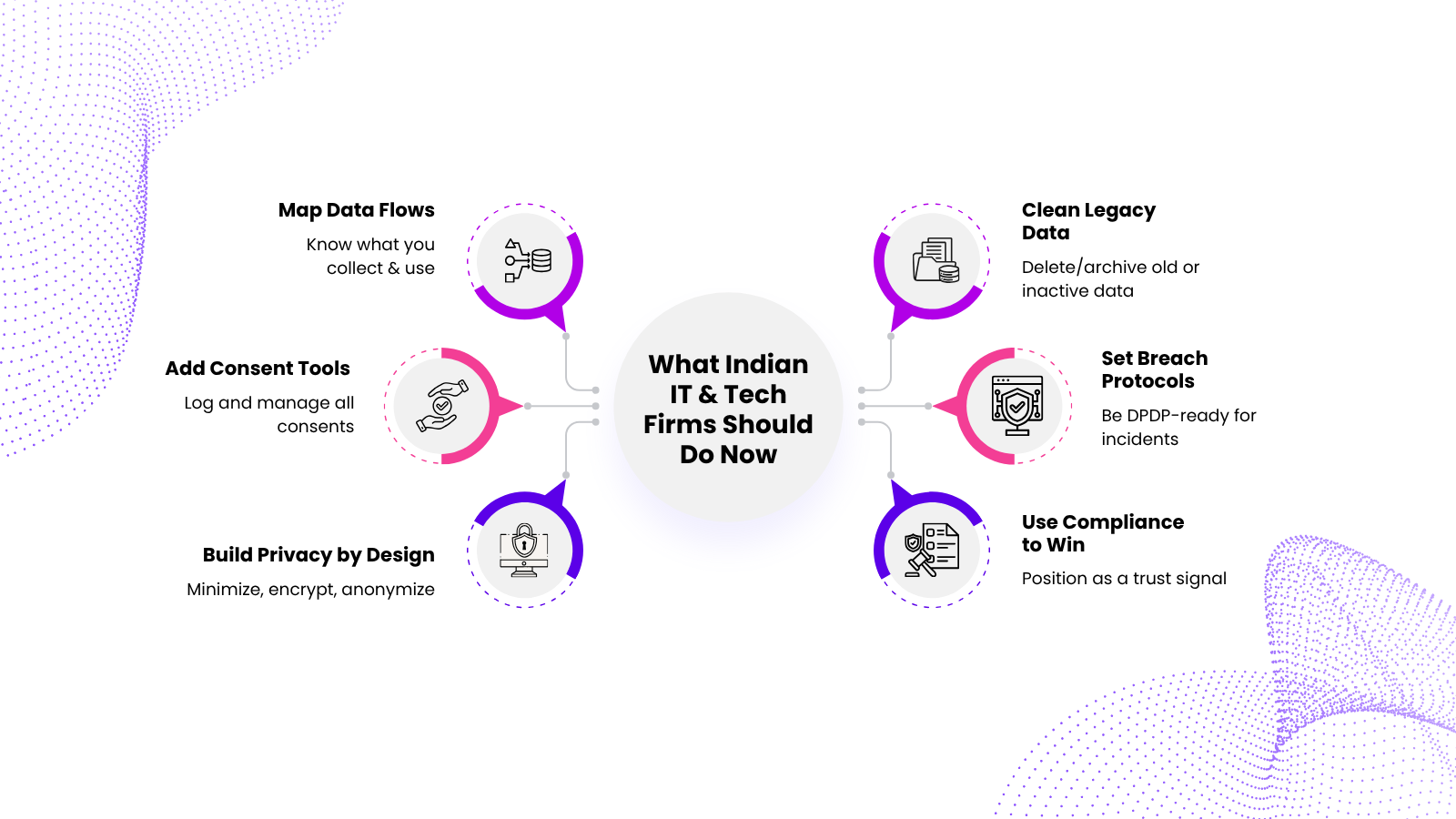
You must take quick action to get ready for DPDP Compliance if you work in AI, SaaS, learning technology, fintech, or data-driven services. The actions taken today will immediately affect trust, scalability, and long-term competitiveness in addition to fulfilling regulatory requirements. The playbook that follows lists doable steps that companies should focus on to improve governance, lower exposure, and align operations with the principles of digital personal data protection.
The Big Picture: India's Digital Economy Reaches Maturity
DPDP is more than just a rule. In India’s digital development, it represents a structural turning point. Digital Personal Data Protection signals a developing digital economy based on accountability and trust by establishing a baseline for data protection, bolstering individual rights, and harmonizing domestic regulation with international privacy standards. DPDP Compliance may seem marginal to big IT services companies. It is a strategic chance for startups, SaaS providers, learning platforms, and AI-driven companies to include privacy, consent, and transparency into products from the bottom up. Businesses that approach DPDP as a fundamental design principle will gain greater credibility, lower long-term risk, and be more competitive. In the end, DPDP will distinguish companies in India’s digital economy that are not just compliant but also genuinely competitive.