For decades, traditional learning methodssuch as classroom training, printed manuals, and in-person workshops have been the cornerstone of corporate training. While these methods excel in fostering face-to-face interaction, structured environments, and hands-on experiences, they often fall short in today’s fast-paced, data-driven business landscape.
Enter LMS Platforms (Learning Management Systems). Rather than replacing traditional learning, LMS Platforms enhance and modernize it, making training more accessible, engaging, and measurable. Here’s how integrating an LMS with traditional learning methods can elevate your training programs and deliver better results for your organization.
The Strengths and Shortcomings of Traditional Learning
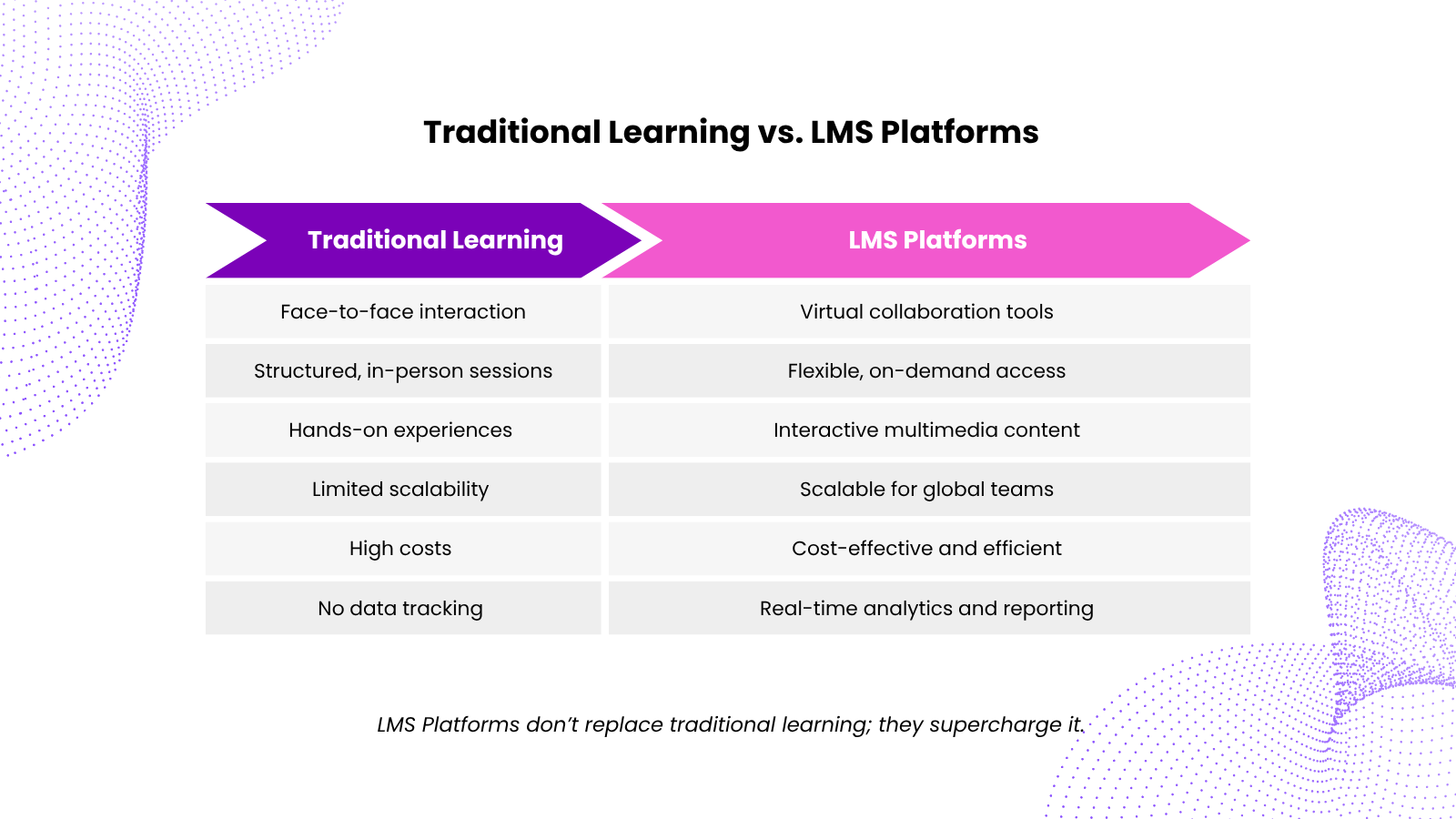
Traditional learning has been a trusted approach in corporate training for years, and it’s easy to see why: ✅Face-to-face interaction encourages collaboration and immediate feedback. ✅Structured environments help employees stay focused and engaged. ✅Hands-on experiences, such as role-playing and group discussions, deepen understanding and retention.
However, traditional learning also comes with limitations that can hinder its effectiveness in a modern context: ❌Lack of scalability – Training large, geographically dispersed teams is challenging. ❌High costs – Expenses for travel, venue rentals, and printed materials quickly add up. ❌Limited flexibility – Employees must adhere to fixed schedules, which can be inconvenient. ❌No data tracking – Measuring engagement, progress, or ROI is difficult.
This is where LMS Platforms come into play, not to replace traditional learning, but to enhance and modernize it.
How LMS Platforms Elevate Traditional Learning
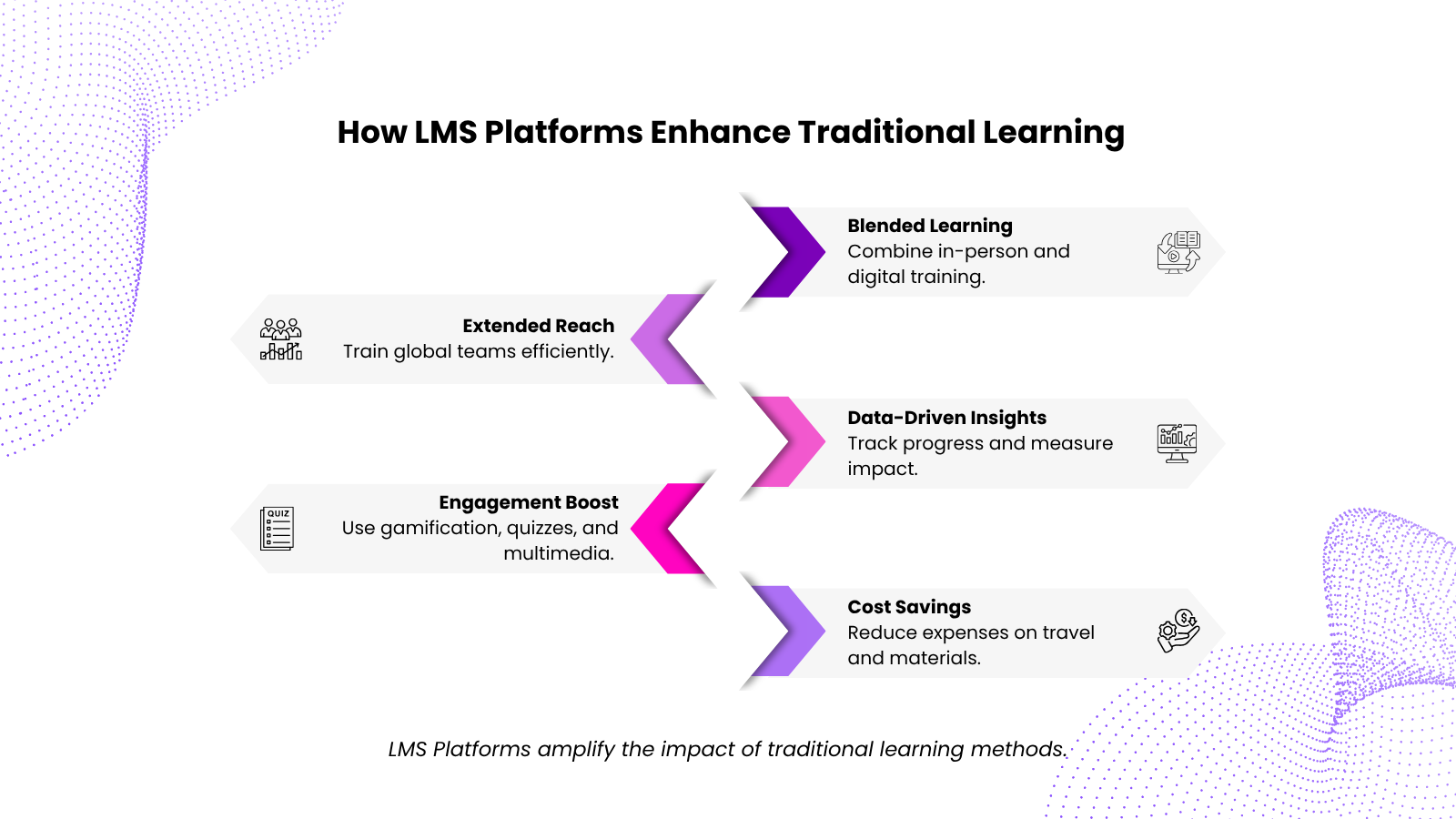
Blended Learning: The Best of Both Worlds
Instead of choosing between traditional learning and an LMS, organizations can adopt a blended learning approach, combining the strengths of both methods:
In-person workshops for hands-on training, team-building, and complex discussions.
LMS Platforms for on-demand access to supplementary materials, quizzes, and follow-up resources.
Example: A sales team attends an in-person negotiation workshop. Later, they use the LMS to access video recaps, practice quizzes, and real-world case studies to reinforce their learning.
Extending Reach and Scalability
Traditional learning is often constrained by location, time, and resources. An LMS removes these barriers by:
Enabling remote access to training materials for employees in different locations.
Supporting self-paced learning, so employees can revisit content as needed.
Reducing costs associated with travel, venues, and printed materials.
Example: A multinational company uses an LMS to standardize training across all its offices, ensuring every employee, regardless of location, receives the same high-quality content.
Data-Driven Insights for Continuous Improvement
One of the most significant advantages of LMS Platforms is their ability to track and analyze learning data. This allows organizations to:
Monitor engagement (e.g., which courses are most/least popular?).
Assess knowledge retention through quizzes and assessments.
Identify skill gaps and tailor future training programs accordingly.
Example: After a traditional leadership training session, an LMS can track which participants completed follow-up modules and which struggled with key concepts, allowing trainers to provide targeted support.
Boosting Engagement with Interactive Content
Traditional learning can sometimes feel static or passive. LMS Platforms enhance engagement by incorporating:
Gamification (e.g., badges, leaderboards, and rewards).
Multimedia content (e.g., videos, animations, and interactive simulations).
Social learning features (e.g., discussion forums, peer feedback).
Example: A compliance training program that was traditionally a dry, in-person lecture can be transformed into an interactive LMS course with quizzes, scenario-based learning, and certifications.
Reinforcing Learning with Microlearning
Traditional learning often involves long, intensive sessions that can lead to cognitive overload. An LMS allows organizations to break content into bite-sized modules (microlearning) that reinforce traditional training.
Example: After a day-long workshop on project management, employees can access short, focused LMS modules on specific topics like risk assessment or Agile methodologies.
Real-World Impact: A Case Study
A global financial services company wanted to improve its onboarding program, which traditionally relied on in-person training sessions. By integrating an LMS Platform, they:
Reduced onboarding time by 40% by blending in-person sessions with self-paced LMS modules.
Increased knowledge retention by 30% through interactive quizzes and reinforcement modules.
Cut training costs by 25% by reducing the need for travel and printed materials.
The result? A more effective, scalable, and cost-efficient training program that retained the best elements of traditional learning while leveraging the power of digital tools.
The Future of Learning: A Hybrid Approach
The most effective training programs don’t pit LMS Platforms against Traditional Learning; they combine the two to create a hybrid learning ecosystem. By doing so, organizations can: ✅Retain the human touch of traditional learning (e.g., mentorship, collaboration). ✅Leverage the scalability and flexibility of LMS Platforms. ✅Use data to continuously improve training programs. ✅Engage learners with interactive, on-demand content.
Key Takeaways
LMS Platforms don’t have to replace traditional learning; instead, they enhance it. By integrating the two, organizations can create a more flexible, engaging, and effective training experience that delivers better results.
Ready to supercharge your traditional learning with an LMS? Discover how LMS Platforms can complement your existing training methods for maximum impact. Contact us to learn more.