Skill gaps are more than just an HR challenge. They’re a hidden obstacle to business growth. When employees lack the right skills, productivity slows, innovation stalls, and opportunities are missed. Yet, many organizations still treat skill gaps as an abstract issue, relying on outdated methods like guesswork or annual reviews to address them.
The solution is Learning analytics. By harnessing data-driven insights, organizations can identify, measure, and close skill gaps with precision, turning a potential weakness into a strategic advantage. Here’s how learning analytics doesn’t just fix skill gaps but transforms them into opportunities for business growth.
The Hidden Impact of Skill Gaps
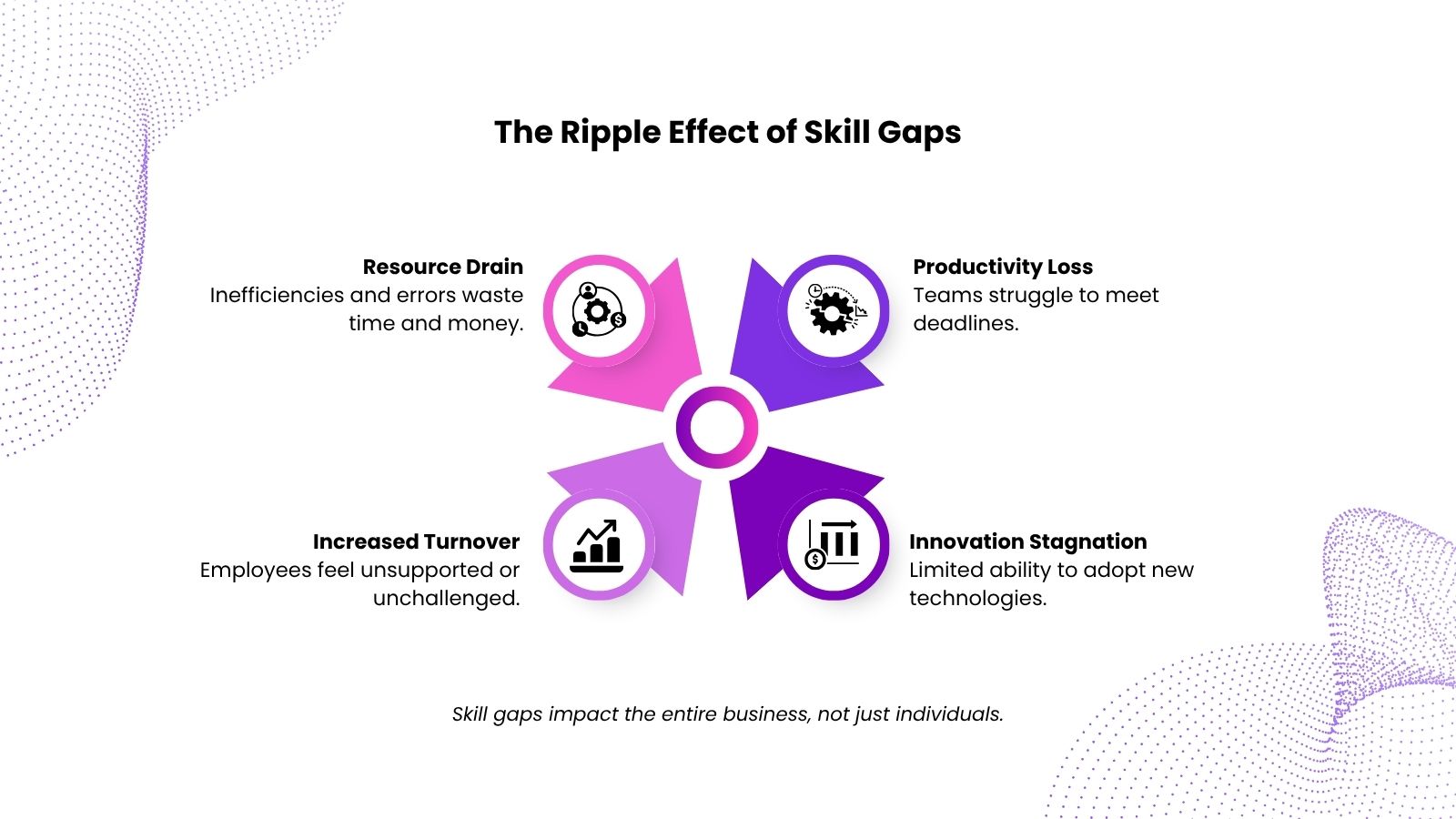
Skill gaps don’t just affect individual performance; they have a ripple effect across the entire organization. When employees lack critical skills:
Teams struggle to meet goals, leading to missed deadlines.
Projects get delayed, slowing down progress.
Customer satisfaction drops, affecting reputation and revenue.
Over time, these gaps can stifle innovation, increase turnover, and drain resources. Yet, many companies still address skill gaps reactively, waiting until they become glaring problems. This is where learning analytics changes the game.
How Learning Analytics Uncovers and Addresses Skill Gaps
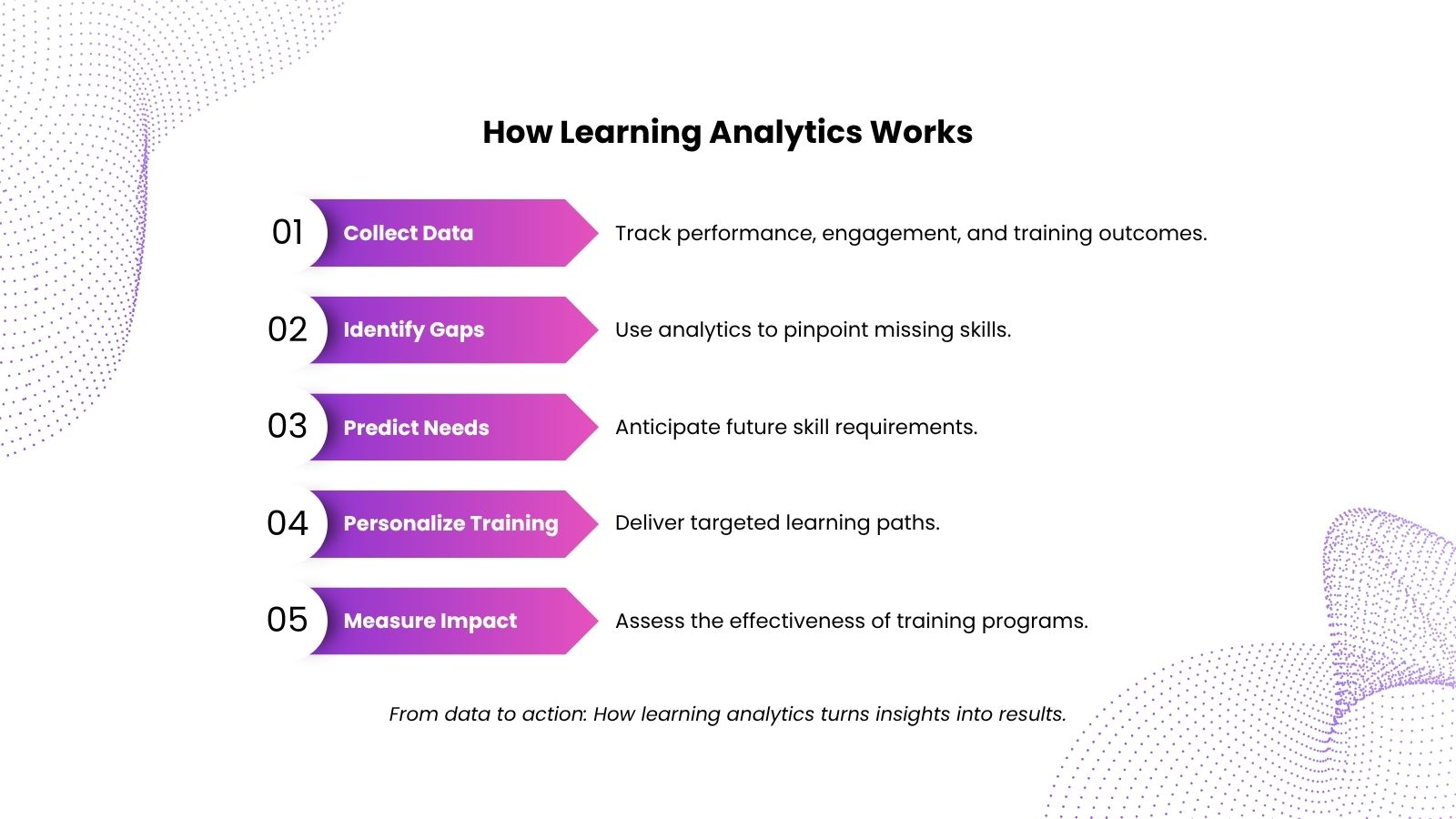
Traditional methods of identifying skill gaps, such as manager feedback or annual reviews, are slow, subjective, and often incomplete. Learning analytics, on the other hand, provides real-time, objective data to pinpoint exactly where gaps exist.
Data-Driven Skill Assessments
Learning analytics uses performance data, quiz scores, and engagement metrics to identify:
Which skills are missing across teams or departments.
Which employees are struggling with specific competencies.
Which training programs are effective and which are not.
This data-driven approach removes guesswork, allowing organizations to target their efforts where they’re needed most.
Predictive Insights for Future Needs
Learning analytics doesn’t just look at current skill gaps, rather, it predicts future ones. By analyzing trends in learning behavior, course completions, and performance data, organizations can:
Anticipate skill gaps before they impact business operations.
Align training programs with upcoming business needs.
Personalized Learning Paths
Once skill gaps are identified, learning analytics helps tailor training to individual needs. For example:
An employee struggling with data analysis might receive targeted modules on Excel or SQL.
A team lacking leadership skills could be enrolled in a customized leadership development program.
This personalized approach ensures that training is relevant, efficient, and effective, closing gaps faster and with less wasted effort.
How Addressing Skill Gaps Drives Business Growth
Fixing skill gaps isn’t just about improving individual performance; it’s about unlocking the full potential of your workforce. Here’s how learning analytics helps organizations grow by addressing skill gaps:
Boosts Productivity and Efficiency: When employees have the skills they need, they work faster, smarter, and with fewer errors.
Fuels Innovation: Skill gaps often hold organizations back from adopting new technologies or strategies. By proactively closing these gaps, companies can adopt new tools and develop new products or services with confidence.
Improves Employee Retention and Engagement: Employees who feel supported in their growth are more engaged, loyal, and motivated.
Aligns Learning with Business Goals: Learning analytics ensures that training programs are directly tied to business objectives, delivering measurable results.
The Proof: A Real-World Example
A global manufacturing company used learning analytics to identify skill gaps in its workforce. By analyzing performance data and training outcomes, they discovered that 30% of their employees lacked critical digital skills needed for a new automation initiative. Using this insight, they:
Developed targeted upskilling programs for the affected employees.
Reduced onboarding time for new hires by 40%.
Increased operational efficiency by 25% within six months.
From Challenge to Opportunity
Skill gaps don’t have to be a roadblock; they can be a catalyst for growth. With learning analytics, organizations can: ✅Identify gaps with precision, not guesswork. ✅Predict future needs before they become problems. ✅Personalize training to maximize impact. ✅Align learning with business goals to drive real results.
The organizations that thrive in the coming years won’t be the ones that ignore their skill gaps—they’ll be the ones that use learning analytics to transform them into opportunities.