Intelligent Content Recommendations: Guiding Learners to What’s Next
In a traditional LMS, employees often don’t know what to learn next, or they’re overwhelmed by too many options, leading to decision fatigue and low engagement.
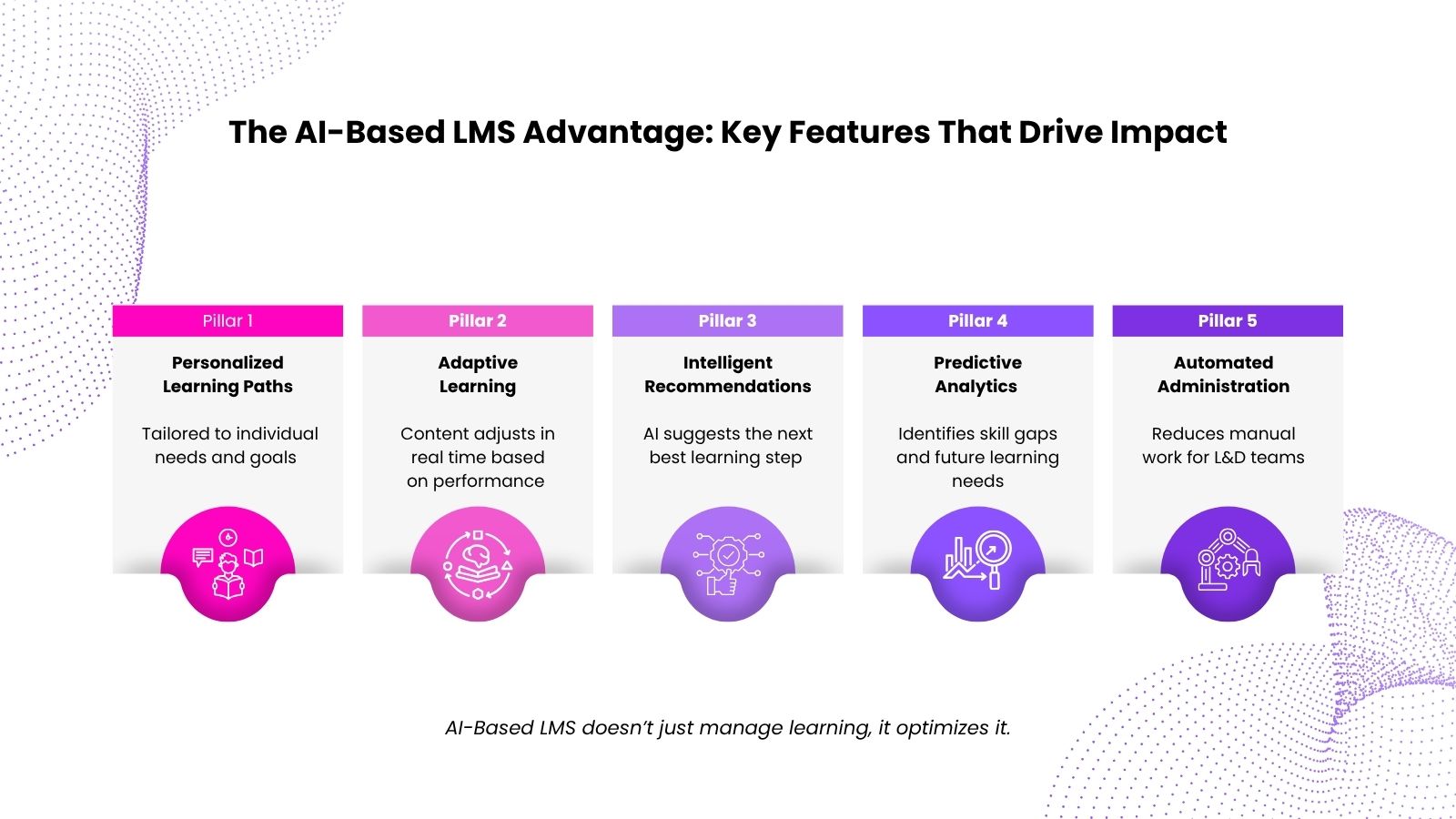
An AI-Based LMS acts like a personal learning concierge, recommending courses, articles, videos, and other resources based on the learner’s role, career goals, and past learning behaviour. For example, if a marketing employee completes a course on digital advertising, the AI might recommend advanced modules on SEO, content strategy, or data analytics.
Predictive Analytics: Anticipating Learning Needs Before They Arise
Traditional LMS platforms provide basic reporting, such as completion rates and quiz scores, but they don’t offer actionable insights into skill gaps, future training needs, or business impact.
An AI-Based LMS leverages predictive analytics to analyze patterns in learning data, allowing organizations to anticipate emerging skill gaps, identify employees at risk of falling behind, and align training with future business objectives.
Automated Administration: Freeing Up L&D Teams for Strategic Work
Managing a traditional LMS can be time-consuming, with L&D teams spending countless hours assigning courses, tracking completions, and generating reports.
An AI-Based LMS automates these administrative tasks, such as enrolling employees in courses, sending reminders for incomplete training, and generating customized reports on learning progress and compliance.