In today’s fast-paced business world, the ability to track and improve staff abilities is not only advantageous, but also necessary. Learning dashboards, powered by L&D metrics and learning analytics, are changing the way businesses monitor and enhance skill advancement. But how can you use these tools to foster an environment of continual learning and demonstrable growth?
The Power of Learning Dashboards
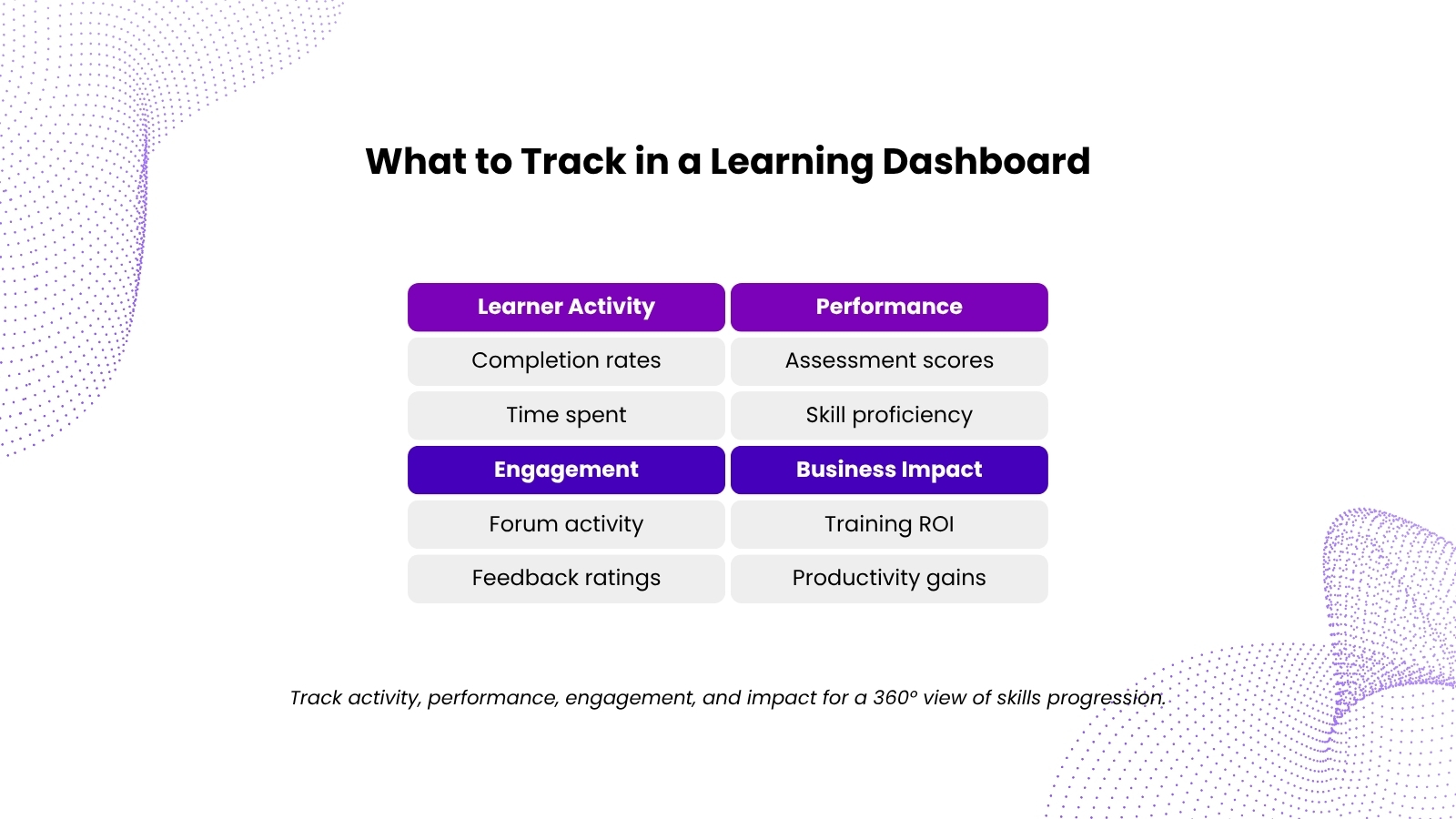
Learning dashboards show real-time, visual representations of learning activities, performance, and outcomes. They combine data from a variety of sources, such as course completion rates, assessment scores, and engagement levels, to produce actionable insights. Learning and development teams can use dashboards to: • Track individual and team learning progress, identifying strengths and areas for improvement. • Assess the impact of learning programs on corporate goals. • Enhance Engagement: Personalize training experiences with data-driven insights to boost motivation and participation.
Key Learning & Development Metrics to Track
To get the most out of learning dashboards, focus on five key L&D metrics: 1. Measure course completion rates to assess employee engagement and relevancy. 2. Assess information retention and application via quizzes and practical assessments. 3. Time to Competency: Monitor employee proficiency in certain skills. 4. Monitor learner engagement through forum conversations and resource downloads. 5. Identify skill gaps and provide targeted assistance.
Learning Analytics: From Data to Insight
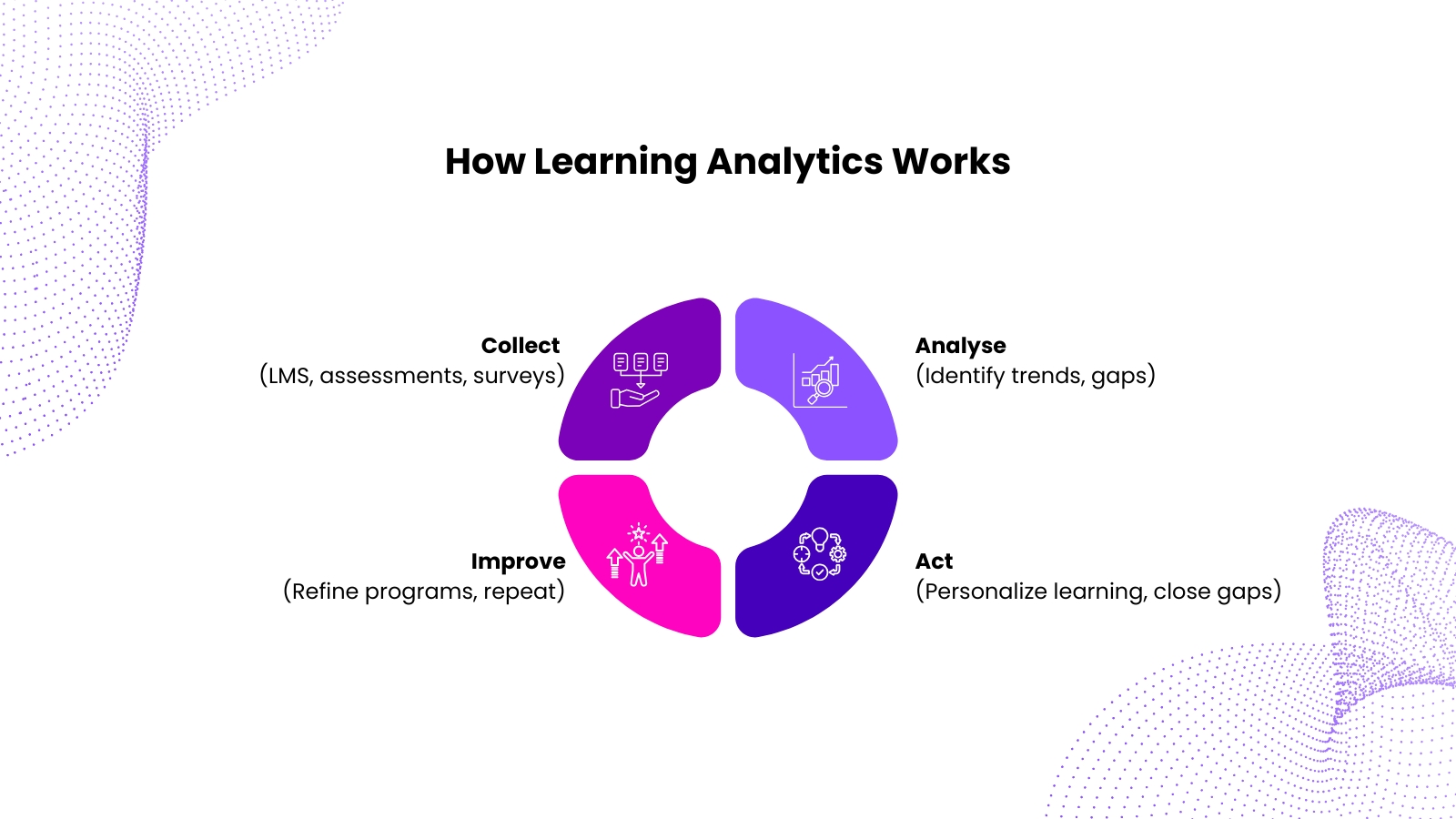
Learning analytics extends L&D metrics by utilizing advanced data analysis to identify patterns, forecast trends, and recommend actions. Here’s how it improves skill progression:
Use predictive analytics to forecast future skill needs based on current learningbehavioursand business trends.
Customize learning paths to meet individual needs, increasing efficiency and effectiveness.
Use feedback loops to improve training programs and overcome skill gaps
Implementing Learning Dashboards in Your Organization
To effectively incorporate learning dashboards into your L&D strategy: 1. Set clear objectives by aligning dashboard metrics with company goals and learner requirements. 2. Choose the Right Tools: Choose systems with advanced analytics, user-friendly interfaces, and integration possibilities. 3. Train Your Team: Ensure L&D professionals and supervisors understand how to analyse and apply dashboard insights. 4. Continuously review and update dashboards to reflect changing learning priorities.
Case Study: Using Learning Dashboards to Transform Skills Progression
A worldwide technology corporation used learning dashboards to track skill advancement throughout its staff. By focusing on L&D measures like as course completion and evaluation scores, and employing learning analytics to personalize training, they accomplished:
A 20% increase in course completion rates.
15% reduction in time to competency.
Improved employee engagement and retention.
Conclusion: The Future of Skills Progression
Learning dashboards, which use L&D measurements and learning analytics, are more than simply tools; they are catalysts for developing a talented, agile, and future-ready workforce. Organizations can use data to transform learning activities into measurable skill growth, resulting in individual and company success.