Imagine this, new course has just been released by your L&D team. Completion rates appear to be high, you have a green dashboard, and the leadership is impressive. The gap you set out to reduce is still very much open three months later. The harsh reality is that completion metrics are only a vanity scoreboard. Instead of measuring impact, they assess activity. Furthermore, most learning management systems are built to maximize this appearance of advancement. Whether or not your platform records completions are not the true question, it’s if it develops the skills necessary to advance your company.
The System That Gains Knowledge While Your People Gain Knowledge
Conventional systems follow a set logic, which is to provide material, monitor completion, and produce reports. They are not learning architects, but rather record-keepers. This is completely reversed by contemporary LMS characteristics. Consider adaptive intelligence in place of static delivery. The platform tracks each learner’s engagement, areas of difficulty, and what works and what doesn’t. It not only monitors advancement but also gains knowledge from it. Does a sales representative find it difficult to handle objections? The platform introduces micro-scenarios, modifies difficulty, and distributes reinforcement across ideal intervals. Technical concepts are raced through by an engineer. It speeds up their journey and adds complexity at an early stage. This isn’t segmentation-based personalization. It’s observation-based intelligence.
When Your Dashboard Says "So What"
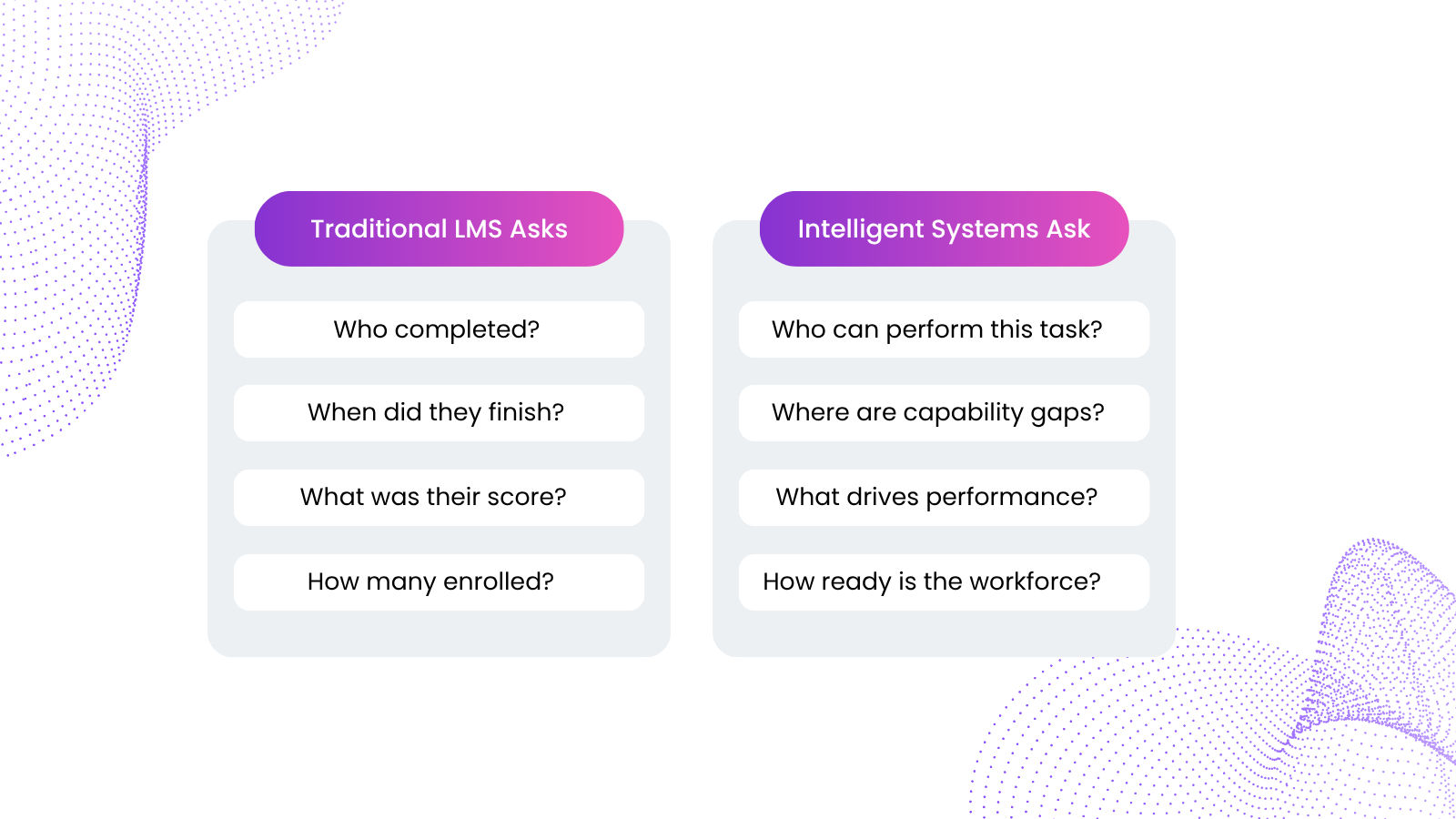
The majority of LMS platforms and features excel at the fundamentals, such as keeping track of logins, documenting completions, and calculating scores. However, that is not strategic intelligence; rather, it is operational housekeeping. The breakthrough occurs when your system responds to various queries like,Which teams are prepared to launch the product in Q2? Before they affect delivery, where are important skill gaps developing? Which educational strategies are associated with better performance? The possibilities are altered by this transition from activity reporting to capability intelligence. L&D begins anticipating requirements rather than responding to demands.
Skills, Not Syllabi
Here’s where legacy thinking breaks down entirely. Traditional systems organize learning around courses and curricula, but your business doesn’toperate on curriculum logic. It operates on capabilities. Can your team execute the new go-to-market strategy? Do your engineers have the skills for the architecture shift you’re planning? Modern LMS features organize around skills, not subjects. They map roles to required capabilities. They track proficiency, not completion. They validate what people can do, not what they’ve watched. This architecture enables workforce agility. The difference between managing courses and building capabilities isn’t theoretical. It shows up in measurable business outcomes that directly impact your bottom line.
The shift to intelligent LMS features and platforms isn’t a technology upgrade. It’s a strategic repositioning of how your organization builds, validates, and deploys capability.
The Real ROI
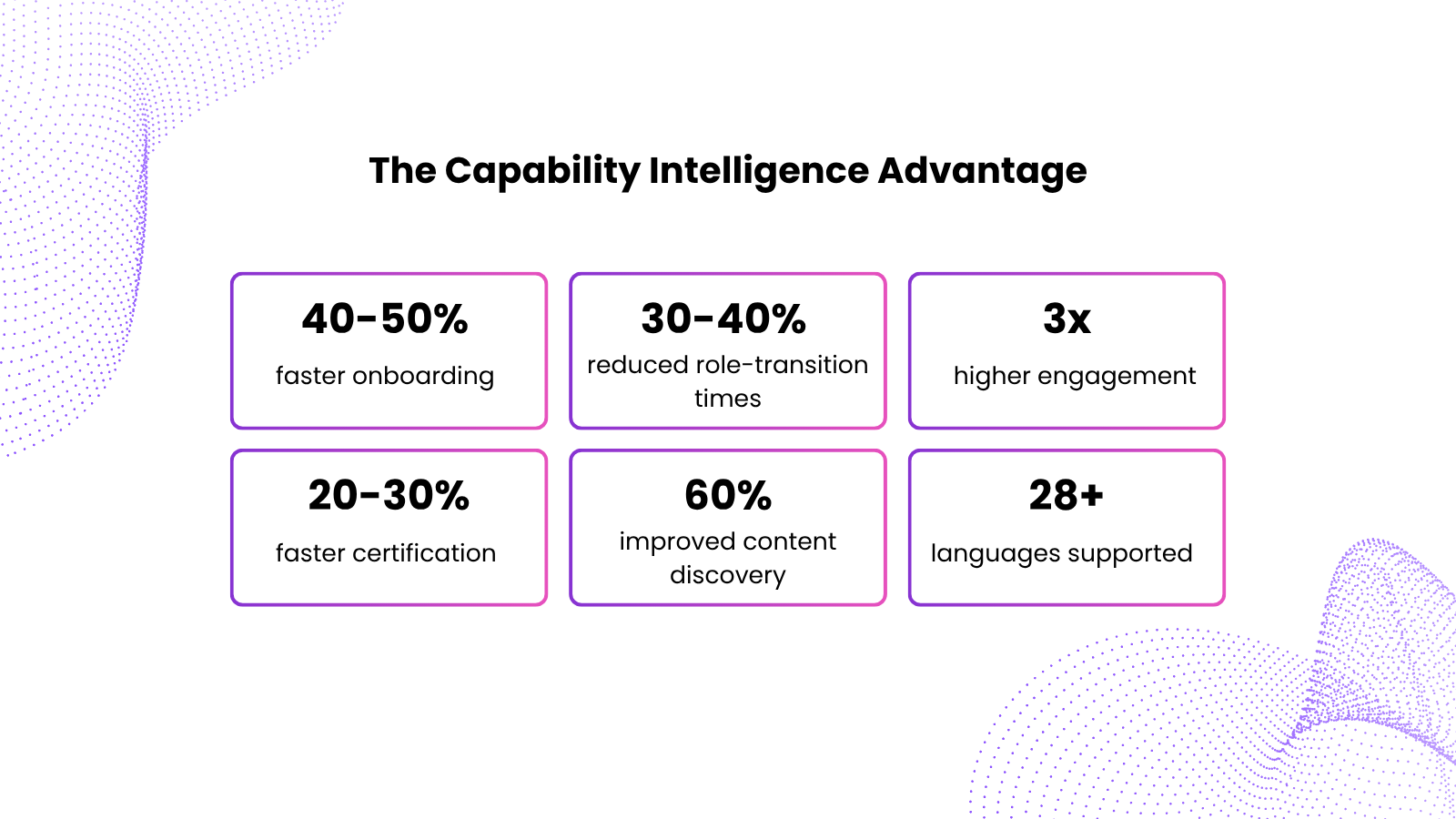
Completions are not used to calculate the return on learning investment. It’s measured in readiness, performance, and adaptability. Can your workforce execute when priorities shift? Can they absorb new capabilities as fast as the market demands them? The right system makes this possible through intelligence, adaptability, and a relentless focus on what people can do. Organizations making this shift report faster certification cycles, improved content discovery, and learning experiences that scale across languages and every device. Your learning management system should build capability, not just track completions. Recognizing that gap is where transformation begins.